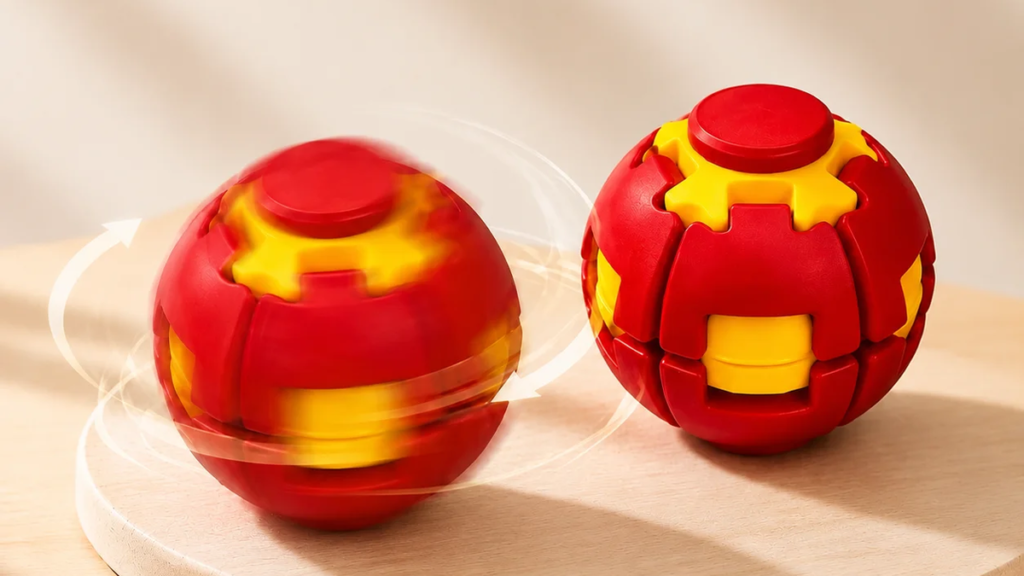
Press-to-spin fidget toys are becoming a notable product format within the broader fidget and novelty toy market.
The concept is simple: pressing the toy activates a spinning or rotating movement within a compact handheld structure. That combination of pressing, spinning and mechanical feedback creates more interaction than a traditional single-function spinner while remaining easy to understand.
Products such as HelixCore have also shown how this type of mechanism can first gain attention through 3D-printed prototypes before moving toward broader commercial development. The original HelixCore design, for example, uses a press-to-spin mechanism built around a compact ball format.
For toy buyers, the opportunity is not simply to follow a trending product. The more important question is whether the underlying mechanism can support a differentiated, scalable product program.
Table of Contents
Faster Prototyping Is Changing Toy Development
3D printing has made it easier to evaluate new toy concepts before committing to production tooling.
A prototype can help test basic factors such as shape, mechanical movement, overall size and user interaction. If the concept performs well, the next step may involve adapting the structure for mold development and injection molding.
This gives buyers more flexibility during early product development.
Instead of selecting only from established catalog products, brands can evaluate emerging mechanisms and determine whether they are suitable for further development around their own product requirements.
Once the basic mechanism is proven, the focus changes from:
“Can this concept work?”
to:
“How should this product be developed for our market and brand?”
One Mechanism Can Support Multiple Designs
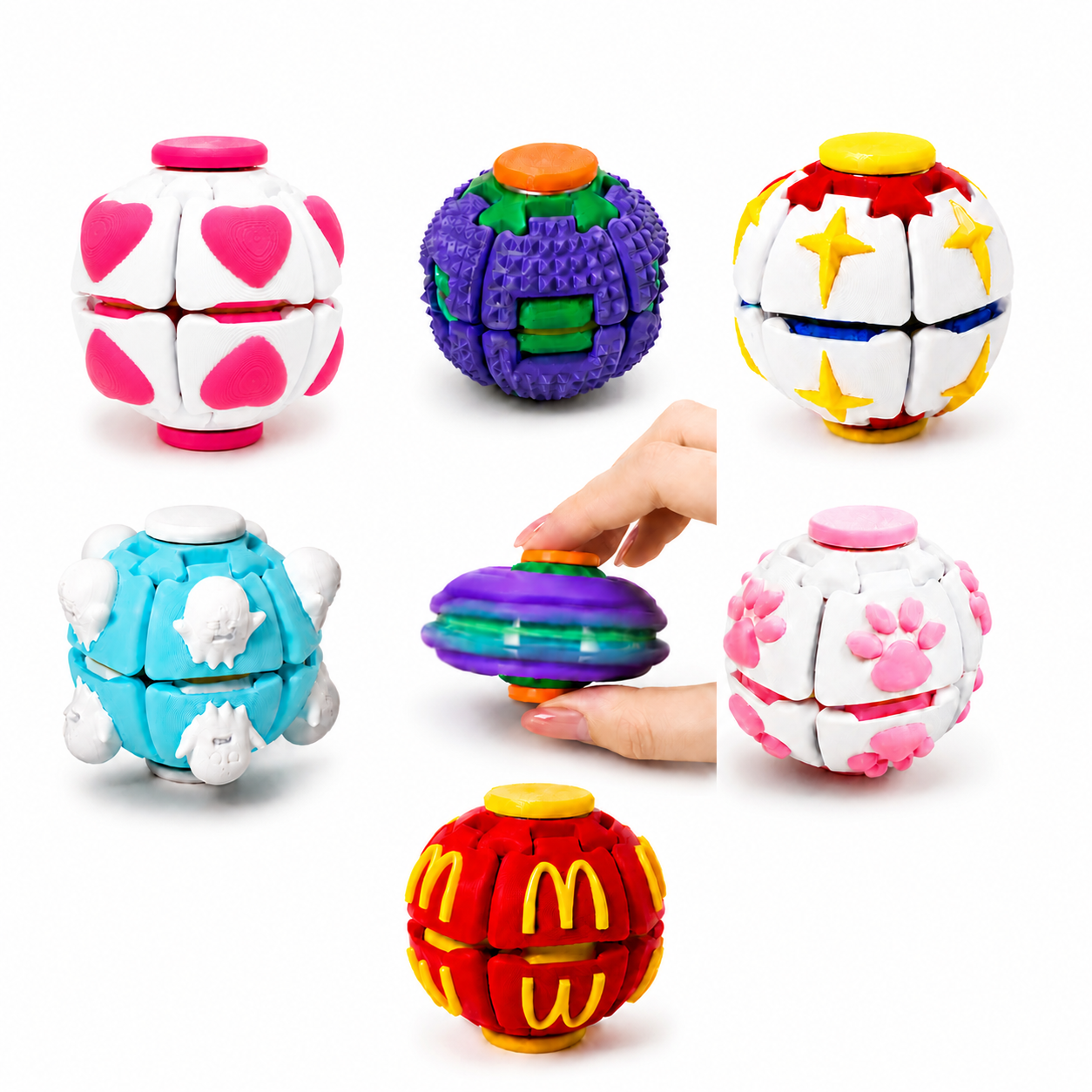
The core mechanism of press-to-spin fidget toys may remain similar, while the finished products can look and feel very different.
Customization can include:
- Color combinations
- Surface textures
- Outer shapes
- Button designs
- Lighting effects
- Themed product concepts
Current U.S. marketplace listings already show press-to-spin products in multiple color combinations and different visual styles, while 3D-printed versions continue to explore variations on the same basic mechanism.
For a brand or distributor, this means a proven mechanism can become the foundation for several SKUs rather than a single product.
When multiple suppliers offer a similar mechanism, differentiation increasingly comes from product design, finish, packaging and brand presentation.
Packaging Should Be Planned With the Product
Packaging is an important part of the development process, especially for wholesale and private label programs.
The same press-to-spin fidget toys can be positioned differently depending on its packaging.
An OPP bag may suit certain value-oriented wholesale programs, while individual color boxes or countertop display boxes can be more appropriate for retail stores, gift programs and branded collections.
For products intended for the U.S., Europe and other international markets, packaging may also need to accommodate product information, barcodes, age grading, safety warnings and market-specific labeling requirements.
For OEM and ODM projects, packaging is best discussed during product development rather than after the product itself has already been finalized.
Buyers Should Evaluate the Product Platform, Not Just the Trend
Trend-driven products can attract attention quickly, but popularity alone is not enough to justify a sourcing decision.
When evaluating press-to-spin fidget toys, buyers should consider whether the product can be manufactured consistently and whether the concept offers enough room for further development.
Useful questions include:
Can the same mechanism support multiple designs?
Can colors, textures or lighting be changed?
Can the product be adapted for different packaging programs?
Can the concept become a small collection rather than a single SKU?
If the answer is yes, the product has more potential for long-term differentiation.
From One SKU to a Product Series
A mature interactive mechanism can serve as the starting point for a broader product collection.
A buyer might begin with a standard multi-color version, then expand into textured models, light-up versions or themed designs without starting every project from zero.
Vilora Toys’ Press-to-Spin Fidget Toys follows this development approach, with multiple colors, styles and light-up versions available.
Custom colors, logos, product designs and packaging can also be developed for wholesale, retail and private label programs.
For toy buyers, the mechanism is only the starting point.
The greater opportunity lies in turning a proven interaction into a differentiated product line with its own design, positioning and brand identity.