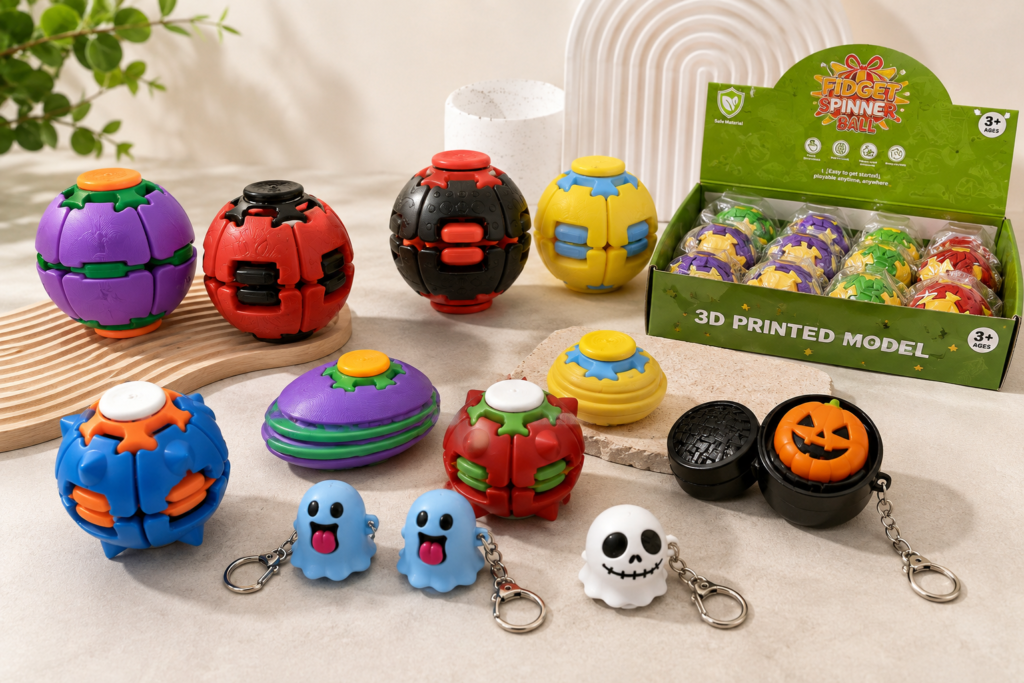
Fidget toys in 2026 have moved well beyond the spinner craze.
Today, fidget products overlap with stress toys, squishies, sensory accessories, desk toys and small impulse items. Many of them are not even marketed primarily as “fidget toys,” but the appeal is similar: they are easy to understand, satisfying to use and designed to keep hands busy.
That broader shift is showing up in industry trends as well. Sensory Play was highlighted at the UK Toy Fair 2026, while The Toy Association’s 2026 “Cozy Culture” trend points to continued interest in tactile materials, low-tech interaction and screen-free play. For buyers, the category is becoming less about one specific format and more about the experience a product delivers.
Table of Contents
Fidget Toys in 2026 Have Moved Well Beyond Spinners
Fidget products now come in many forms. A shopper may pick up a stress ball, stretch toy, squishy, tactile keychain or small desk toy and use it in much the same way: squeeze it, press it, pull it or repeat a simple movement.
That ease of use matters in retail. There is almost no learning curve, and the product usually explains itself within a few seconds. In an impulse-buy setting, that can be a real advantage.
For buyers, this also means category labels are becoming less important than they used to be. A product may sit under sensory, novelty, stress relief or desk toys, but still serve the same basic purpose.
Hand Feel Can Matter More Than the Photo
Fidget toys are one of those categories where a catalog image only tells part of the story.
Two products can look nearly identical and feel completely different once they are in your hand. One may be soft with very little resistance. Another may have a firmer squeeze. A textured surface, slow rebound or repeated clicking motion can completely change the experience.
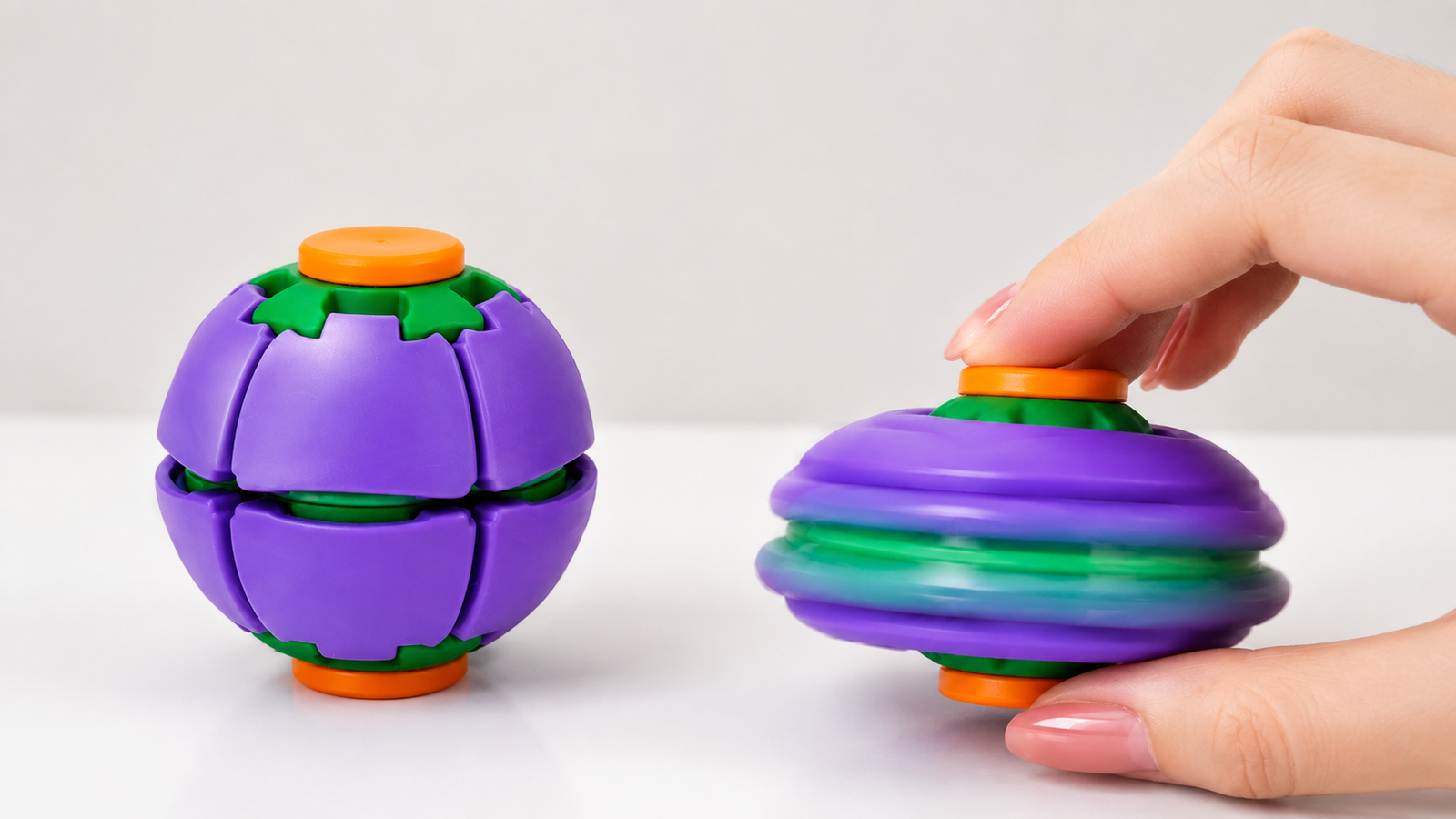
As fidget toys in 2026 become more varied, buyers are paying closer attention to how a product actually feels and performs in the hand.
That is why sample evaluation matters when sourcing wholesale fidget toys. Buyers should look beyond shape and color and pay attention to resistance, rebound, surface feel, durability and how the product performs after repeated use.
For tactile products, the hand feel is not a minor detail. It is part of what the customer is actually buying.
More SKUs Do Not Automatically Make a Better Range
A shelf full of products that all feel the same can look varied without actually offering much variety.
For buyers comparing fidget toys in 2026, the goal should be to build real differences in interaction, not just more versions of the same basic idea.
A stronger assortment may combine several types of interaction instead. One product might focus on squeezing, another on stretching, while another offers texture, movement or some other immediate physical feedback.
That kind of mix can work especially well in physical retail, where customers naturally want to pick products up and try them. The differences between products become part of the merchandising experience rather than something that has to be explained on the package.
For a retailer, that may be more useful than simply adding another five colors of the same basic item.
Viral Products Can Help, but They Should Not Define the Whole Category
Fidget and sensory toys can move quickly on social media. A new product can suddenly appear everywhere on TikTok or short-form video and create a rush of buyer interest.
The problem is timing.
By the time a retailer places an order, waits for production and receives international shipments, the original viral moment may already be cooling off. That makes it risky to build an entire assortment around one product that happens to be trending today.
A more balanced approach is to keep a core range of familiar, easy-to-understand products and add a smaller number of newer items with different textures, mechanisms or visual effects. Buyers can still participate in fidget toy trends without making the whole category dependent on one short-lived hit.
Fidget, Sensory and Novelty Are Starting to Overlap
One of the more interesting changes in the category is how much the boundaries are starting to blur.
A squishy can be sold as a stress toy. A tactile desk item can function as a fidget. A small sensory product can also work as a novelty gift or counter item. Consumers are not necessarily thinking about the same product categories that buyers and suppliers use internally.
They are responding to what the product does.
That gives retailers more flexibility. Depending on the size, packaging and design, the same type of tactile product might work in a toy aisle, gift section, checkout display or desk-toy assortment.
For buyers looking at fidget toys in 2026, the better question may not be, “What is the next big fidget?” It may be, “What kind of experience is missing from our current range?”
That shift in thinking can lead to a stronger assortment—and a category that does not depend on chasing every new viral moment.
For custom fidget, sensory and novelty toy development, explore our OEM & ODM capabilities.