Global toy market trends are pointing in a positive direction in 2026, but the headline growth number only tells part of the story. Across the markets tracked by Circana, toy sales increased 14% in the first half of 2026 compared with the same period last year. Sales for the 12 months ending June were up 9.5%.
For retailers, importers and private-label brands, however, the more useful story is underneath those numbers. North America, Europe, Latin America, China and Australia are not being driven by exactly the same categories or consumer interests. The global toy business may be growing together, but it is not becoming one uniform market.
That distinction matters when buyers decide which products to add, how to package them and how broadly to carry the same assortment.
Table of Contents
The Leading Toy Categories Look Very Different by Region
Circana’s latest regional data makes those differences easy to see. Games & Puzzles was the largest toy supercategory in North America for the 12 months ending June 2026. Building Sets led in Europe and Australia, Dolls ranked first in Latin America, while Infant, Toddler & Preschool Toys remained the largest supercategory in China.
Licensing preferences were just as varied. NFL ranked as the leading license in North America, FIFA in Latin America, Star Wars in Europe and Australia, and Duffy and Friends in China. Even within a global entertainment and licensing ecosystem, regional fandom still matters.
For international toy buyers, this is a useful reminder that a product can have global potential without performing the same way everywhere. The product itself may travel well across markets, while the assortment, presentation or positioning around it needs to change.
One Product Does Not Always Need Five Different Versions
Regional differences do not mean brands need to develop an entirely new toy for every country. In many cases, the smarter opportunity is to build flexibility into an existing product.
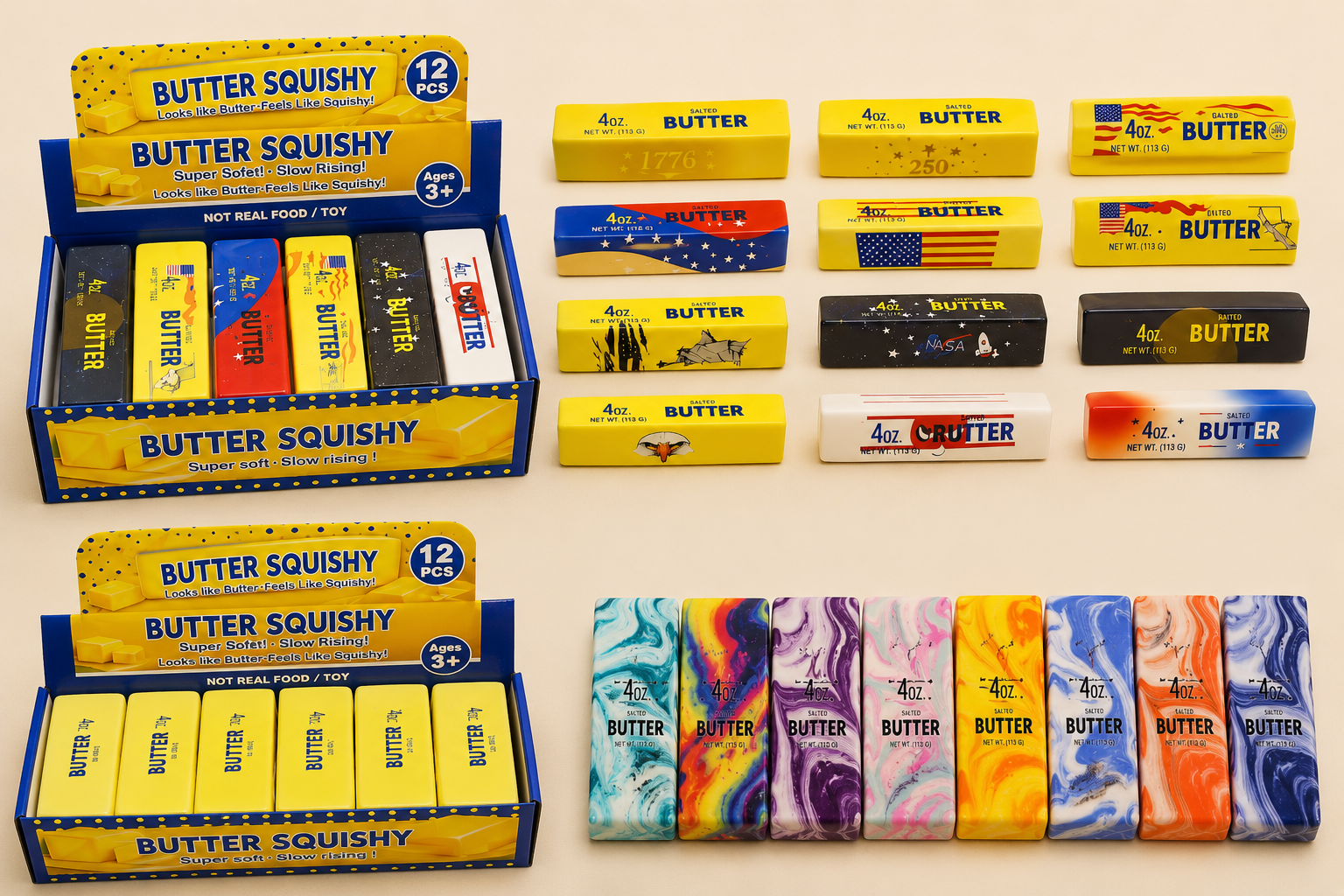
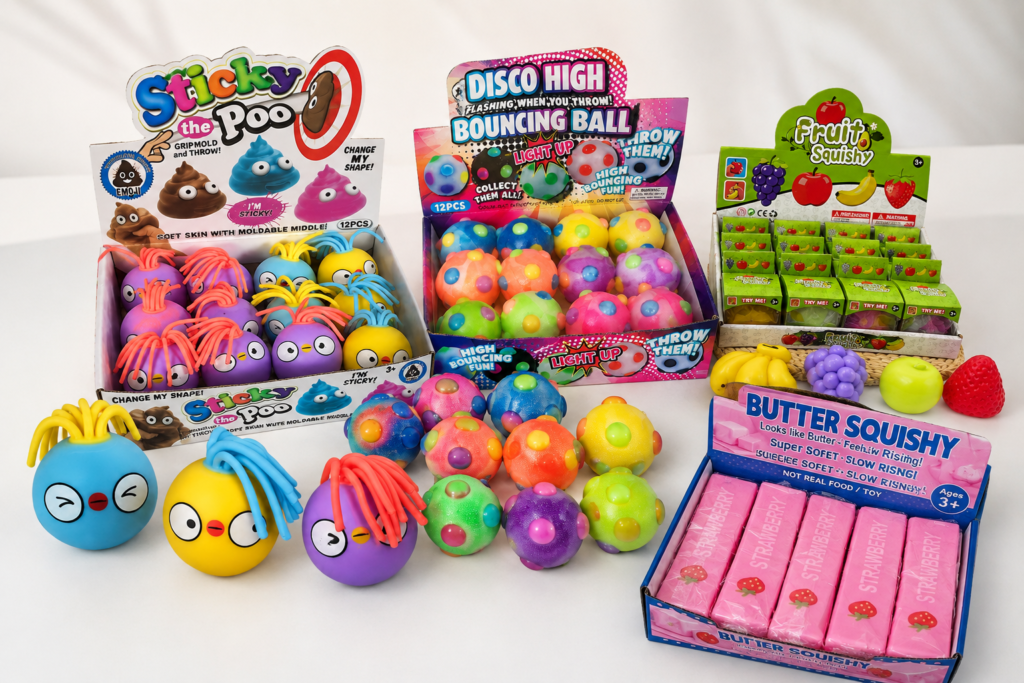
A sensory or novelty toy, for example, might keep the same basic construction while changing its color assortment, size, packaging format or price point. A compact version may work well as an impulse item in one channel, while another retailer may prefer gift-ready packaging or a larger format with more shelf presence.
The same idea applies to merchandising. A product can be presented as a sensory item, desk toy, small gift or novelty product depending on the retailer and customer. That makes toy assortment strategy less about creating as many SKUs as possible and more about deciding which variations actually serve a purpose.
Global Trends Travel Fast, but Retail Is Still Local
Social media, entertainment properties and online retail can move toy trends across borders faster than ever. A product discovered online in Los Angeles can be seen by consumers in London, Paris or Sydney almost immediately.
But discovery is not the same as purchase behavior.
Circana notes that category preferences, licensing, seasonality and fandom continue to vary by region. That means following global toy market trends should not replace understanding the local retail environment.
For a brand selling internationally, the better approach may be to identify a strong core product concept first, then decide which parts of the offer should stay consistent and which should change. Colorways, pack sizes, display formats and price architecture can often be adjusted without changing the product’s basic identity.
Product Development Should Leave Room for Market Flexibility
Some of those merchandising decisions need to happen long before a product reaches the retail shelf.
During product development, buyers can ask whether a design can support multiple colorways, whether the packaging can be adapted for different channels, or whether the same item can work in individual packs and mixed display assortments.
Price positioning matters as well. A market that is highly price-sensitive may need simpler packaging while preserving the product’s core experience. A gift-oriented retailer may want stronger presentation from essentially the same product.
These decisions connect product development with sourcing, but they are not the same issue. Our recent article on Toy Sourcing in 2026 looks at supplier capability and supply-chain decisions. Regional assortment planning comes one step later: once a product can be made reliably, how should it be adapted for the markets where it will actually be sold?
Global Toy Market Trends Point to Adaptability, Not Uniformity
The growth of the global toy market is encouraging, but the latest regional data also shows why international expansion should not be treated as a copy-and-paste exercise.
North American buyers, European retailers and consumers in China may all respond to the same broader play trend while showing very different category, licensing and merchandising preferences.
For buyers working across several markets, that may favor products with a strong core idea but enough flexibility to change the color mix, pack size, packaging or price point from one market to another.
That is one of the more practical lessons behind global toy market trends in 2026:
A product can be globally relevant without being globally identical.