Toy discovery no longer starts only in the toy aisle. For many Gen Alpha consumers, the first encounter with a new product may happen on YouTube, in a creator video or during a few seconds of short-form content.
That shift is easy to treat as a marketing story, but it may have implications much earlier in the product cycle.
Research presented by The Toy Association and Precisify in 2026 found that 75% of U.S. kids ages 2 to 12 watch YouTube, while more than half of parents co-view YouTube with their children. Separate research released this summer found that 73% of Gen Alpha kids prefer YouTube when watching influencer content.
For retail buyers and product developers, the question is no longer just whether a toy looks good on a shelf. It is also whether someone can understand what makes it interesting when they see it on a screen.
Table of Contents
Shelf Appeal Still Matters. Now There Is Camera Appeal, Too.
Toy buyers have always considered shelf appeal. Color, packaging, size and presentation all influence whether a shopper notices a product in a crowded retail environment.
Video adds another layer.
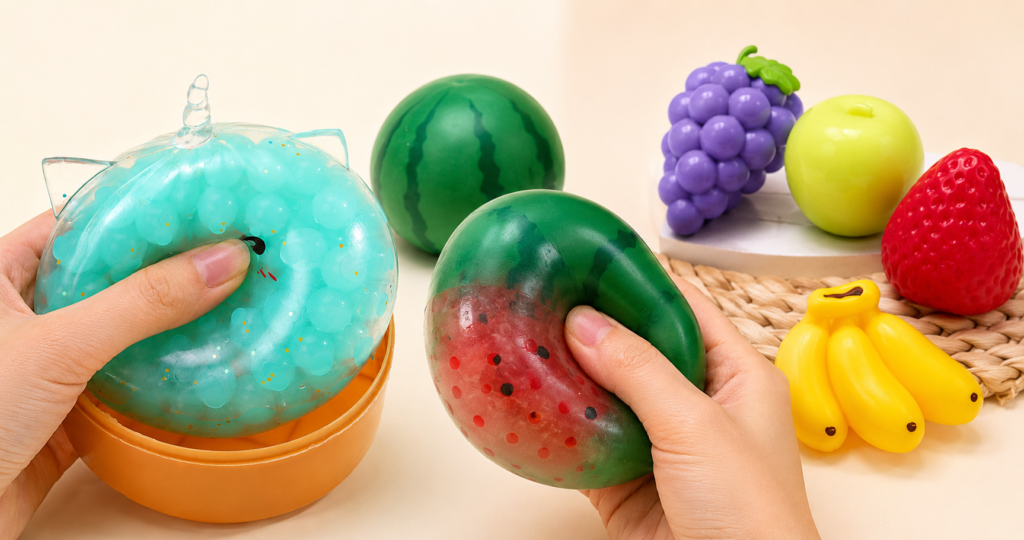
Think about a squishy that visibly changes shape when squeezed, a fidget toy with an obvious spinning motion, or a stretch toy that creates a dramatic before-and-after effect. None of those products needs a long explanation. The action itself communicates much of the play value.
That quality could be described as camera appeal: how clearly a product’s core experience translates through a screen.
Camera appeal does not mean making every toy louder, brighter or more complicated. In many cases, the opposite is true. A simple interaction that reads clearly on video may be more effective than a feature that requires a minute of explanation.
The Five-Second Test
There is a practical way buyers can think about this during sample review.
Take out a phone and record the product for five seconds. No voice-over, no music and no explanation. Then ask whether someone seeing the clip for the first time could understand what is happening and why it might be fun.
A product that needs more explanation is not necessarily a weaker product. But in a video-led toy discovery environment, it may require more marketing support to communicate its value.
Products with an immediate squeeze, spin, stretch, reveal or transformation have an advantage here: the demonstration is built into the product.
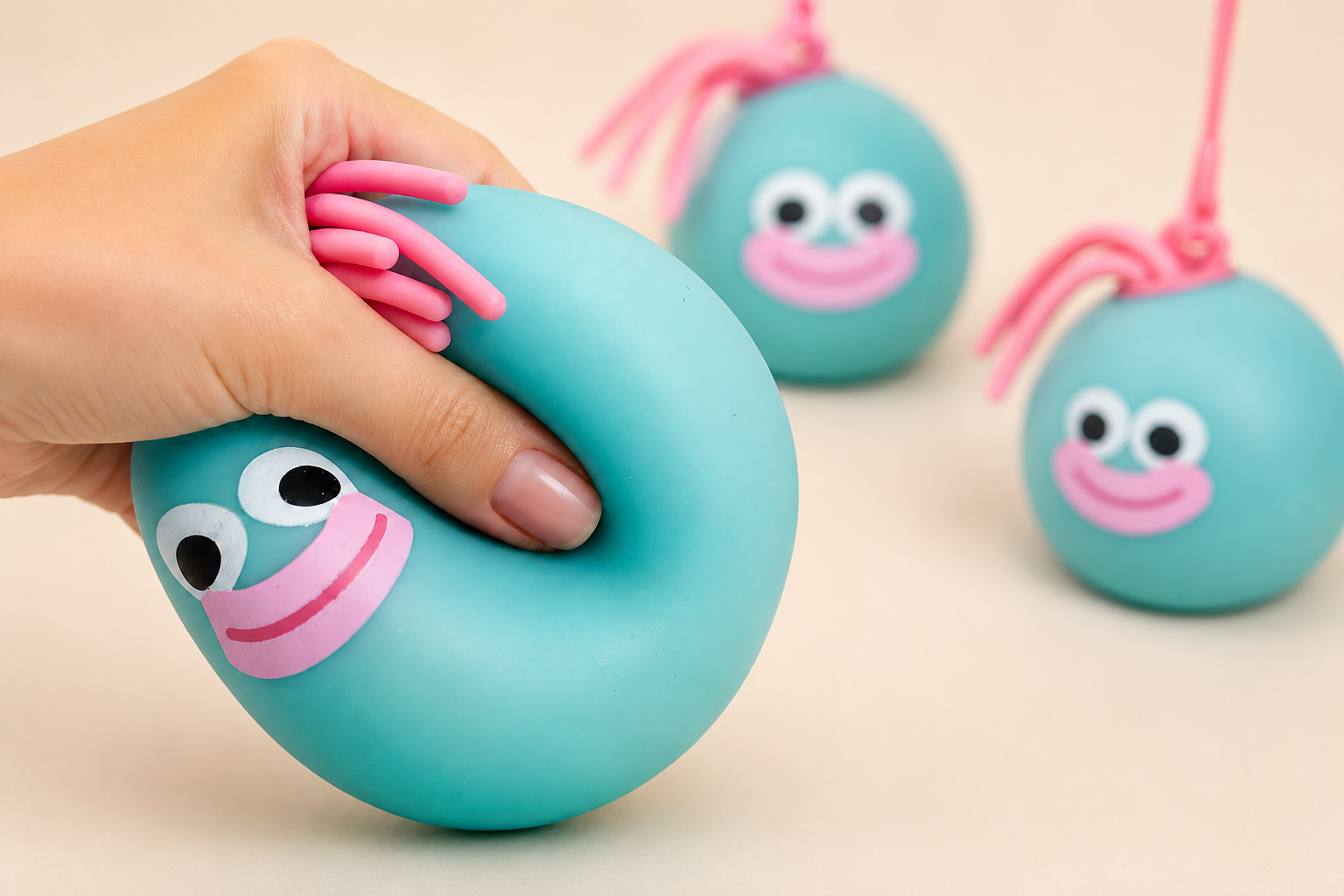
That makes demo value worth considering alongside more familiar evaluation points such as design, material, size, hand feel, durability and packaging.
Gen Alpha Is Not Always Watching Alone
There is another reason clear product communication matters: kids are not necessarily the only people seeing the content.
The same 2026 research found that more than half of U.S. parents co-view YouTube with their children. The study also examined ad recall, shared toy interests and the influence kids have on family purchase decisions.
That creates an interesting dual audience.
A child may be thinking, “That looks fun.” A parent may be trying to figure out what the product actually is.
Good product presentation has to work for both. The play pattern should be easy to recognize, while the product itself needs to be clear enough for the person who may ultimately make the purchase.
For buyers, that is a more useful way to think about video than simply asking whether a product could “go viral.”
Packaging Has a New Job: Help Shoppers Recognize the Product Again
Video can also change what packaging needs to accomplish.
If a child first sees a toy in a creator video and encounters it again days later on a retail shelf or product page, something needs to make that connection.
It might be a distinctive color combination, an unusual shape, a recognizable character or the visual effect that made the product memorable in the first place.
Packaging that hides the strongest visual feature can make that recognition harder. For some private-label products, this may influence decisions around window packaging, product visibility, color hierarchy and which feature receives the most attention on the front panel.
The goal is not to cram more information onto the package. It is to make the transition from screen to shelf feel familiar.
Toy Discovery Is Starting to Influence Product Development
Traditionally, product development and promotion have been treated as separate stages: make the toy first, then decide how to market it.
That line is becoming less clear.
If consumers increasingly encounter products through video, buyers can start asking camera-related questions during development. Is the main interaction visually obvious? Does the product have a recognizable feature? Can its most interesting moment be demonstrated quickly?
Those questions do not replace safety, quality, cost or material requirements. They simply add another commercial consideration.
This also connects with our recent discussion of Fidget Toys in 2026. Tactile products still need to feel good in the hand, something a catalog image cannot communicate. But before a shopper ever touches one, the product may first need to earn attention on a screen.
From Screen to Shelf
Physical retail is not disappearing, and video cannot replace the experience of actually holding a toy. What has changed is the path consumers may take before reaching the shelf.
A toy can appear in a creator video, stay in a child’s memory and show up again later on an ecommerce page, in a toy store or at a gift shop.
For buyers, that makes toy discovery a product question as much as a media question.
Shelf appeal asks whether a product can make someone stop and look.
Camera appeal asks whether the product can make someone understand why it is interesting.
For Gen Alpha, those two moments are becoming increasingly connected.