Sensory is one of those toy categories that looks simpler on a spreadsheet than it does on a sample table.
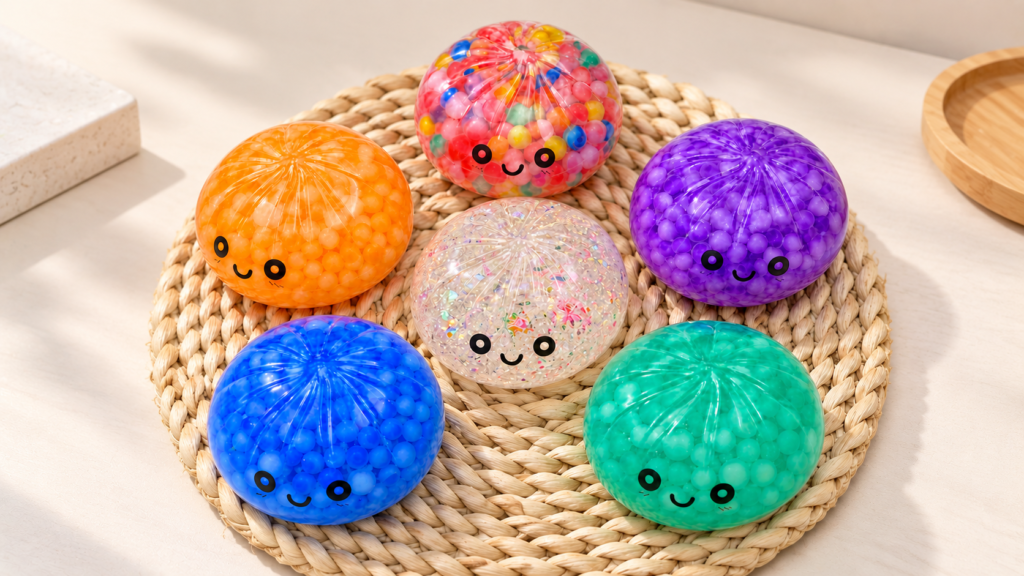
A buyer might have a slow-rise dumpling, a bead-filled squeeze toy, and a small spinning fidget listed under the same category. That makes sense for merchandising. It says very little about how those products actually play.
One takes several seconds to recover after a squeeze. Another is interesting because the filling shifts under pressure. The third is all about repetition: press, spin, reset.
That difference is worth paying attention to as sensory toy trends 2026 move beyond squishies and into a wider mix of tactile products. For retailers, the opportunity is not simply to carry more items labeled “sensory.” It is to build an assortment where the products actually feel different from one another.
Table of Contents
Sensory Toy Trends 2026 Are Moving Beyond the Squishy Shelf
Squishies are still an obvious part of the category, but they no longer tell the whole story. Stretchy toys, filled squeeze products, textured designs, and mechanical fidgets can all sit comfortably within a sensory assortment, even though the play experience is quite different.
That matters when buyers are comparing samples.
A shelf can look varied because it has six characters, four colors, and several food shapes. But if everything offers roughly the same squeeze-and-release action, the assortment may not feel nearly as varied once shoppers start picking things up.
This is one of the more useful ways to look at sensory toy trends 2026: separate visual variety from tactile variety.
The Sample Tells You More Than the Product Photo
Recovery time is easy to overlook in a catalog. Two squishies may photograph equally well, yet one can feel noticeably slower or denser once it is squeezed.
With a slow-rise squishy toy, that recovery is part of the product. PU foam compresses and gradually returns toward its original shape, so the speed and feel of the rebound affect the experience.
A bead-filled squeeze toy is different. Here, the movement inside the toy may be more noticeable than the rebound itself. With TPR products, formulation and construction can create still other interactions, from stretching and deformation to a quicker response after squeezing.
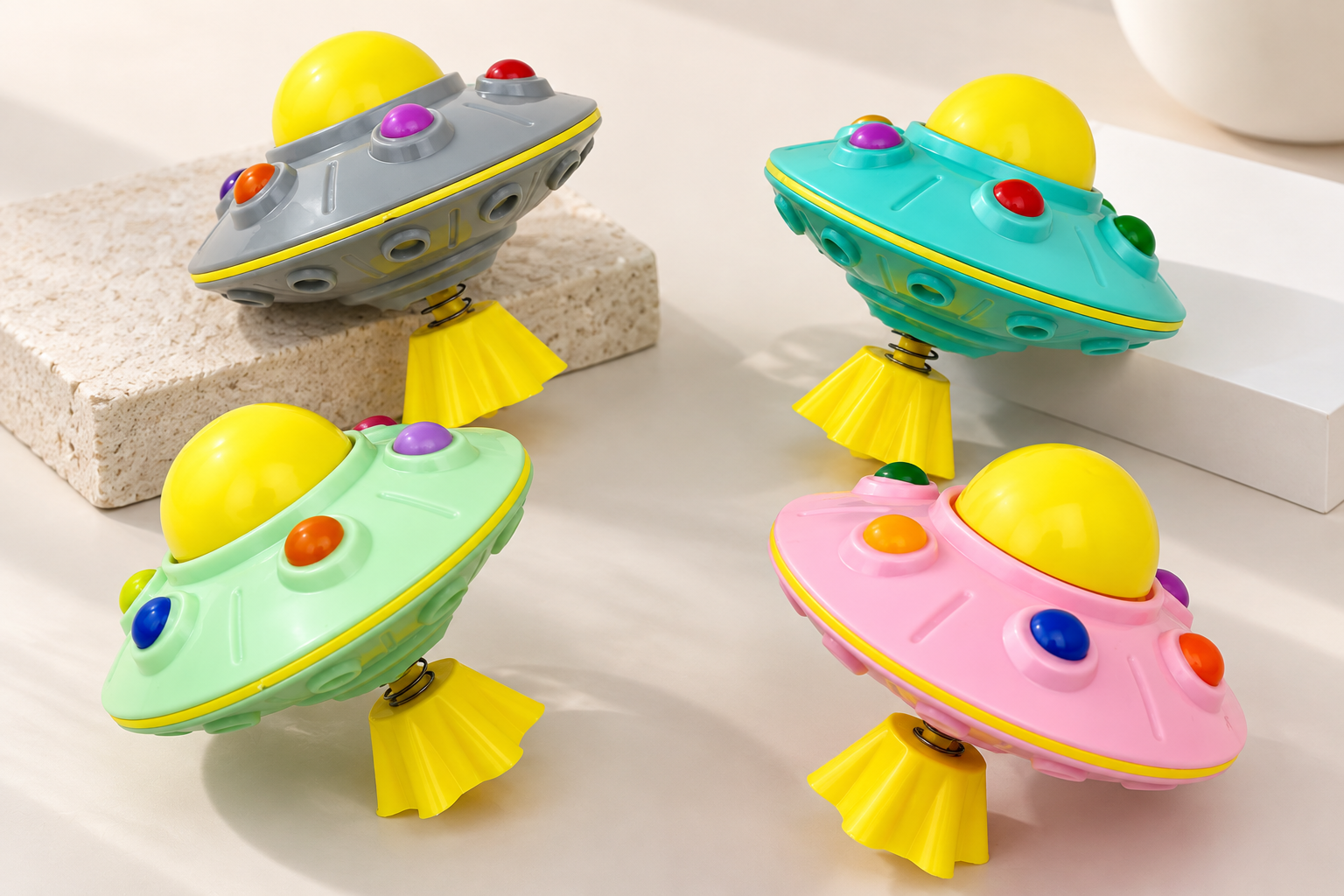
Mechanical fidgets take the category in another direction altogether. A press-to-spin toy is not interesting for the same reason a slow-rise squishy is interesting, even if both eventually end up in the same sensory or fidget display.
For a buyer, that is useful. It means assortment variety can come from the way products behave, not only from adding another shape.
Why Tactile, Hands-On Play Fits 2026
The broader toy industry is giving physical play more attention this year.
The Toy Association included Cozy Culture among its major 2026 toy and play trends, highlighting tactile materials, gentle interactivity, and low-tech or no-tech play.
Spielwarenmesse’s Creative Mindfulness trend comes at the subject from a different angle. It is broader than sensory toys and includes creative activities, but its emphasis on tangible materials and hands-on experiences points in a similar direction.
Neither trend means that anything soft, squeezable, or screen-free will sell. Retail still comes down to the product.
What they do show is that sensory toy trends 2026 fit into a wider interest in toys that give people something physical to do: squeeze, stretch, manipulate, make, press, or spin.
A Good Sensory Toy Still Has to Earn the First Touch
This is where sensory toys have an unusual retail problem. Their strongest feature may be how they feel, but shoppers cannot discover that until they pick them up.
Something has to earn that first touch.
Food shapes are a good example. A dumpling, butter block, or other familiar object can communicate the joke or concept from several feet away. Faces, unusual proportions, seasonal themes, and packaging can do the same job.
After that, the tactile experience has to deliver.
This is especially important when evaluating sensory toy trends 2026 for impulse retail. A product may have a satisfying interaction, but if shoppers cannot understand the idea quickly, that interaction never gets a chance to do its job.
What Works Depends on Where the Toy Is Sold
A specialty toy store can support a fairly broad sensory assortment. Shoppers have more time to handle products and compare a slow-rise squishy with a stretchy toy, a filled squeeze product, or a mechanical fidget.
Gift and novelty stores work a little differently. Humor, desk appeal, unusual shapes, and packaging may carry more weight because the product is often bought as a small gift or impulse purchase.
Checkout is less forgiving. The idea and interaction need to be obvious quickly.
Online, the challenge changes again. A shopper cannot squeeze anything through a screen, so photography only gets the product part of the way there. A short demonstration showing the recovery, filling movement, stretch, or spinning action can explain something a still image cannot.
For buyers following sensory toy trends 2026, retail setting is therefore just as important as the product category itself.
Before Adding Another SKU, Put the Samples Together
There is a simple exercise buyers can use when reviewing a sensory line: ignore the packaging for a minute.
Squeeze a few products. Stretch the ones designed to stretch. Press the fidgets. Spin the mechanical ones.
If six sensory SKUs feel almost identical in the hand, the assortment may offer visual variety without offering much sensory variety.
That does not make color or character variations unnecessary. They can be useful for collecting, seasonal programs, and merchandising. The point is simply that they are one kind of variety.
This becomes even more useful in private-label development. If a retailer already carries several slow-rise products, the next project does not automatically need to be another slow-rise character. A filled construction or a simple mechanical interaction might add more to the line.
The same question can be asked before choosing a mold: what is missing from the assortment right now?
That is ultimately where sensory toy trends 2026 become useful for retail buyers. The trend is bigger than adding more squishies. It is an opportunity to build a tactile assortment in which different products give shoppers different reasons to pick them up—and different reasons to come back for another one.
Fidget Toys in 2026: What Retail Buyers Should Look For
Squishy Toy Retail Trends: How the Category Is Changing in 2026
Global Toy Market Trends 2026: Why One Assortment No Longer Fits Every Market
Developing a Sensory or Fidget Toy Line?
Vilora Toys supports OEM and ODM development for squishy, fidget, and novelty toys, from product customization and sampling to packaging and private-label programs.