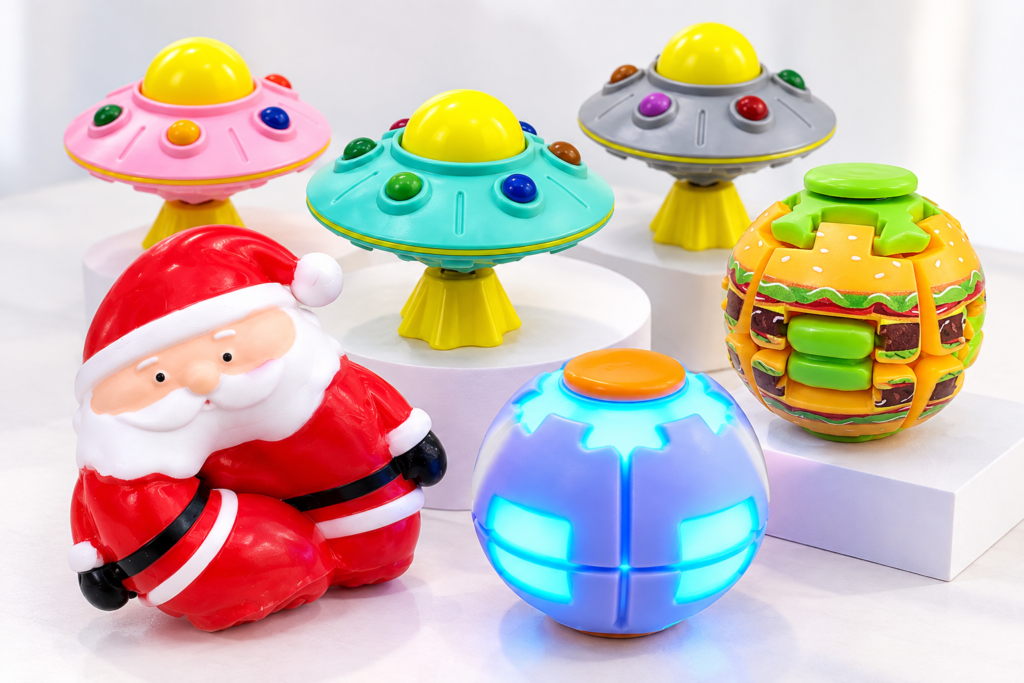
Open a wholesale fidget catalog and the products can look wildly different.
There may be a spinner, a small keyboard, a squeeze toy, a rotating desk toy and something covered in buttons. Different colors, different shapes, different packaging.
But put the samples in your hands and another question becomes more useful:
How many different things are your fingers actually doing?
For buyers comparing wholesale fidget toys, that question can reveal overlap that product photos do not. Two toys may look nothing alike and still depend on nearly the same repetitive motion.
A stronger assortment gives shoppers more than visual choice. It gives their hands different reasons to pick up the next product.
Table of Contents
Wholesale Fidget Toys Are Easier to Compare by Movement
Category names only go so far.
“Fidget toy” now covers products built around pressing, spinning, squeezing, twisting, sliding, clicking and combinations of several movements. Current wholesale marketplaces reflect that range, with everything from keyboard-style keychains and squeeze toys to magnetic sliders and geometric fidgets appearing under the same broad category.
For a buyer, the easiest place to start is often the sample table.
Take a spinner and use it.
Then a push-button toy.
Then a squeeze product.
The differences become obvious much faster than they do in a spreadsheet. One relies on continuous rotation. Another gives a short press-and-release response. A squeeze toy involves the whole hand, while a smaller clicker may be used mostly with a thumb or fingertip.
That does not make one mechanism better than another.
It tells you whether the assortment is actually offering different interactions.
Look for Overlap Before Adding Another SKU
This becomes especially useful when several wholesale fidget toys are competing for the same order.
Imagine a buyer has selected eight products. Three have different characters, two use completely different packaging and another is marketed as a desk toy.
On paper, the mix looks broad.
Now ignore the artwork and use each one for ten seconds.
If five products all come down to repeatedly pressing a similar button, the assortment may have more visual variety than mechanical variety.
The opposite can happen too. Two products may share a similar theme but earn separate places because one spins while the other squeezes.
This is where samples become more valuable than category labels.
For a first order, buyers do not need every mechanism they can find. But there should be enough contrast that adding another SKU changes something besides the artwork.
Some Mechanisms Need More Explanation Than Others
Not every fidget communicates itself at the same speed.
A squeeze toy usually makes sense immediately. Pick it up and the interaction is obvious.
A spinner is familiar enough that many shoppers will understand it just as quickly.
Other products may need a little more help. A rotating mechanism might require a first push in the right place. A multi-function fidget may have several controls that are not obvious through clear packaging. Some desk toys make far more sense once they are demonstrated.
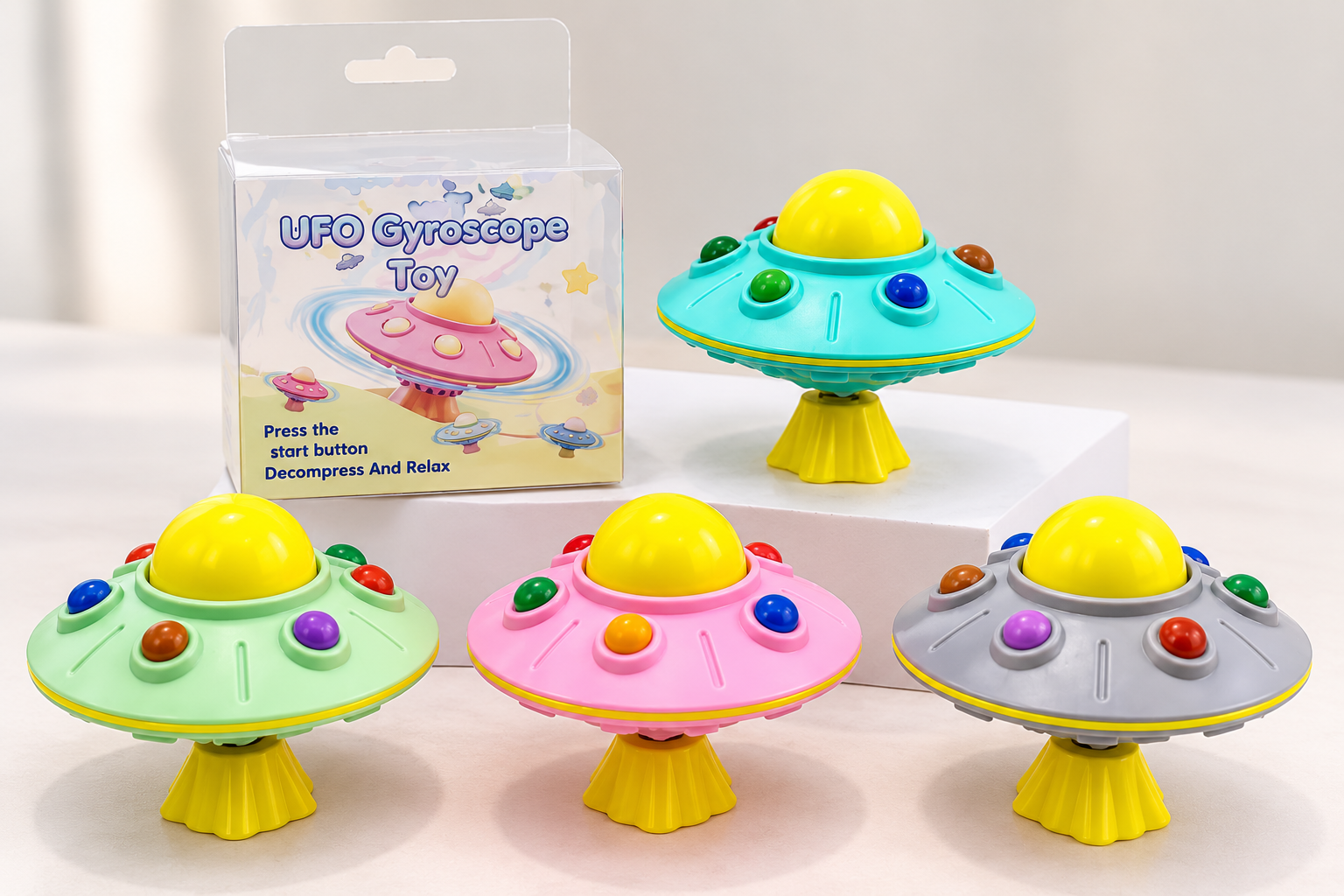
That difference matters when selecting wholesale fidget toys for physical retail.
A product that needs explanation is not necessarily a weak product. It may simply need a different presentation.
For an open display or demonstration area, that may be fine. Inside sealed packaging on a peg, the same product has less opportunity to explain itself.
Before ordering, ask someone unfamiliar with the sample to pick it up.
Do they know what to do?
That small test can tell you quite a bit about how easily the product will communicate from the shelf.
Mechanism Also Changes What Buyers Should Inspect
Different movements create different points of wear.
With a spinner or rotating toy, buyers may want to pay attention to how smoothly the moving parts operate after repeated use. Buttons and click mechanisms should feel consistent across samples. A squeeze product raises different questions around seams, recovery and how the material behaves after repeated compression.
This is one reason wholesale fidget toys should not all be evaluated with the same sample checklist.
A product can look excellent out of the carton and still reveal weaknesses only after it has been used repeatedly.
Try the mechanism more than once. Hand the sample to someone else. Compare multiple pieces from the same SKU when possible.
The goal is not to create an elaborate laboratory test at the buying table. It is simply to inspect the part of the product shoppers will use most.
That is usually where consistency matters first.
Build the Order Around Differences You Can Feel
Once buyers begin comparing mechanisms, the assortment becomes easier to edit.
Maybe the order already has a strong squeeze product. Another squeeze toy can still earn a place because of price, size or presentation—but it should not be added simply because the character is different.
The next product might contribute more by introducing rotation, clicking or another kind of hand movement.
This approach also makes the first order more useful. Instead of buying deeply into several products that behave almost the same way, a retailer can test a few noticeably different interactions and see which ones customers actually respond to.
The reorder can then become more specific.
Go deeper on the products that move. Replace the ones that do not. If one interaction performs particularly well, test another product that uses the same basic movement without simply duplicating the original SKU.
That gives the assortment room to evolve based on what happens in the store rather than what looked most interesting in a catalog.
When sourcing wholesale fidget toys, the goal is not to collect every mechanism available.
It is to make sure the assortment does not accidentally offer the same experience again and again.
Different colors help a display.
Different characters can make a line more fun.
Different ways to interact are what give the assortment another dimension.
Read More
• Fidget Toys in 2026: What Retail Buyers Should Look For
• Fidget Toy Retail Trends: What Buyers Should Watch in 2026
• Sensory Toy Trends 2026: What Retail Buyers Should Know Beyond Squishies