
A spinning toy can look perfectly symmetrical inside its retail packaging yet wobble, lose momentum unexpectedly, or perform differently from one unit to another. For wholesale buyers ordering thousands of units, these inconsistencies can lead to customer complaints, product returns, and difficult supplier discussions.
Desktop gyroscope toy balance testing helps procurement teams evaluate rotational performance before approving bulk production. Rather than relying on appearance or a single demonstration, buyers can compare production samples against an approved reference and establish practical acceptance criteria.
The objective is not to make every toy spin for exactly the same number of seconds. It is to identify meaningful performance differences before those products reach retail shelves.
Table of Contents
Understand How Mass Distribution Affects Spin Stability
A spinning toy’s performance depends on several interacting factors, including weight distribution, rotational alignment, friction, and assembly consistency.
During desktop gyroscope toy balance testing, quality teams should examine the components most likely to influence rotational behavior.
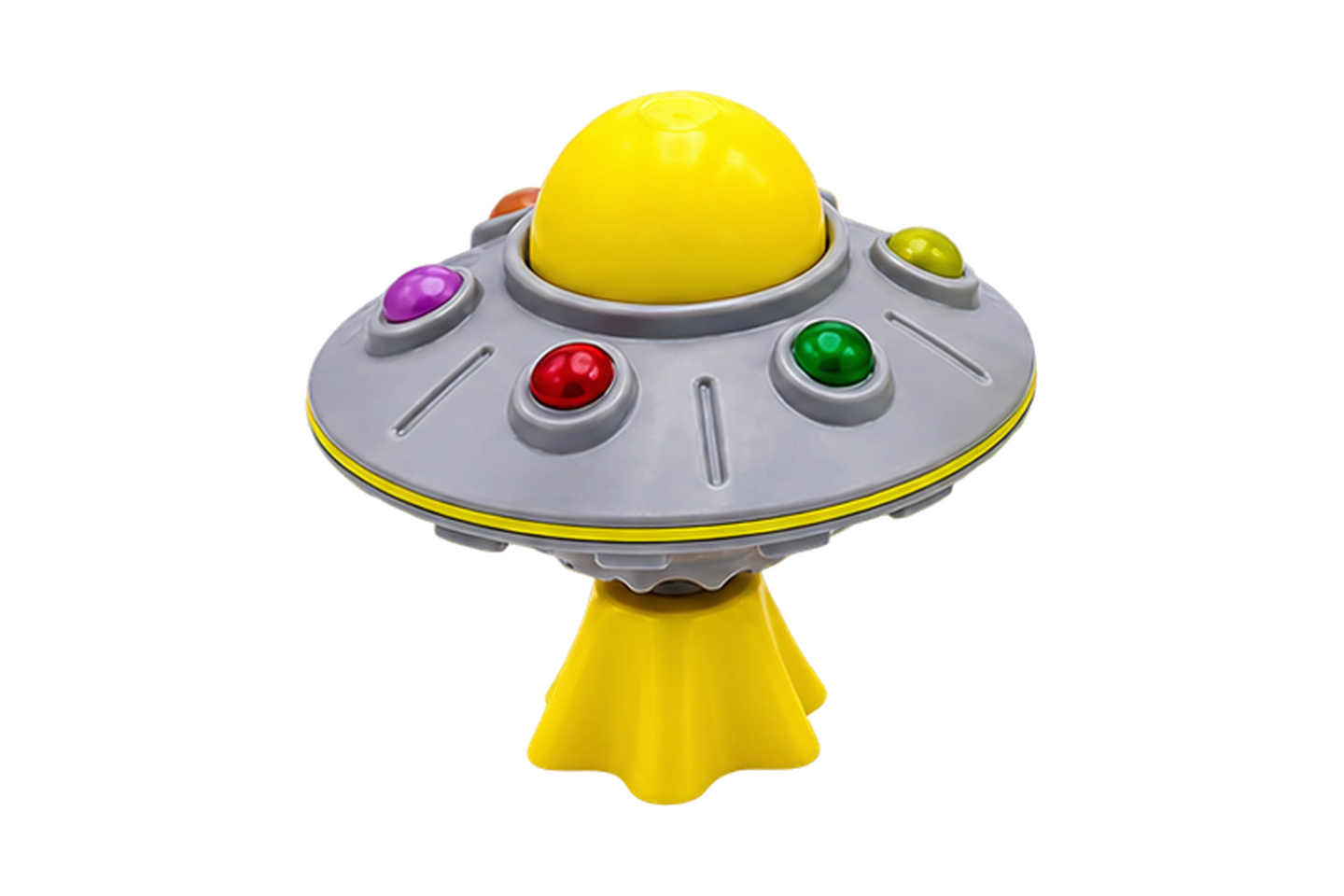
- Molded Body Consistency: Plastic-bodied spinning toys, such as Vilora Toys’ UFO Gyroscope Spinning Toy, benefit from consistent molding and assembly. Uneven material distribution may contribute to imbalance, although uniform wall thickness alone does not guarantee smooth rotation.
- Pivot and Axle Alignment: Inspect the intended rotational axis against the approved design. Different spinning mechanisms require different geometries, so alignment criteria should reflect the actual product.
- Decorative Component Placement: Center caps, decorative inserts, and assembled housing components can affect mass distribution if they are positioned inconsistently.
- Friction and Contact Points: Changes in pivot surfaces, bearings, or moving-part clearances may shorten spin duration even when the external body appears symmetrical.
These factors should be evaluated against a physical reference sample rather than judged only from CAD drawings or product photographs.
Establishing the expected construction and movement provides a useful foundation for desktop gyroscope toy balance testing throughout production.
Conduct Repeatable Spin and Wobble Evaluations
A single successful spin does not demonstrate that an entire production batch performs consistently. Launch force, tabletop texture, and even small differences in assembly can influence the result.
For reliable desktop gyroscope toy balance testing, buyers should establish a repeatable procedure before evaluating pre-production or shipment samples.
- Standardized Test Surface: Use the same clean, level surface for each comparison. Avoid switching between textured wood, soft mats, and polished surfaces because differences in friction can affect results.
- Consistent Launch Method: Follow the same starting procedure for every sample. If the toy uses an integrated spinning mechanism, operate it according to the approved instructions.
- Spin-Duration Comparison: Record how long each unit maintains its intended rotational movement and compare the results with an approved golden sample.
- Wobble and Noise Observation: Watch for excessive vibration, irregular movement, unusual contact noise, or premature stopping.
- Repeated Trials: Test each selected unit more than once when practical, helping distinguish inconsistent launching from recurring mechanical problems.
A useful inspection record includes the product SKU, sample identification, test surface, launch method, observed spin duration, visible defects, and final disposition.
The number of units inspected should follow an agreed sampling plan appropriate to the order and inspection objective. Testing a handful of samples can provide useful development feedback, but it does not automatically establish statistical confidence for an entire shipment.
Documenting these observations turns desktop gyroscope toy balance testing into a repeatable quality-control process rather than a subjective product demonstration.
Investigate Wobble, Assembly Defects, and Handling Durability
When production samples perform differently from the approved reference, buyers should ask suppliers to investigate the underlying cause before accepting the batch.
An effective desktop gyroscope toy balance testing review considers both rotational behavior and the condition of assembled components.
Common inspection concerns include:
- Off-Center Components: Misaligned inserts, rotating parts, or decorative elements may introduce imbalance.
- Loose Housing Connections: Poorly seated snap-fit joints can allow components to shift during operation.
- Excessive Mechanical Friction: Contact between moving parts may reduce spin duration or produce abnormal noise.
- Post-Handling Performance: If handling durability is part of the agreed inspection, recheck rotational behavior after the specified handling procedure.
Any internal drop or impact screening should document the height, orientation, impact surface, and sample quantity. Such checks must not be described as ASTM compliance testing unless the applicable standardized method has actually been followed.
For children’s toys, buyers must also consider age grading, small parts, and other applicable safety requirements. The CPSC Small Parts Guidance provides relevant regulatory information.
Functional performance inspection does not replace required laboratory testing or certification.
Recording the defect, suspected cause, corrective action, and retest result helps make desktop gyroscope toy balance testing more useful for supplier quality management.
Establish Batch Acceptance and Protective Packaging Requirements
A successful prototype demonstration is only the beginning. Wholesale buyers also need confidence that production units will perform consistently after assembly, packing, and transportation.
Before shipment, desktop gyroscope toy balance testing should be tied to documented acceptance criteria agreed upon by the buyer and supplier.
These may include allowable differences from the golden sample, unacceptable wobble, loose-component defects, and the procedure for handling failed inspection units.
For lot-level quality decisions, procurement teams can refer to NIST’s Acceptance Sampling guidance when considering how sampling plans support acceptance decisions. The actual sampling method and acceptance limits should be established for the specific product and order.
Packaging deserves equal attention. Retail boxes, inner trays, and master cartons should protect the spinning mechanism from avoidable pressure, displacement, or damage during transportation.
Where a product includes a sensitive pivot or rotating assembly, packaging should be checked against the approved sample configuration.
For importers and distributors, consistent desktop gyroscope toy balance testing provides a practical way to communicate performance expectations, investigate production differences, and reduce preventable quality disputes.
Explore our fidget toys collection to review available styles, or contact Vilora Toys with your target quantities, destination market, and product requirements.
Read More