
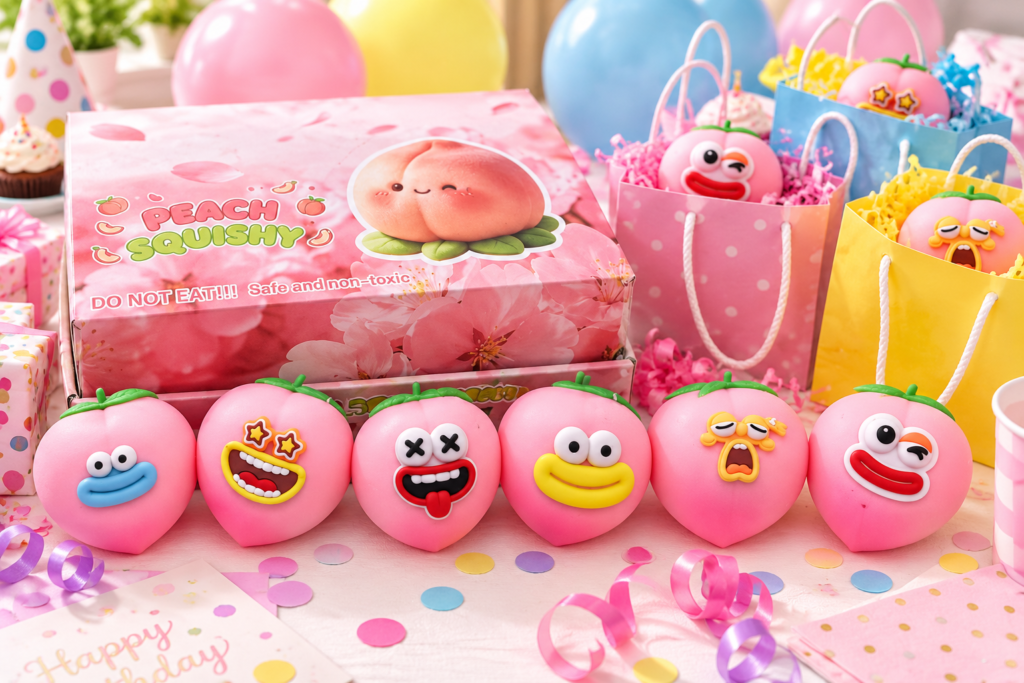
A party planner needs favors for 150 children. The supplier offers a colorful assortment of squishy toys, but there’s a problem: some are individually boxed, others come loose, and the quantities don’t divide evenly into 150 bags.
Suddenly, choosing cute toys isn’t the difficult part.
For businesses purchasing bulk party favor toys, the real challenge is making sure every guest receives the intended items without creating unnecessary leftovers or discovering during assembly that the toys don’t fit the bags.
A good buying plan starts with the guest list, not the supplier catalog.
Table of Contents
Start With the Number of Finished Favor Bags
Before comparing toys, decide exactly what goes into each finished favor.
Will every guest receive one toy? Two smaller toys? Will different age groups receive different bags?
An event with 150 guests and two toys per bag requires 300 pieces before any extras are added. If the buyer decides to keep a 10% buffer for unexpected guests, damaged packaging, or last-minute changes, the planning quantity becomes 330 pieces.
That doesn’t necessarily mean the purchase order will be exactly 330 pieces.
Supplier pack quantities matter too. If a selected product is packed 144 pieces per master carton and full cartons are required, two cartons provide only 288 pieces. Three provide 432. The buyer then has to decide whether to accept the extra inventory, change the product mix, or use the remaining units for another event.
That’s why buyers sourcing bulk party favor toys should distinguish between:
- Pieces needed per favor bag
- Total pieces needed for the guest count
- Pieces per inner pack or master carton
- Extra inventory remaining after the event
The goal isn’t simply to add a percentage to the guest count. It’s to make the event quantity work with the way the products are actually supplied.
Choose Toys for the Actual Age Group
A colorful product may look perfect for a birthday party, but appearance alone doesn’t determine whether it’s appropriate for the children attending.
Small components, detachable accessories, and certain product constructions require particular attention, especially when younger children are involved.
The U.S. Consumer Product Safety Commission’s small-parts guidance explains federal requirements concerning small parts in toys and other products intended for young children.
For bulk party favor toys, buyers should request product-specific age information and applicable compliance documentation rather than assuming every squishy, fidget, or novelty toy is suitable for every party.
Mixed-age events deserve additional attention. A product selected for an older child may still end up in the hands of a younger sibling.
Our guide to choosing squishy toys provides additional points wholesale buyers can consider when comparing product materials, dimensions, and packaging.
Buyers should evaluate the actual SKU, its intended age group, and the supporting product information rather than relying on a catalog description alone.
Make Sure the Toy Fits the Favor Bag
Packaging is easy to overlook when products are being compared on a screen.
A squishy may be relatively compact, but its individual retail box can take up considerably more space. That becomes a problem when hundreds of favor bags have already been ordered.
Before placing an order, compare three dimensions: the toy itself, its individual packaging, and the bag that will hold it.
An individually boxed product may work well when handed out on its own. Inside a preassembled goodie bag, a more compact packaging format may be easier to manage.
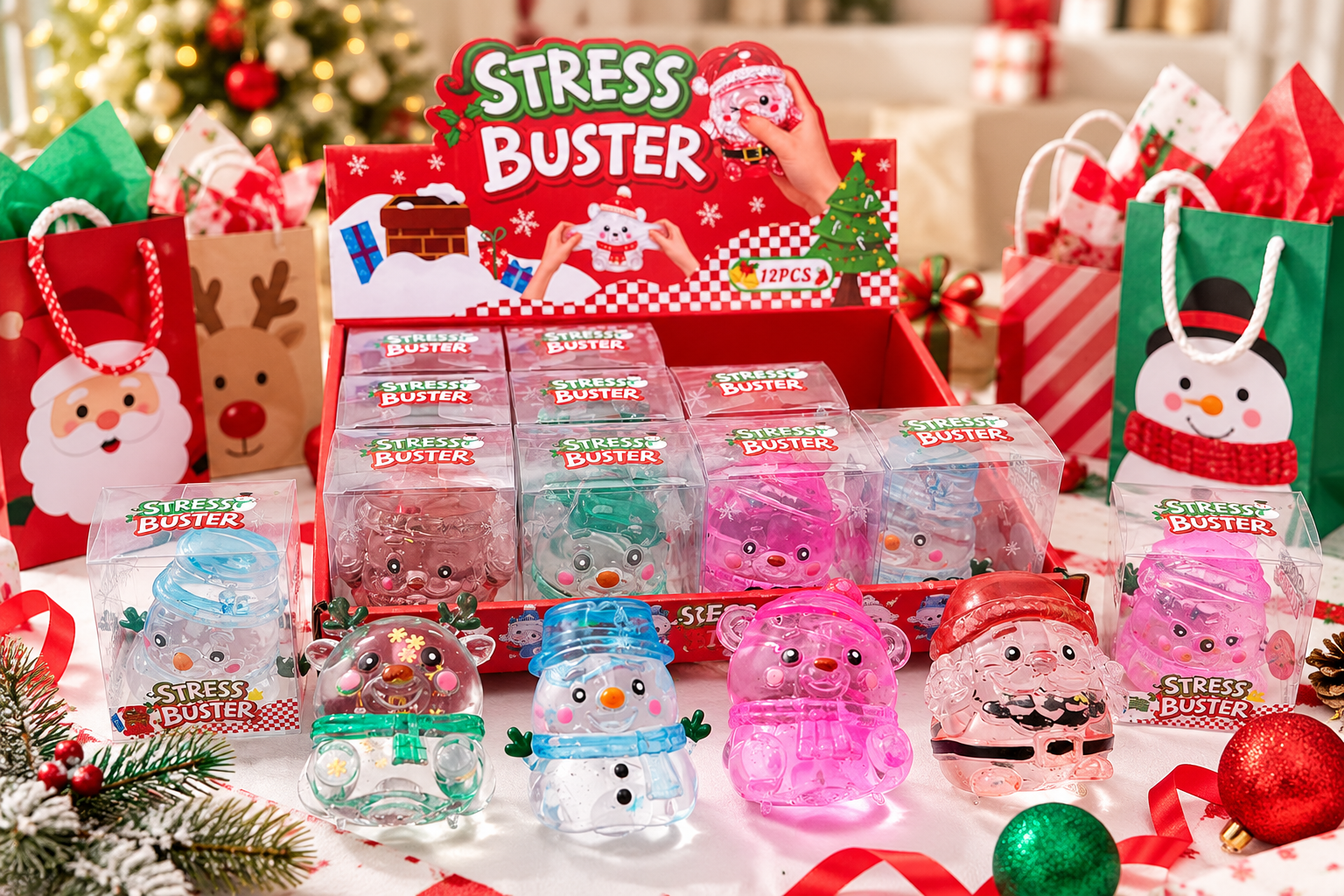
Buyers exploring bulk party favor toys can compare different formats in our Squishy Toys collection and then confirm the packaging configuration for the specific SKU they are considering.
Also think about everything else going into the bag. Stickers, candy, stationery, activity cards, or products from other suppliers all compete for the same space.
Before approving a larger purchase, assemble one complete sample bag with the actual products whenever possible. A bag that technically holds everything may still be awkward to pack, close, or distribute.
Match the Theme Without Creating a Complicated Mix
Party favors don’t have to match every decoration, but they should make sense within the event.
Animal-shaped squishies might work with an animal-themed birthday, while food-shaped toys can complement a dessert or cooking theme. For events without a specific theme, a coordinated color assortment may be enough.
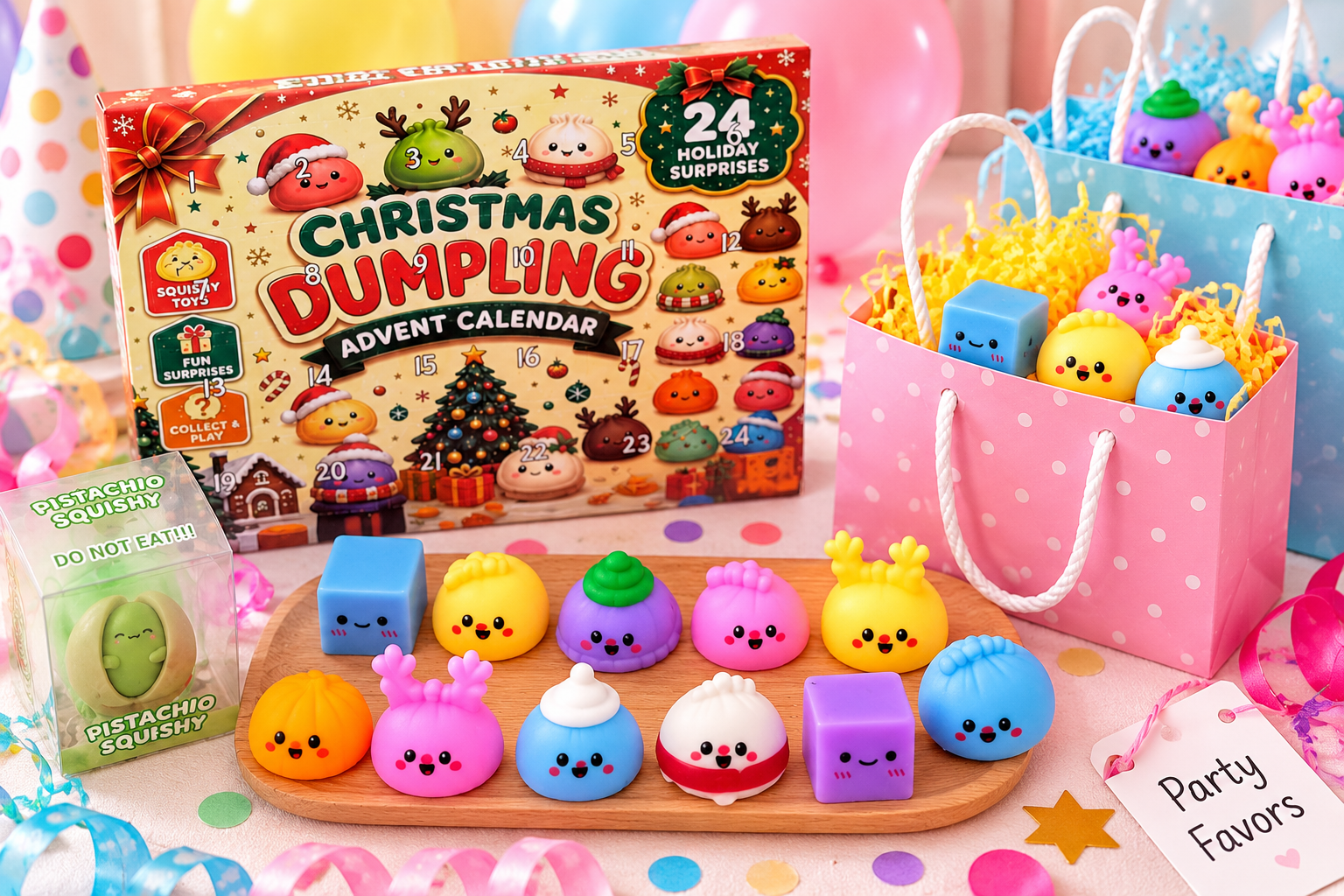
More designs don’t automatically create a better favor.
If every guest receives one toy, a large number of variations can make distribution more complicated. Buyers should decide before ordering whether they want identical products, assorted colors, or a controlled mix of several designs.
For bulk party favor toys, that distinction should be included in the purchasing request.
For example, “300 assorted squishies” leaves more room for interpretation than “100 pieces each of three selected designs.” Depending on the product, available assortment and packing configurations may differ, so those details should be confirmed before the order is finalized.
Our Novelty Toys collection is another useful starting point for comparing shapes and interactive product formats.
A simpler assortment can also make leftover inventory easier to reuse for another party rather than leaving small quantities of many unrelated designs.
Calculate the Cost Per Finished Favor
Unit price is important, but it doesn’t tell buyers what one completed favor actually costs.
The final calculation can include the toy, individual packaging, favor bag, other inserts, freight, and the labor required to assemble the sets.
Imagine two options. One is a lower-priced loose toy that requires sorting and additional packing. The other costs slightly more per piece but arrives in a format that fits directly into the planned favor.
The cheaper toy isn’t automatically the cheaper finished favor.
When comparing bulk party favor toys, buyers should calculate the cost per completed bag and consider what happens to any unused inventory.
Before requesting a quotation, prepare a short purchasing brief with the guest count, number of toys per bag, intended age group, preferred designs, packaging requirements, delivery location, and required in-hand date.
Then ask the supplier to confirm available pack quantities and the product information needed for that specific SKU.
The goal isn’t to fill a bag with as many inexpensive toys as possible.
It’s to create a favor that fits the event, works for the intended guests, and can be purchased and packed without turning a simple giveaway into an inventory problem.
Read More