

A community center might host a children’s activity in the morning, a youth drop-in program after school, and a family event on Saturday. The same building serves different groups, but purchasing may still run through one budget or one recreation department.
That can make ordering more complicated than it first appears.
For teams sourcing community center activity supplies bulk, the goal isn’t simply to find inexpensive products. Buyers need to think about who will use them, where they’ll be stored, how they’ll be distributed, and whether the same items can realistically support more than one program.
A useful purchasing plan begins with the programs, not the catalog.
Table of Contents
Start With the Program, Not the Product List
Community centers rarely operate like a single classroom. Some activities have registered participants and predictable attendance, while others are open programs where numbers change from week to week.
The City of Jacksonville’s community center programming initiative shows how broad that programming can be, including youth, arts, education, wellness, and other community activities.
That variety matters when purchasing.
A product intended for a supervised weekly activity has a different job from an item handed out at a one-day family event. One may stay in the building and be used repeatedly; the other may leave with the participant.
Before requesting community center activity supplies bulk pricing, identify the program, expected participants, approximate quantity, and whether products will be reused or distributed.
That information gives purchasing staff a much better starting point than a request for a general assortment of toys.
Think About Shared Rooms and Storage
Many community centers use the same rooms for several activities.
A table used for children’s programming in the afternoon might be needed for an adult activity that evening. Supplies have to be collected, stored, and brought out again without creating unnecessary work for staff.
This is where product size and packaging become practical purchasing considerations.
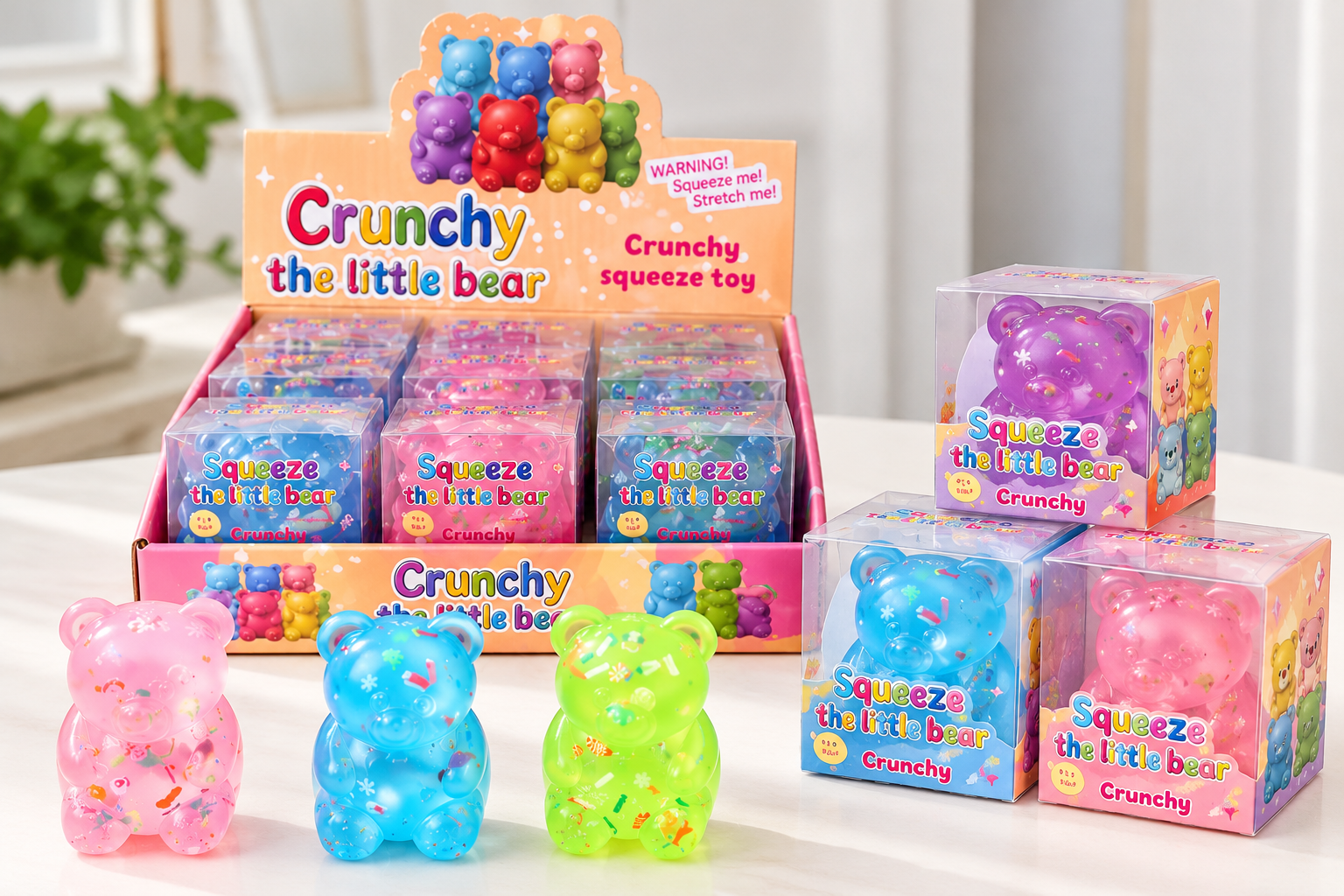
Small tactile toys, fidget items, or simple novelty products may be easier to organize when they can be separated into clearly labeled containers or inner packs. Larger mixed assortments may be less convenient if staff have to sort every shipment themselves.
The National Recreation and Park Association discusses the role outside vendors can play in helping recreation agencies provide varied programming.
When comparing community center activity supplies bulk, buyers should therefore consider more than the individual item. Storage space, internal distribution, packaging, and staff handling all affect whether an order works once it reaches the facility.
Buyers exploring handheld options can also review our Fidget Toys collection when comparing different product formats.
Match Products to the People Using Them
Community programming can involve preschool children, school-age participants, teenagers, adults, and older residents. A product that fits one group shouldn’t automatically be treated as appropriate for another.
For children’s programs, purchasing teams should check intended age grading, warnings, product dimensions, construction, and applicable compliance documentation.
The U.S. Consumer Product Safety Commission provides guidance on U.S. toy safety requirements, including requirements connected with ASTM F963 and children’s product certification.
Adult programming requires a different judgment. A product may be physically easy to handle but still feel too child-oriented for the activity.
That’s why community center activity supplies bulk purchasing works better when buyers create a few clearly defined product groups instead of looking for one assortment that is supposed to suit everyone.
Our Novelty Toys collection provides another starting point for comparing small products, but individual designs should still be reviewed for the specific program and participant group.
Plan Quantities Around Programs
A community center serving hundreds of people doesn’t necessarily need hundreds of every product.
Quantity should follow the way an item will actually be used.
A take-home item for a community event may require one unit per expected participant plus a reasonable buffer. A supervised table activity may need only enough products for the number of people participating at one time.
This distinction can prevent over-ordering.
When several programs share one purchase, keep their allocations separate even if the supplier ships everything together. Staff should know which cartons or inner packs belong to each program before the order arrives.
For community center activity supplies bulk orders covering several locations, buyers should also specify delivery destinations and determine whether each facility needs the same assortment.
Clear quantities make supplier quotations easier to compare and make internal budget tracking easier after the purchase.
Give Suppliers a Clear Purchasing Request
“Activity toys for our community center” doesn’t tell a supplier enough.
A useful request should identify the intended participant groups, products or product types, approximate quantities, packaging preferences, and any restrictions that matter to the organization.
If products will be divided between several programs, say so. If separate packing or carton identification would make receiving easier, ask whether that option is available rather than assuming it is standard.
Samples can also be useful when buyers need to evaluate size, surface feel, construction, packaging, or other characteristics that photographs don’t show well.
Our Squishy Toy Specification Sheet explains the type of product information buyers can organize before requesting a quotation.
For community center activity supplies bulk, the strongest purchase request isn’t necessarily the longest one. It’s the one that tells the supplier enough to quote the products the organization actually needs.
A community center may run many different programs under one roof. Purchasing works better when the order reflects those differences instead of treating the entire building as one activity.
Read More