

Do stress balls work? Research suggests they may help reduce anxiety during certain medical procedures, although the evidence has limitations. That does not establish the same benefit for everyday stress, every user, or every product sold as a stress ball.
Part of the confusion comes from the word “work.” Someone waiting for an appointment may want something pleasant to hold. Another person may expect lower blood pressure. A shopper dealing with persistent anxiety may be looking for treatment.
These are different expectations. Understanding which one a study actually tested makes its findings much more useful.
Table of Contents
The Setting Changes What a Study Can Tell You
To answer “Do stress balls work?”, start with the people involved and the situation they faced.
A 2026 systematic review and meta-analysis examined anxiety during conscious surgical interventions. Six studies met the criteria for the combined analysis. The authors reported a possible small benefit, but also identified limitations: few studies, small samples, wide confidence intervals, and differences in how the balls were used.
The practical takeaway is specific. Stress balls may offer some help in those procedural settings. The review does not demonstrate that a toy used during an ordinary workday produces an equivalent result.
An older student research article archived by the University of Wisconsin asked a different question. Thirty college-aged participants were divided into stress-ball and control groups following a timed stress task. Researchers found no statistically significant group differences in heart rate, blood pressure, or skin conductance.
This small student study deserves less weight than a substantial body of clinical evidence. It also does not prove that nobody enjoyed using the ball.
Read together, these sources show why “Do stress balls work?” needs a more precise follow-up: for whom, in what setting, and measured how?
| Before accepting a claim, check… | Why it matters |
|---|---|
| Who participated | Findings from patients undergoing a procedure may not apply to office workers |
| What was measured | Anxiety ratings and blood pressure describe different outcomes |
| What the comparison group did | Improvement over time alone does not establish an added benefit |
| How long participants were followed | A short-term result does not establish lasting change |
Enjoying the Activity Is a Separate Outcome
Do stress balls work if the goal is simply to have an enjoyable hand activity? A person may find that worthwhile without expecting a measurable health effect.
“I like squeezing this while I wait” is a reasonable description of someone’s experience. It does not need to become “this treats anxiety” to justify keeping the object nearby.
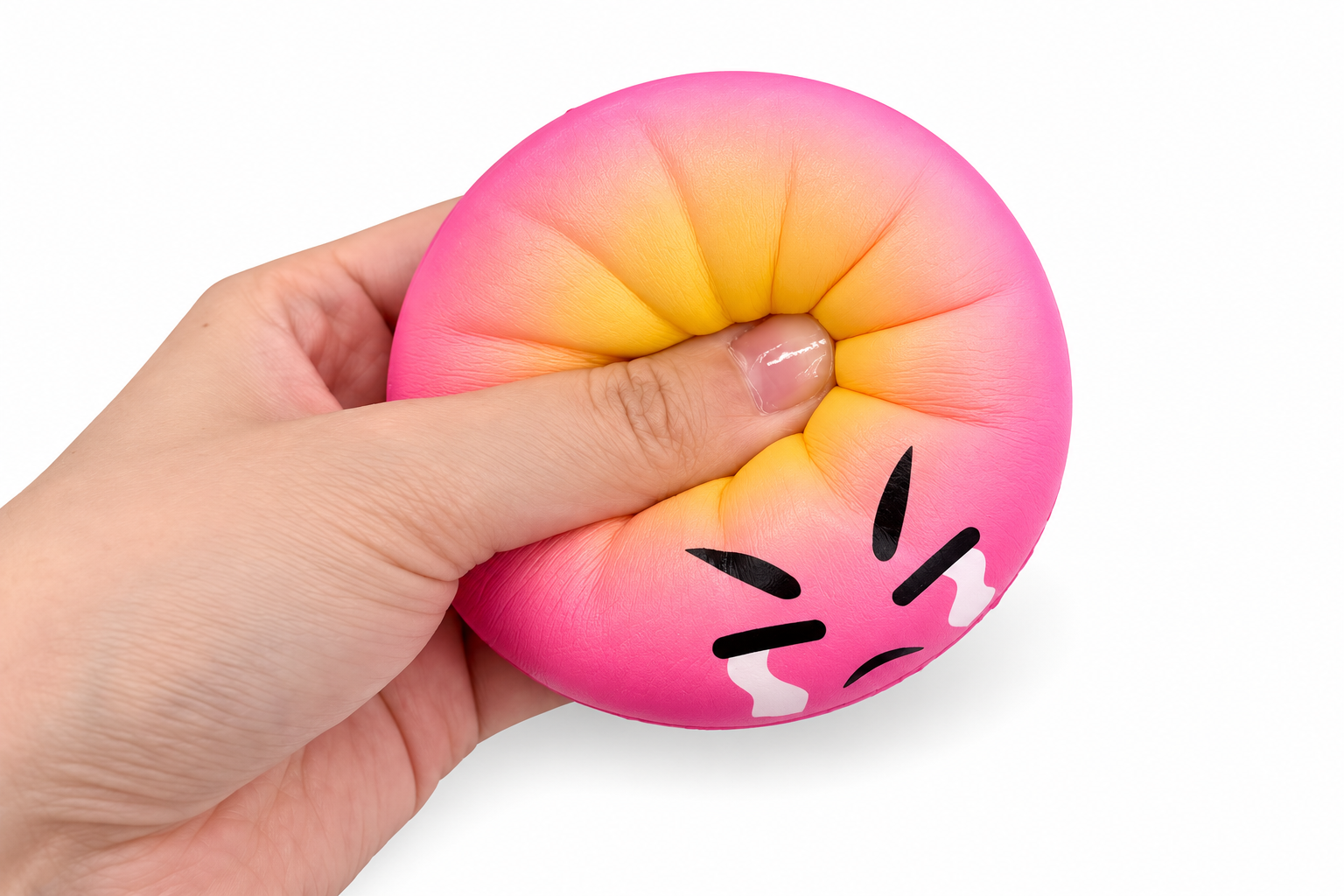
The distinction also leaves room for people who dislike the sensation. Someone else may prefer turning an object, drawing, or having nothing in their hands. A popular product is not automatically a comfortable choice for everyone.
When asking “Do stress balls work?” for personal use, describe the result plainly. Did you enjoy the activity? Did you choose to use the item again? Those observations can guide a purchase, but they cannot establish a medical benefit.
Our adult fidget selection guide explores movement preferences separately. Products in Vilora’s fidget toy collection offer different actions to compare; the category itself is not evidence of effectiveness.
If persistent worry is affecting daily life, the research discussed here does not establish a squeeze toy as a replacement for professional assessment or care. Anxiety during a procedure and an ongoing anxiety disorder are different questions.
A Research Link Does Not Validate Every Product Claim
Retail buyers asking “Do stress balls work?” should look closely at how a seller connects research to its merchandise.
Consider a hypothetical product page that links to a surgical study, then promises better sleep, improved concentration, and lasting anxiety relief. The source may be genuine while the advertised conclusions go beyond what it measured.
Check the wording against the evidence. Does the claim name the outcome studied? Does it preserve the setting and limitations? Does it imply that the advertised product was tested when the research used something else?
When a supplier answers “Do stress balls work?” with “clinically proven,” ask which study supports that wording and whether it evaluated the actual product. A study about the general format does not automatically validate a particular SKU.
Retailers can still give shoppers useful information: explain the action, dimensions, construction, and care requirements. If discussing research, keep the finding attached to its original context rather than turning it into a guarantee.
Do stress balls work? Some evidence points to limited benefits in particular medical settings, and some people enjoy the activity. Those are useful findings when stated accurately. The better buying decision comes from knowing which outcome matters—and whether the evidence actually addresses it.
Read More