
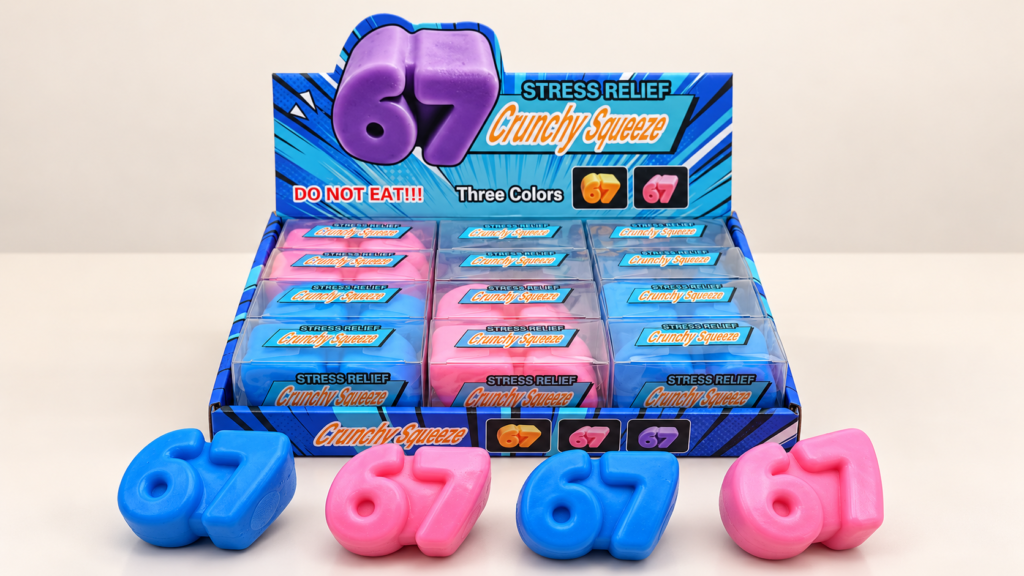
Fidget toy demo display planning starts with a simple distinction: the item a shopper handles is not the unopened product they take to checkout.
For squishies, a hands-on sample can help shoppers compare texture, resistance, and size. But an unmanaged sample can also leave staff opening fresh boxes, mixing up designs, or overlooking a worn product.
Before ordering a display assortment, decide which items will become demos, where the corresponding merchandise will sit, and who will check the samples during store operations.
Table of Contents
Choose Samples That Answer a Buying Question
Start with what shoppers need to understand.
If several colors share the same construction, opening every color may add little useful information. If two similar-looking squishies feel substantially different, one sample may not represent both accurately.
Choose demos around meaningful differences: squeeze resistance, surface texture, size, or play mechanism. Confirm those differences with the supplier rather than inferring them from photographs.
Plus-Plus USA’s merchandising range includes dedicated “Try Me” sets and demo materials alongside retail display programs. Although construction toys differ from squishies, this demonstrates a real merchandising approach: demonstration materials can be planned separately from packaged stock.
For fidget toy demo display planning, the useful question is: which sample helps a shopper make a choice?
A butter-shaped product, for example, should represent the actual version being sold. When evaluating Vilora’s butter stick squishy, confirm the current construction and packaging before deciding how to demonstrate it.
Keep Each Sample Beside Its Matching Product
Place each demo near its matching packaged product, with a clear “Try Me” or “Display Sample” label.
The connection should be obvious without a staff explanation. A shopper who enjoys a firm sample should not accidentally purchase a softer item simply because the packages look similar.
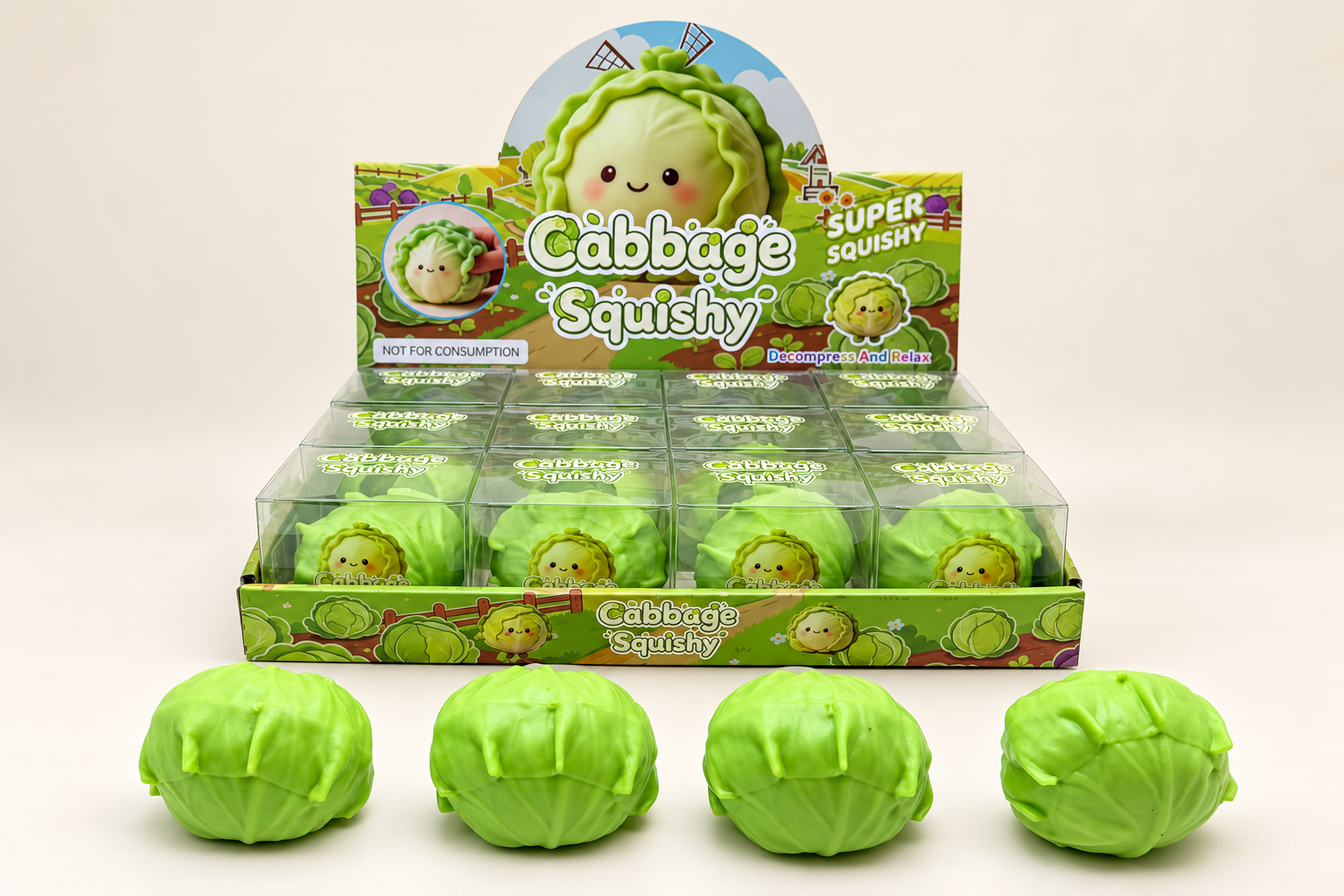
Use the SKU or product name to connect the sample, price label, and packaged inventory. If mixed colors are supplied, explain whether shoppers can choose a color or are buying an assorted item.
Keep opened samples in a designated tray or position. Avoid letting them drift back into unopened merchandise.
This is where fidget toy demo display planning differs from a retail planogram. The planogram allocates space and capacity; the demo plan identifies which products shoppers can try and how they find the matching merchandise.
Allow room for shoppers to pick up and return the sample, too. A sample that blocks price labels or requires shoppers to move packaged stock creates unnecessary work for staff.
Set Product-Specific Care and Removal Rules
Ask the supplier for care instructions for the exact demo SKU.
Do not assume that foam, printed surfaces, and filled elastic products tolerate the same cleaning method. Confirm whether the product can be washed, wiped, or treated with a particular cleaner before making that part of the store routine.
Schylling’s FAQs provide care guidance for its own NeeDoh products. Those instructions are product-specific; they should not be applied automatically to a different supplier’s squishies.
Include a brief visual check in the display routine. Remove a sample with a tear, leak, loose component, or another condition that makes it unsuitable for continued handling. Follow the product’s age labeling and use instructions.
Assign responsibility for checking and resetting the area. An opening check and checks after busy periods may be a starting point, but the schedule should reflect actual use.
Practical fidget toy demo display planning includes clear rules for when to replace a sample, along with instructions for routine care.
Budget for Samples and Review What They Cost
Count demo units separately from sellable inventory.
Illustrative example: A store orders 24 units of one SKU and opens one as a demo. Unless an additional sample was supplied, only 23 unopened units remain available for regular sale.
For several stores, that difference grows. Include initial demos and any planned replacements in the purchasing calculation, while confirming case-pack restrictions with the supplier.
A simple working sheet helps:
| Field | What to record |
|---|---|
| Demo identity | SKU and product version |
| Matching merchandise | Shelf position and price label |
| Initial sample quantity | Units allocated to each store |
| Care instructions | Supplier-confirmed method |
| Removal criteria | Conditions requiring withdrawal |
| Replacement record | Date, reason, and units used |
Track whether samples help answer questions and whether they require frequent replacement. Customer attention alone does not establish that a demo increases sales.
When discussing a display project through Vilora’s OEM/ODM page, ask about sample availability, relevant care information, and packaging details. Confirm any sample charges separately.
Good fidget toy demo display planning leaves the store with a clear connection between the item shoppers try, the product they buy, and the inventory needed to support both.
Read More