Fidget toys have always been easy to collect. Now, some kids are giving those collections a second life by trading them.
A recent Parents report describes fidget trading as a growing schoolyard activity involving products such as NeeDoh, Pop-Its, squishies and stress balls. Kids may weigh color, novelty, rarity and personal preference when deciding whether a trade feels worthwhile, which means the perceived value of one toy can be very different from its original retail price.
For toy buyers, that behavior is worth watching for a reason that goes beyond the trend itself. Trading creates another way for consumers to engage with an assortment after the first purchase. A child who already owns a fidget toy may still want another version because the color, shape or design feels different enough to collect or exchange.
That raises an interesting product question: What makes a simple toy worth wanting more than once?
Table of Contents
Why Fidget Trading Matters Beyond the Playground
The basic appeal of a fidget toy has not changed. A product still needs to feel satisfying, perform consistently and offer an interaction that makes sense quickly. But trading adds another layer to that experience: comparison.
Two toys can function almost identically while carrying very different value within a collection. One color may be harder to find, a particular food shape may become more desirable, or a seasonal version may stand out simply because fewer children have seen it. For retailers, the takeaway is not that every fidget toy should suddenly become a collectible; it is that product variation can create value of its own.
This also connects naturally to our Fidget Toys in 2026 buyer guide, which looks more closely at hand feel, resistance, rebound and other product-level factors buyers should evaluate before building an assortment.
Product Variation Can Create a Second Reason to Buy
When a toy category becomes crowded, the natural response is often to add another feature. Manufacturers introduce a new mechanism, movement or visual effect in an effort to make the next SKU feel different.
Fidget trading suggests another possibility: sometimes the product does not need to become more complicated.
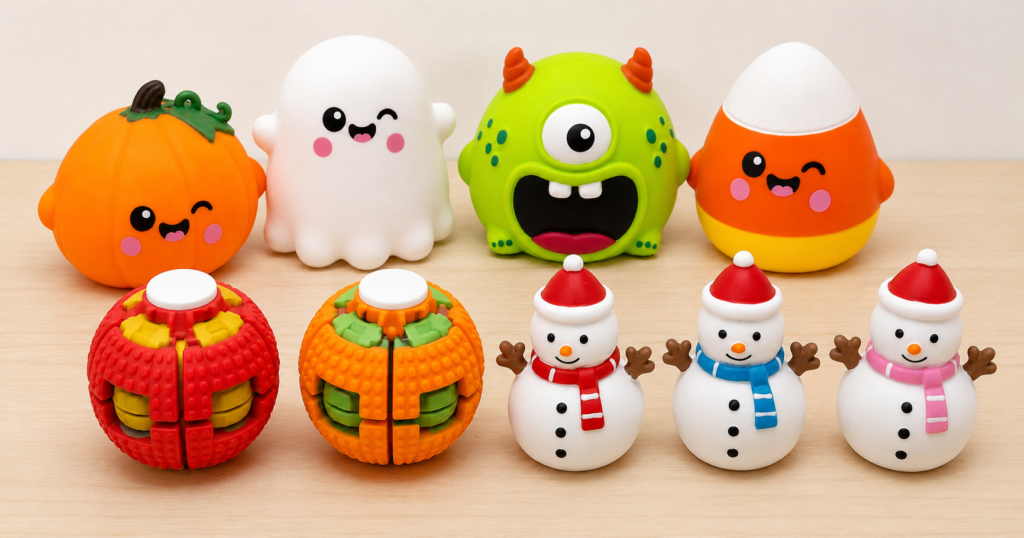
A proven squeeze toy might be offered in several distinct colorways. A food-inspired squishy concept could expand into dumplings, fruit, desserts or other recognizable shapes. The same basic construction might support seasonal graphics or a small number of special variations.
From a manufacturing perspective, some of those changes can be considerably more practical than developing an entirely new mechanism. From a consumer perspective, however, they can still make the next item feel meaningfully different.
For OEM and private-label programs, differentiation may come from color, graphics, packaging or a coordinated family of related designs rather than a completely new mold every time.
The question changes from “What else can this toy do?” to “What would make someone want another version?”
Assortment Depth May Matter More Than More SKUs
Toy Fair 2026 provides useful context for that idea. The show highlighted both sensory play and pocket-sized collectibles, describing squishies and trading toys as products suited to collecting, swapping and repeat engagement. Sensory play also included soft stress toys and hands-on fidget products, showing how closely these categories now overlap.
For a buyer, that makes the structure of an assortment important. Twenty unrelated fidget toys may create variety, but they do not necessarily create a collection. A smaller group of coordinated products can work differently if consumers understand that the pieces belong together.
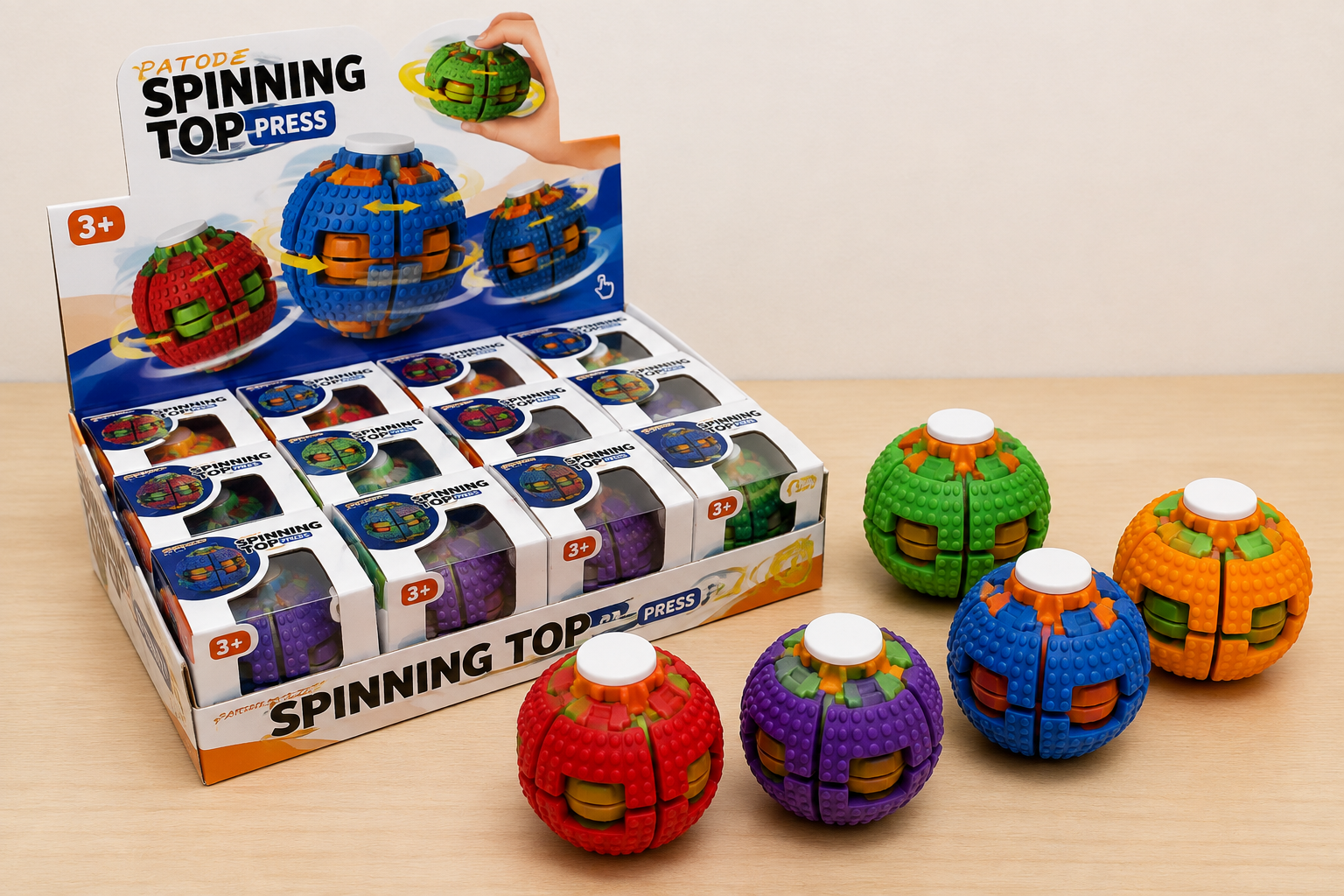
The distinction is commercially useful. Assortment size is how many products you carry. Assortment depth is how many meaningful choices exist within a product idea.
That could mean several colors of a proven tactile product, a family of related food shapes, or standard and special-effect versions that remain visually connected. The objective is not to multiply SKUs without a reason; it is to create enough recognizable variation that customers can compare, choose and potentially return for another.
Merchandising can reinforce that relationship. A mixed countertop display, for example, allows shoppers to see the variations together instead of encountering each product as an isolated item.
What Fidget Trading Means for Private-Label Development
The rise of fidget trading does not mean brands should manufacture artificial scarcity or label ordinary variations as “rare” simply to create urgency. That can become gimmicky quickly, particularly when there is little real difference between the products.
A stronger private-label approach is to build variation consumers can actually see and understand. Color is one option, but shape families, surface textures, fillings, graphics, seasonal editions and packaging formats can all help establish a product line without turning every SKU into a completely separate development project.
This is also where mixed assortments deserve more attention. For a retailer testing a new line, the question is not only how many units to order, but how those units should be distributed. A carton containing one dominant color may behave differently at retail from a deliberately balanced mix that encourages comparison.
The same applies to display packaging. If variation is part of the selling point, the presentation should make that variation visible.
For OEM and private-label buyers, these decisions are best made before mass production rather than after the assortment reaches the shelf.
What Toy Buyers Should Watch Next
It is too early to say whether the current fidget trading wave will become a lasting behavior or settle back into a smaller collector community. Buyers do not need to make that prediction today.
What is worth watching is the behavior underneath it. Are consumers searching for specific variations rather than simply buying whatever is available? Do mixed assortments reorder differently from single-style products? Are certain colors or shapes consistently becoming the ones shoppers look for? Does interest continue after the first purchase?
Those signals tell buyers more than a viral video alone.
The larger lesson from fidget trading is that a relatively simple toy can generate value beyond its core play feature. Collecting, comparing and exchanging can all create additional reasons for consumers to stay interested in a product family.
For the next fidget or sensory assortment, the most useful development question may therefore be surprisingly simple:
If a customer already owns one, what would make them genuinely want another?
Read More: Industry News Buying Guide Customization Guide