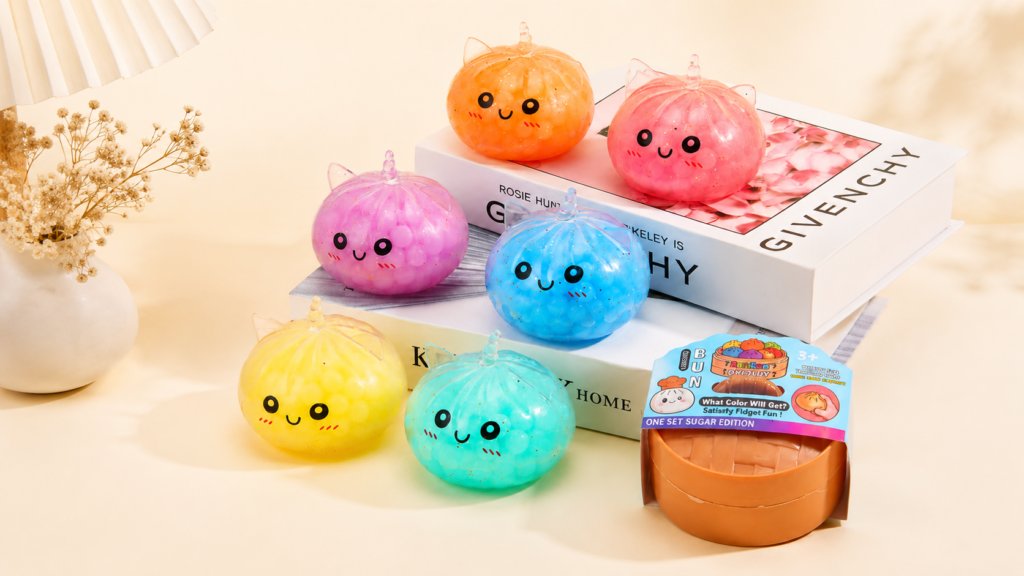
Squishy toys have become a popular category of stress-relief and novelty toys in recent years. Common styles include stress balls, soft squeeze toys, dumpling-shaped squishies, animal designs, and products with various fillings or interactive features. TPR and EVA are among the most commonly used materials for squishy toys currently available on the market.
For buyers learning how to choose squishy toys for a product line, material, size, weight, play features, packaging, carton information, and target-market compliance should all be considered.
Table of Contents
How to Choose Squishy Toys Based on Material
TPR is one of the most commonly used materials for squishy toys, and many commercially available products list TPR as their primary material.
However, the material name alone does not guarantee that a product is safe. Product safety may also depend on raw materials, additives, manufacturing processes, and the testing requirements of the target market. Risk-monitoring reports have noted that certain squishy toys may involve concerns related to plasticizers, volatile organic compounds, and other substances.
For B2B buyers, a practical approach is to confirm the primary material, recommended age range, available test reports, and whether the supplier can support additional testing based on the requirements of the destination market.
Product Size and Weight Affect Display and Shipping
Squishy toys vary significantly in size and weight. During the purchasing process, buyers should ask manufacturers to clearly provide information such as individual product dimensions, unit weight, packing quantity, master carton dimensions, and carton gross weight.
These details are important for both merchandising and logistics.
Smaller products are often suitable for gift bags, party favors, compact retail displays, and bundled sets. Larger products can create stronger visual impact on shelves, but they also take up more space and may increase shipping costs.
Before confirming a product, buyers should at least understand:
Individual product dimensions
Individual product weight
Quantity per display box or carton
Master carton dimensions
Carton net weight or gross weight
This information can help buyers estimate storage and transportation requirements in advance.
Consider the Interactive Play Features
Modern squishy toys are no longer limited to simple squeeze-and-release designs.
Different products may include features such as:
Soft squeeze and rebound
Clear shells filled with colorful beads
Glitter or rainbow visual effects
Stretchy silicone strands or “hair”
Multiple facial expressions or character designs
Hidden or surprise styles
Different constructions create different tactile and visual experiences.
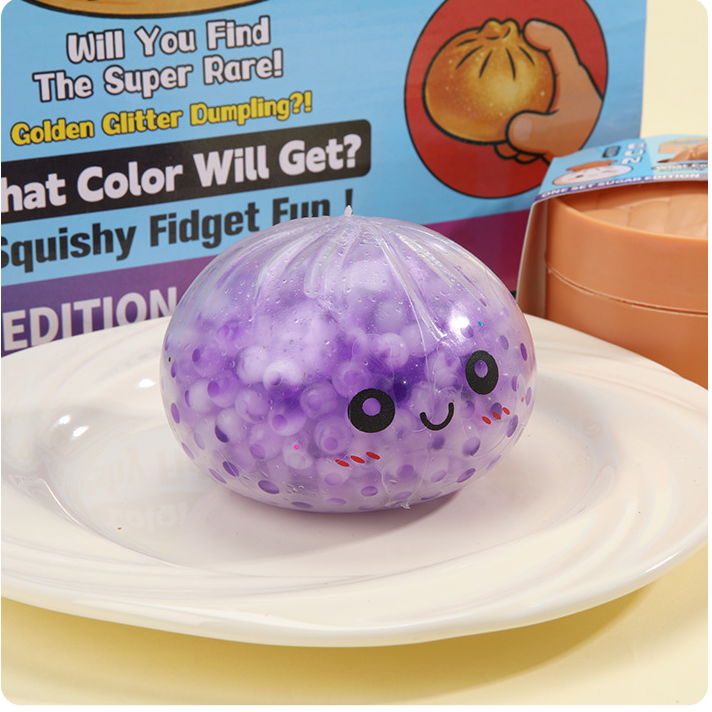
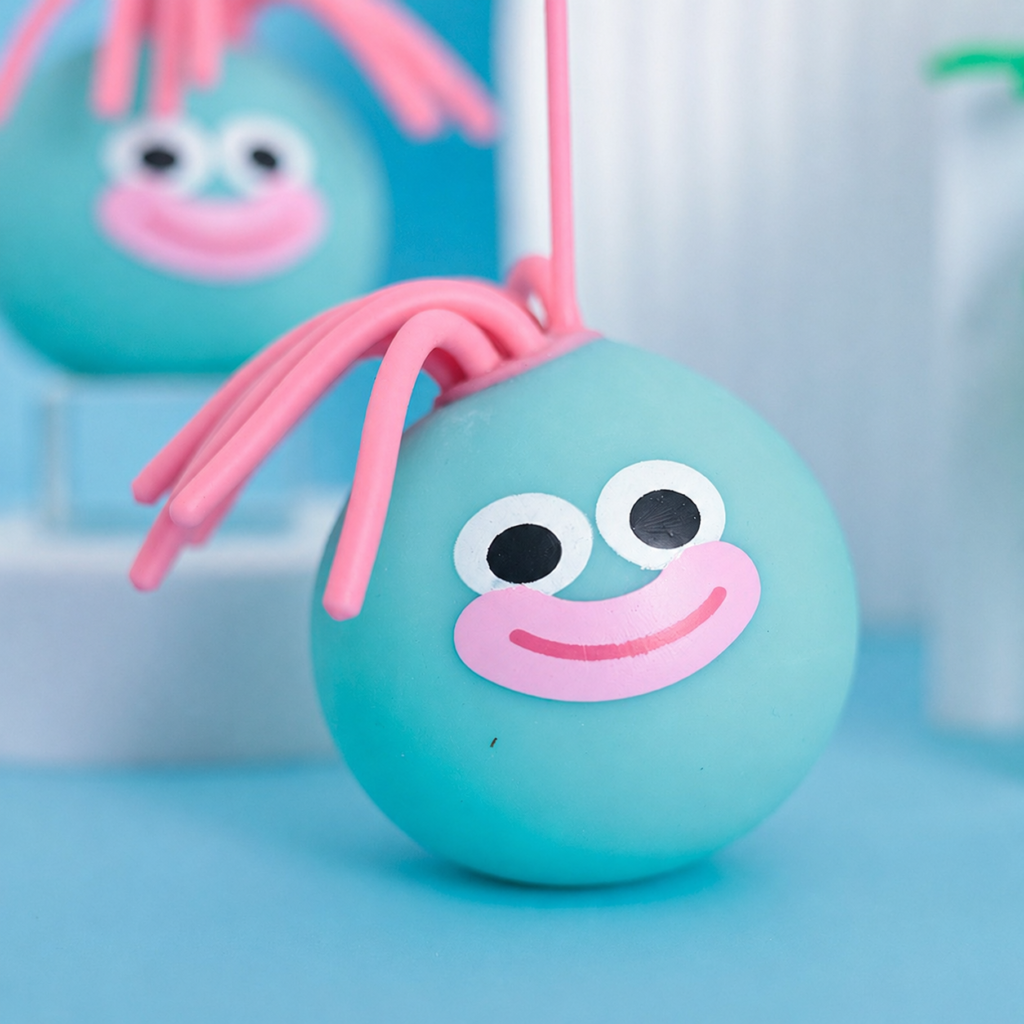
Buyers can select products based on their intended sales environment. For example, a Clear Bead-Filled Dumpling Squishy creates visual movement as the colorful beads shift inside the transparent shell, while a Silly Hair Monster Squishy adds pulling and fidget play through its stretchy hair design.
Confirm Color and Style Assortments in Advance
Many squishy toys are offered in multiple colors or assorted color combinations.
Common options include single colors, mixed assortments, random colors, fixed color ratios, and custom brand colors.
When placing an order, buyers should confirm more than simply which colors are available. It is also useful to clarify:
Whether colors are packed randomly
Whether each display box has a fixed color ratio
Whether special or hidden styles are included
Whether Pantone color matching is available
Whether bulk production colors will follow the approved sample
Clarifying these points in advance can reduce differences between the expected assortment and the final shipment.
Packaging Can Affect Both Sales and Shipping
Common packaging options for squishy toys include OPP bags, color boxes, master cartons, and custom branded packaging. Different projects may require different packaging solutions.
For products intended for countertop or shelf display, display boxes can make merchandising easier. For individually sold items, gifts, or party favors, individual packaging may be more suitable.
For private label projects, buyers may also need to confirm details such as brand logos, packaging colors, barcodes, labels, and required warning information.
Carton Information Is Important for B2B Purchasing
For importers, distributors, and wholesale buyers, carton data is directly related to transportation and storage planning.
Commercial product specifications commonly include packing quantity, carton dimensions, net weight, gross weight, and other logistics details.
Before placing an order, buyers should confirm:
Quantity per carton
Master carton length, width, and height
Carton gross weight
Carton volume
Individual product packaging method
For international shipments, this information can also help estimate the space required for sea or air freight.
Safety and Compliance Should Be Confirmed for the Target Market
Squishy toys may be handled by both children and adults, so material safety and regulatory requirements should not be overlooked.
Quality and safety monitoring reports have noted that some squishy toys may present risks related to volatile organic compounds, plasticizers, and other substances. Product identification should also include appropriate information such as the product name, manufacturer details, applicable standards, material information, and warning labels.
Different markets have different toy safety requirements.
For the United States, children’s toys may require compliance documentation such as a CPC, ASTM F963 testing, and applicable CPSIA requirements, including limits for lead and certain phthalates.
For the European Union, applicable requirements may include CE marking, EN71 testing, and REACH requirements related to substances of very high concern.
Before placing an order, buyers should request third-party laboratory test reports that are relevant to the actual product and materials being purchased, rather than relying only on internal factory testing documents.
Choose Between Existing Designs and Custom Development
Not every project needs to start from a completely new design.
If the goal is to launch a product more quickly, buyers can begin with an existing shape and customize elements such as colors, packaging, or branding.
For projects that require greater differentiation, custom development can include changes to the shape, size, color palette, packaging, or interactive features.
Before starting the sampling process, it is helpful to define the target market, estimated order quantity, product positioning, packaging requirements, and required safety standards. These factors can help determine the appropriate level of customization.
Conclusion
When selecting squishy toys, buyers should consider much more than appearance. Material, size, weight, interactive features, color assortment, packaging, carton data, and safety and compliance requirements can all affect the final purchasing decision.
Understanding how to choose squishy toys based on material, packaging, safety and product features can make sourcing and product development more efficient.