
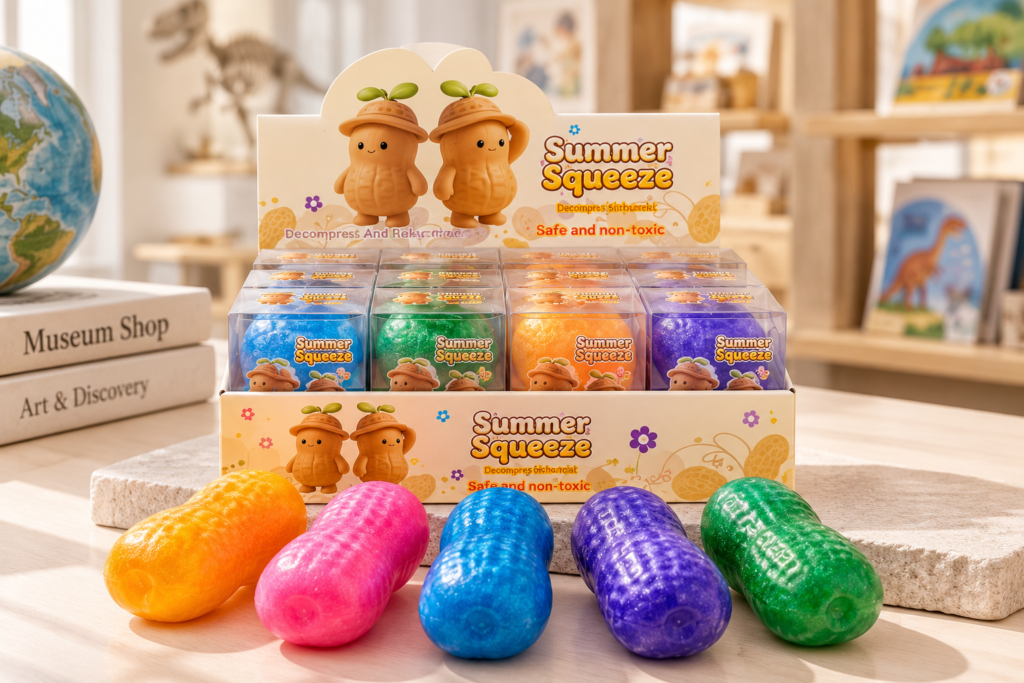
A child leaves a natural history exhibit and spots a small animal toy in the museum shop. It isn’t necessarily expensive or elaborate, but it reminds them of something they just saw.
That connection is what makes museum retail different from an ordinary gift store.
For buyers exploring museum gift shop toys wholesale, the challenge is finding products that appeal to visitors while still making sense for the institution. A toy might sell well elsewhere, yet feel completely out of place beside a museum’s books, exhibition merchandise, and educational gifts.
The best starting point is the visitor experience.
Table of Contents
Start With What Visitors Came to See
A museum store doesn’t need every product to be an exact reproduction of an exhibit. It does, however, help when merchandise has a recognizable connection to the institution.
The Smithsonian National Museum of Natural History provides a useful example. Its shops carry different types of merchandise, including fossils, gemstones, science kits, educational toys, and animal-themed gifts.
That approach gives buyers a practical question to ask: Why would someone purchase this item here rather than at a general toy store?
An animal-shaped squishy might fit a wildlife exhibit. A spinning novelty toy could complement a science-related display when its movement is relevant to the subject. A food-shaped toy might suit an exhibition exploring food culture.
These are possible merchandising connections, not automatic educational benefits.
When comparing museum gift shop toys wholesale, buyers should be able to explain the connection in one or two sentences.
If that explanation feels forced, the product may belong in a different retail setting.
Give Small Products a Reason to Belong
Novelty toys often rely on color, shape, or an unusual interaction to attract attention.
Museum stores have another opportunity: connecting a familiar product to a subject visitors have just explored.
The Smithsonian’s Natural History Express Kiosk, for example, offers gift assortments inspired by the museum’s exhibits. It illustrates how retail merchandise can reflect the subjects visitors encounter during their visit.
Consider a panda-shaped squishy.
In a general gift shop, shoppers may simply see a cute animal toy. In a museum with relevant wildlife programming, the same product could be presented alongside other animal-themed merchandise.
The toy itself hasn’t changed. The retail context has.
Buyers reviewing museum gift shop toys wholesale options can explore different shapes in our Novelty Toys collection, then evaluate whether individual designs genuinely relate to their institution.
A short product description or display card may help visitors understand the connection. Any factual claims on that card should be checked against the museum’s own educational content.
Consider the Visitor Who Will Buy It
Museum visitors aren’t one audience.
A parent shopping with young children may look for an affordable reminder of the visit. A teenager may prefer an unusual interactive product. An adult visitor might choose something with a more understated design.
The same museum store may serve all three.
That doesn’t mean buyers need a separate toy collection for every age group. It means they should avoid assuming that one colorful assortment will appeal equally to everyone.
For museum gift shop toys wholesale, product selection should account for the institution’s visitor mix, the intended age group, and the way customers typically shop.
Children’s products also require appropriate age grading, labeling, and applicable safety documentation. The U.S. Consumer Product Safety Commission explains the toy safety requirements that manufacturers and importers must consider.
A useful assortment may include several price points and product formats, but each item should have a clear role.
The goal isn’t to fill every available shelf. It’s to offer visitors a few worthwhile choices.
Make the Display Work in a Museum Store
Museum shops vary considerably in size.
Some have dedicated retail areas with room for larger displays. Others operate in compact spaces near an entrance, exit, or visitor information desk.
Small toys can be useful in either setting, but packaging deserves attention.
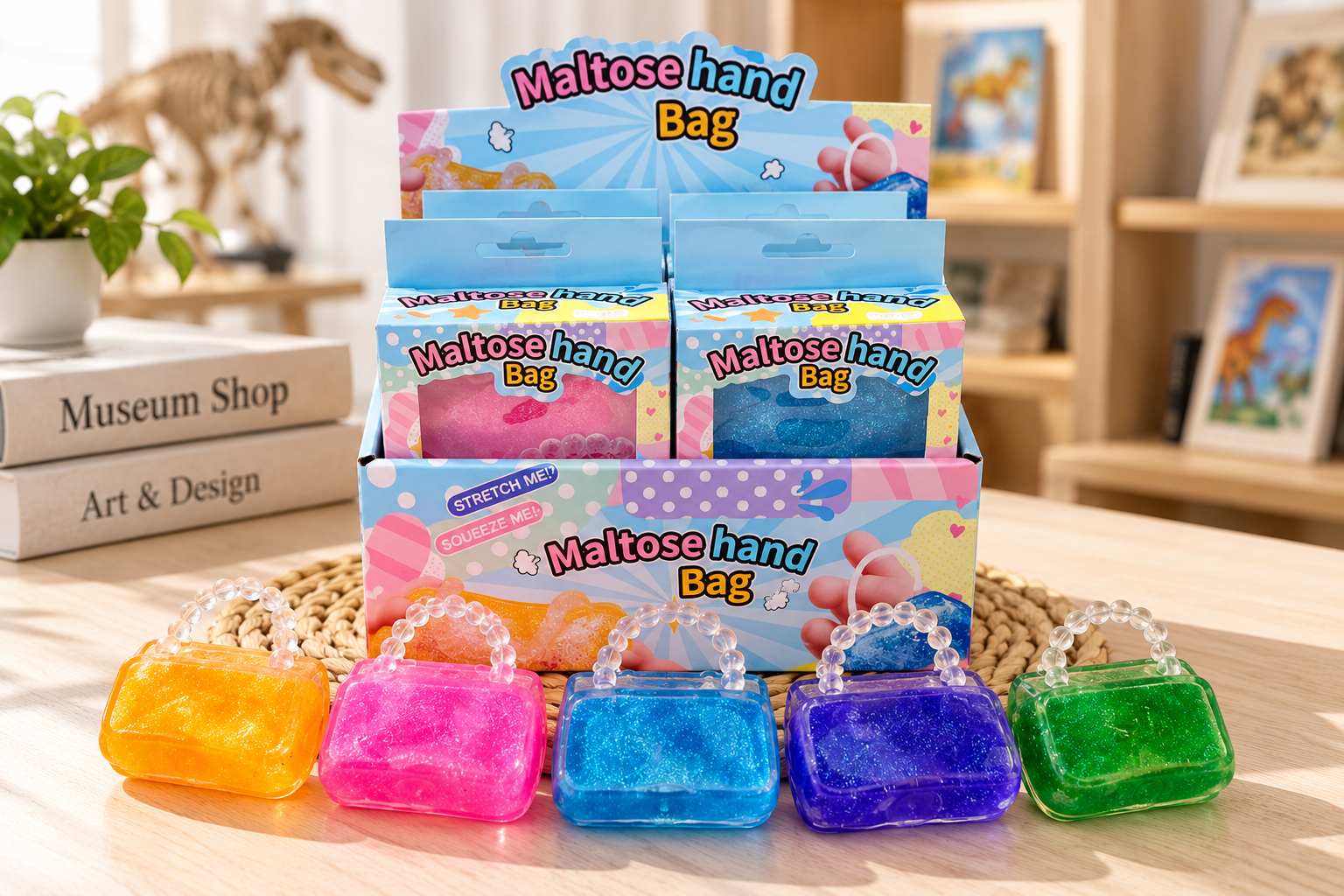
An individually boxed squishy may be easy to display on a shelf. A countertop assortment might work better near a register, provided it doesn’t obstruct the shopping area.
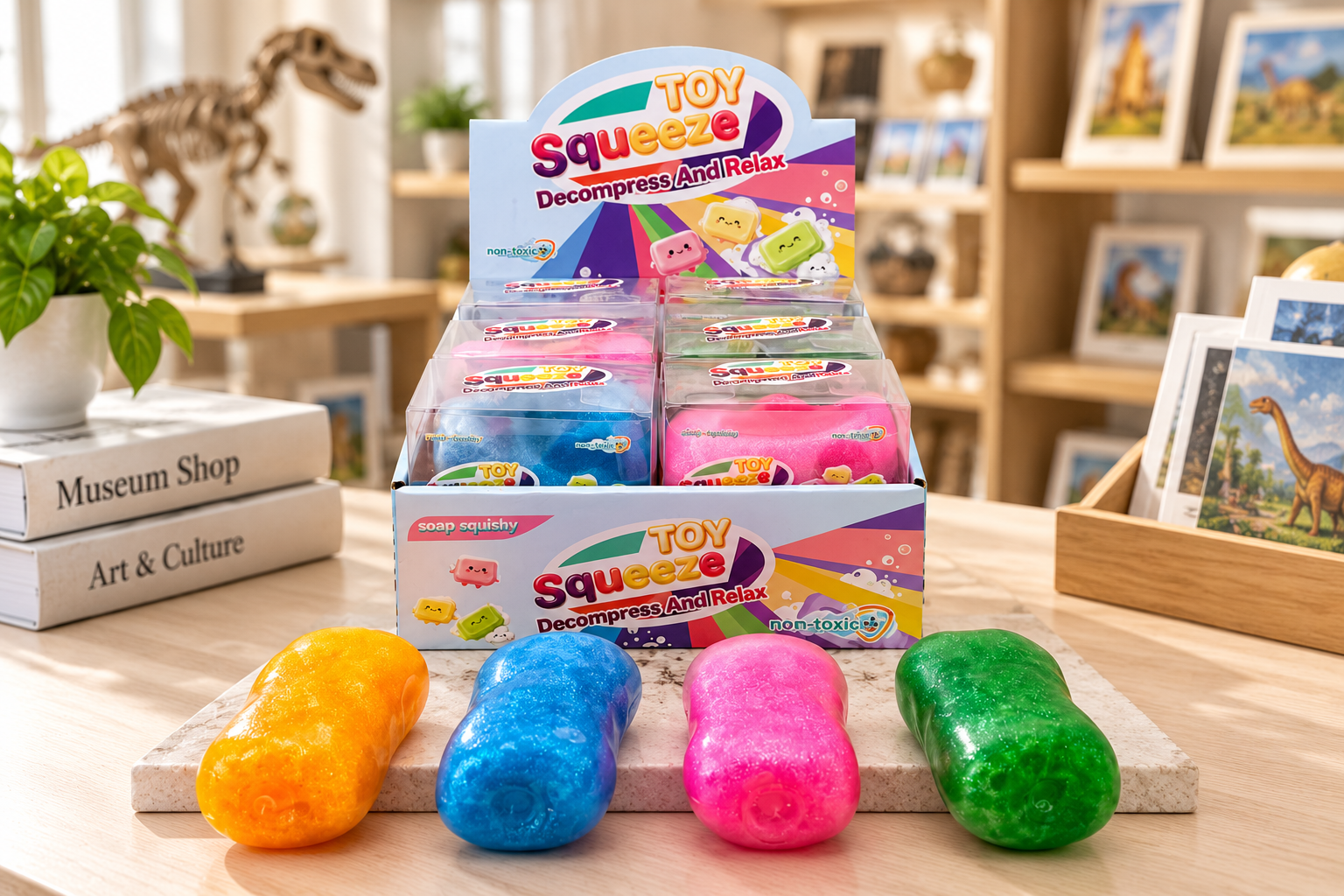
Buyers should consider whether visitors can see the product clearly, understand what it does, and find the information needed to make a purchase.
For museum gift shop toys wholesale, a visually appealing product isn’t enough if its packaging takes up too much room or makes restocking difficult.
Our article on Novelty Toy Packaging explains how retail visibility, box dimensions, and display formats affect purchasing decisions.
Museum stores should also consider whether packaging graphics fit the overall retail environment. Bright promotional artwork may work for one institution but feel out of place in another.
Request Products With a Specific Retail Purpose
A supplier can provide a more useful quotation when the buyer explains where and how the products will be sold.
Instead of requesting a general collection of novelty toys, identify the museum type, relevant exhibition themes, intended customers, and preferred product formats.
It also helps to clarify whether the merchandise will be part of a permanent assortment or a temporary exhibition.
Temporary exhibitions create different purchasing considerations. Products need to arrive before the retail opportunity begins, and buyers must consider what happens to remaining inventory afterward.
When requesting museum gift shop toys wholesale pricing, include the approximate quantities, packaging preferences, delivery requirements, and any proposed customization.
Samples are particularly useful when evaluating tactile toys. Buyers can examine their actual size, appearance, construction, and packaging before deciding whether they belong in the store.
For custom designs, confirm artwork permissions and any licensing requirements before production.
A museum store purchase should ultimately support both the retail operation and the institution’s identity.
The right novelty toy doesn’t have to teach an entire lesson. Sometimes it simply gives visitors a small, memorable connection to something they enjoyed discovering.
Read More