
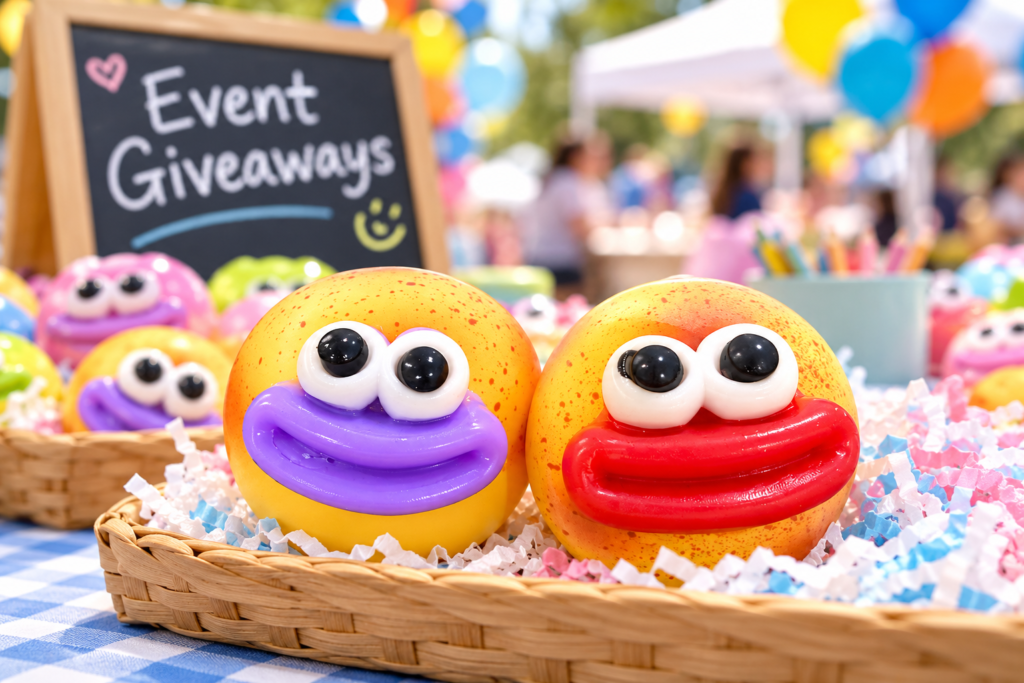
A community organization is preparing for a family event. The budget is approved, volunteers are signing up, and someone has been asked to order 500 small giveaways.
That sounds straightforward until the questions start.
Are all 500 items going to children? Will some be handed out at registration while others are reserved for activities? Does the sponsor want its logo on every item? And what happens if only 350 people attend?
For organizations purchasing nonprofit event giveaways, these details matter more than finding the lowest-priced toy in a catalog.
A useful giveaway plan starts with how the items will be distributed, not how many can fit into the budget.
Table of Contents
Set the Budget Before Choosing Products
Nonprofit purchasing teams often work with an approved spending limit rather than an open-ended merchandise budget.
That makes the cost per item important, but it shouldn’t be the only number buyers consider.
Imagine an organization has $600 available for 400 giveaways. That’s a planning allowance of $1.50 per item before separating product costs from freight, packaging, and other expenses.
If shipping and packaging use $100 of the budget, only $500 remains for the products themselves.
For nonprofit event giveaways, buyers should calculate the available product budget before comparing wholesale prices.
A lower unit price may look attractive, but it can lose its advantage if the order requires extra packaging, sorting, or quantities the organization won’t use.
It’s also worth checking whether the budget covers a single event or several programs throughout the year.
If the same products can be used at future activities, a larger order may make sense. If the giveaway is tied to one particular event, leftover inventory becomes a more serious consideration.
Choose Products for the People Attending
Not every nonprofit event serves the same audience.
A neighborhood family day, youth outreach program, and community appreciation event may all distribute small gifts, but the products shouldn’t automatically be identical.
For events involving children, age suitability comes first.
Small squishy toys, novelty items, and fidget products may be worth considering, depending on the intended recipients and the specific product.

The U.S. Consumer Product Safety Commission’s Toy Safety guidance explains applicable federal requirements for children’s toys, including product-specific safety considerations. U.S. Consumer Product Safety Commission
Organizations planning nonprofit event giveaways should request age information and applicable compliance documentation for the actual products being purchased.
A product suitable for older children should not automatically be distributed to younger children.
Buyers can explore different shapes and product formats in our Squishy Toys collection, then confirm the specifications of the selected items.
The goal is to choose something appropriate for the audience, not simply something inexpensive enough to purchase in large quantities.
Plan Distribution Before Ordering Quantities
One of the easiest ways to waste a giveaway budget is to order everything as though every attendee will receive the same item.
Consider a community event with three distribution points: a welcome table, a children’s activity station, and a volunteer appreciation area.
Each location serves a different purpose.
The welcome table might distribute one small item per family. The activity station may need individual toys for participating children. Volunteer gifts could be reserved for a much smaller group.
For nonprofit event giveaways, buyers should estimate quantities by distribution point rather than using total attendance alone.

A simple allocation plan might include:
- Welcome table: Items for arriving families or registered participants.
- Activity stations: Age-appropriate toys distributed after participation.
- Volunteer or sponsor area: A smaller quantity reserved for designated recipients.
These are planning categories, not a reason to give every attendee multiple products.
Assigning quantities to each location also helps volunteers understand when to distribute items and when to hold inventory back.
Our Novelty Toys collection provides additional product formats for buyers comparing small giveaway options.
Keep Sponsor Branding Practical
Some nonprofit events are supported by local businesses or corporate sponsors.
A sponsor may want its name included on the giveaway, but that doesn’t necessarily mean the toy itself needs a printed logo.
For small or irregularly shaped products, direct printing may not be the most practical option.
Depending on the product and order requirements, a branded insert card, packaging sleeve, or event bag may be worth evaluating instead.
When planning nonprofit event giveaways, organizations should decide where sponsor recognition needs to appear before requesting a customized quotation.
The CPSC’s Promotional Products guidance also explains why decorating or modifying promotional products can affect compliance responsibilities, particularly when the finished item is intended for children. U.S. Consumer Product Safety Commission
Buyers should confirm whether the proposed decoration or packaging changes require additional review.
For projects involving custom designs or branded packaging, our OEM & ODM services provide a starting point for discussing available options.
Sponsor visibility matters, but it shouldn’t make a simple community giveaway unnecessarily expensive or complicated.
Make a Plan for Unused Inventory
Even a carefully organized event can have fewer attendees than expected.
Weather, scheduling conflicts, and last-minute changes can affect turnout. The remaining products still represent money the organization has already spent.
That’s why nonprofit event giveaways should be selected with future use in mind whenever possible.
A generic animal-shaped squishy may be easier to reuse at another family event than a toy packaged with a specific event date.
Likewise, an assortment with consistent packaging can be easier to store and redistribute than several unrelated products.
Before ordering, buyers should ask whether unused items could support another program, volunteer event, or community activity.
They should also confirm carton quantities, packaging requirements, and delivery arrangements with the supplier.
A purchasing brief that identifies the audience, budget, quantities, distribution method, and any sponsor requirements can make the quotation process more productive.
The best nonprofit giveaway isn’t necessarily the one with the lowest unit price.
It’s the one that fits the audience, works within the approved budget, and can be distributed without leaving the organization with boxes of products it has no plan to use.
Read More