Novelty toys used to be fairly easy to recognize. They were the funny item near the register, the inexpensive party favor, or the odd little product bought mostly because it made someone laugh.
That definition feels much narrower in 2026.
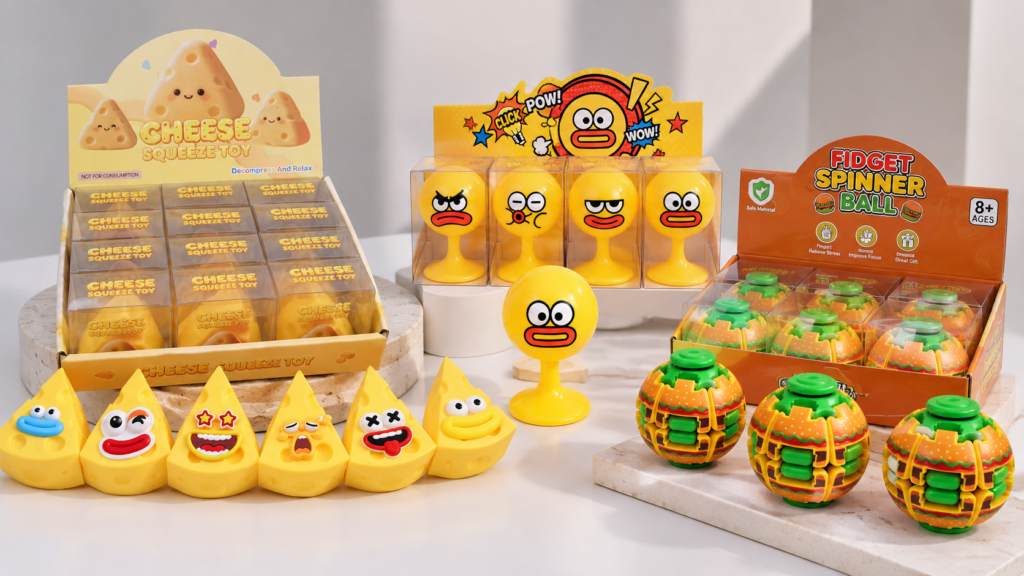
Walk through today’s novelty assortment and you may find a slow-rise food squishy next to a mechanical fidget, a collectible dumpling, or a squeeze toy with an unusual filling. They do not necessarily share the same material or play pattern. What they share is something more immediate: shoppers can usually understand the appeal within seconds.
That shift is one of the more interesting novelty toy trends 2026 is bringing into retail. Novelty is becoming less about one traditional product category and more about how a product gets discovered, handled, and purchased.
Table of Contents
Novelty Toy Trends 2026 Are Expanding the Category
The manufacturing side of the market helps explain why the category now feels broader.
A single product concept can be developed through very different combinations of shape, material, filling, color, surface finish, and interaction. A food design, for example, might become a slow-rise PU squishy, a soft TPR squeeze toy, a keychain, or part of a mechanical fidget.
Retail does not always preserve those manufacturing distinctions.
On Faire today, the wholesale novelty assortment includes products ranging from dumpling and butter squishies to TPR squeeze toys and light-up tactile designs. Its fidget assortment crosses some of the same boundaries.
That overlap matters. A buyer does not necessarily need to ask, “Is this technically a squishy, a fidget, or a novelty toy?”
A better first question may be: What makes someone stop and interact with it?
Fast Discovery Gives Small Toys an Advantage
Many novelty products do not need much explanation.
Press it. Spin it. Stretch it. Squeeze it.
That simplicity can be useful in stores where a product has only a few seconds to earn attention. A shopper walking past a counter display can understand a squeeze toy without reading instructions. A mechanical desktop fidget can invite someone to press it simply because the movement is visible.
This does not mean every small interactive toy will sell. Packaging, price, placement, and the retailer’s customer base still matter.
But current wholesale behavior shows why these products can travel beyond traditional toy stores. Faire reports that gift shops are the largest group of retailers buying wholesale squishies on its platform, while specialty food and convenience retailers also use them as impulse products.
For buyers following novelty toy trends 2026, that is worth noticing. The opportunity is not limited to the toy aisle.
Familiar Objects Keep Becoming Toy Ideas
A stick of butter does not need an introduction. Neither does a dumpling, croissant, pickle, cupcake, or piece of fruit.
That familiarity gives designers room to change the part shoppers do not expect: the interaction.
Make the butter stretch. Turn the dumpling into a squeeze toy. Make an oversized pickle slow-rise. Put a familiar snack shape into a fidget mechanism.
Food-inspired products are a particularly visible example. Faire retailer searches for squishies rose 185% over the previous quarter, according to data reported by The Toy Book, with butter, cheese wedges, croissants, cake slices, and dumplings among the food forms gaining attention.
The lesson is not that every retailer needs more food toys. It is that recognition plus surprise can be a useful novelty formula.
A shopper already knows what the object is. The toy gives that familiar object something unexpected to do.
Interaction Is Becoming a Better Way to Build Variety
There is an easy mistake to make when following novelty toy trends 2026: confusing more SKUs with more variety.
Imagine a display with twelve squeeze toys. They have different faces and colors, but every product feels almost identical in the hand. Visually, the assortment looks broad. In practice, the shopper is making essentially the same choice twelve times.
Now compare that with a smaller assortment containing a slow-rise foam toy, a soft filled squeeze design, a press-to-spin fidget, and a novelty item with a visible mechanical action.
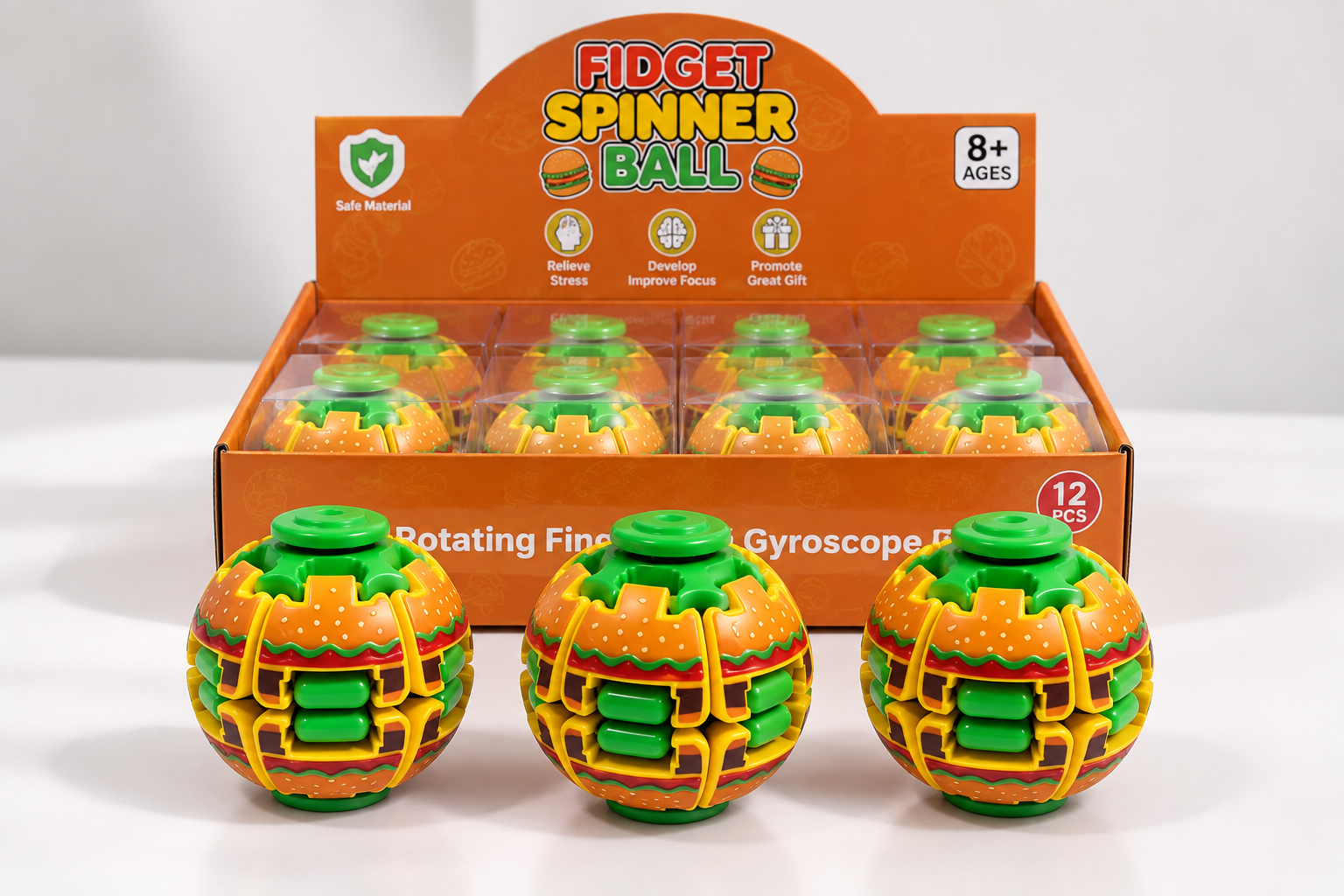
The second assortment creates more reasons to interact.
For a retailer, that distinction can matter more than simply adding another shape. For a supplier developing a line, it also changes the development question from “What other character can we make?” to “What other experience can this assortment offer?”
That is a much larger design space.
A Trend Still Needs Somewhere to Go
Fast-moving novelty products create another challenge: deciding whether an idea has life beyond its first moment of attention.
One useful signal is expandability.
Can the concept support different colors without becoming repetitive? Could it work in a seasonal version? Is there a jumbo or mini format that changes the experience? Could a retailer introduce a small assortment first and later add genuinely different variations?
Those questions matter because independent retailers can react quickly to emerging products. Faire reported that specialty retailers were spotting some squishy demand before it reached broader mainstream attention, illustrating how quickly smaller stores can test a rising format.
But speed alone is not a product strategy.
The stronger novelty concepts give a buyer somewhere to go after the first order.
What Novelty Toy Trends 2026 Mean for Retail Buyers
The category is getting harder to define neatly, and that may actually be useful.
A retailer does not need every product labeled “novelty” to look alike. A good assortment can move between tactile, mechanical, collectible, food-inspired, and visually surprising products as long as each one gives the shopper a clear reason to pick it up.
For buyers evaluating novelty toy trends 2026, the practical question is therefore less about finding one winning category and more about building the right mix of interactions.
That might mean pairing a recognizable food-shaped squishy with a mechanical fidget. It might mean using several variations of one collectible concept alongside products that feel completely different. Or it may mean testing a familiar format with an unexpected material, scale, or movement.
At Vilora Toys, that is also how we think about the relationship between squishy, fidget, and novelty toys. The categories can overlap, but the interaction should still give each product a reason to exist on the shelf.
The best novelty assortment is not necessarily the one with the most products.
It is the one where shoppers keep finding something different to do.