
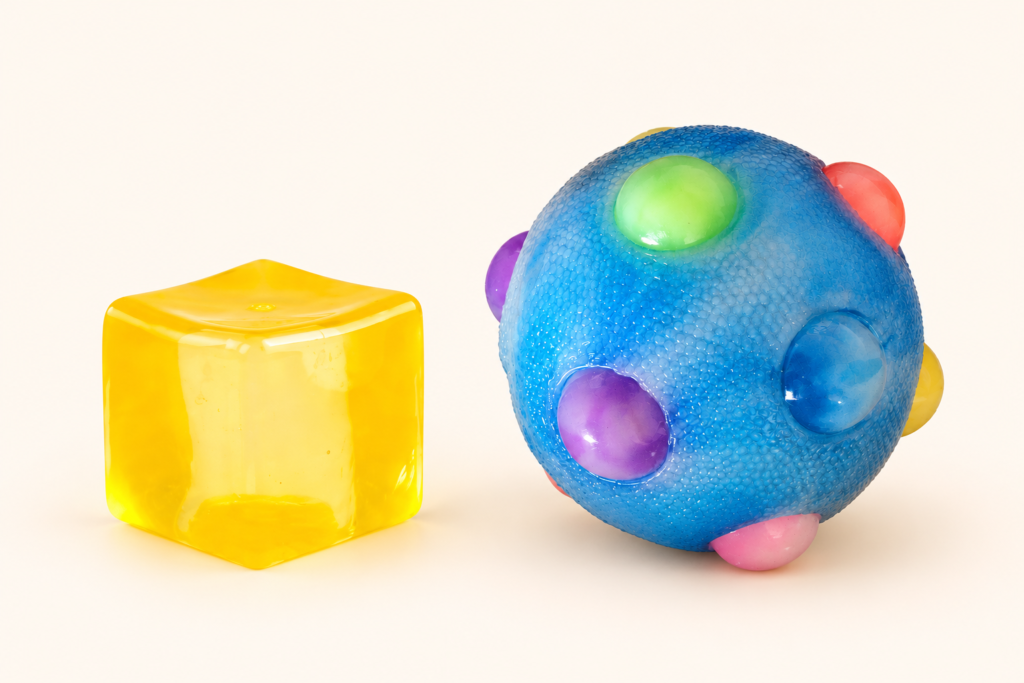
A toy can spring back after a squeeze without bouncing well off the floor. That is the first thing to understand in a stress ball vs bouncy ball comparison. Both actions may be described as “rebound,” but they tell you different things about a product. For shoppers, the difference affects how they can play with it. For retail buyers, it affects which samples to request, what to show in a demonstration, and which claims belong in the listing.
Table of Contents
Stress Ball vs Bouncy Ball: Start With the Intended Action
A stress ball is generally chosen for squeezing in the hand. A bouncy ball is chosen for its movement after hitting a surface. Some products offer both experiences, so the names alone do not always settle the question.
Shape recovery describes what happens after you release pressure. A squeezed toy might return quickly, recover gradually, or need some reshaping. Bounce describes what happens after impact: the ball contacts a surface and moves upward again. Science World’s explanation of ball elasticity shows how deformation and recovery contribute to bouncing.
These actions are related, but one demonstration cannot establish both. Watching a dent disappear tells you little about bounce height or direction. A useful stress ball vs bouncy ball comparison therefore starts with the action the customer wants, then checks whether the specific toy was designed to provide it.
Check Shape Recovery After a Squeeze
Start with a continuous squeeze-and-release demonstration. Watch what happens once the hand lets go, without a cut in the video or someone immediately reshaping the toy. Notice whether the product returns on its own and whether the recovery is part of the appeal.
Vilora Toys’ Stretchy Squishy Cube is described for squeezing, stretching, and reshaping. Those are the relevant actions to review when considering it for a squeeze-toy assortment. Its soft TPR construction does not, by itself, establish a bouncing function.
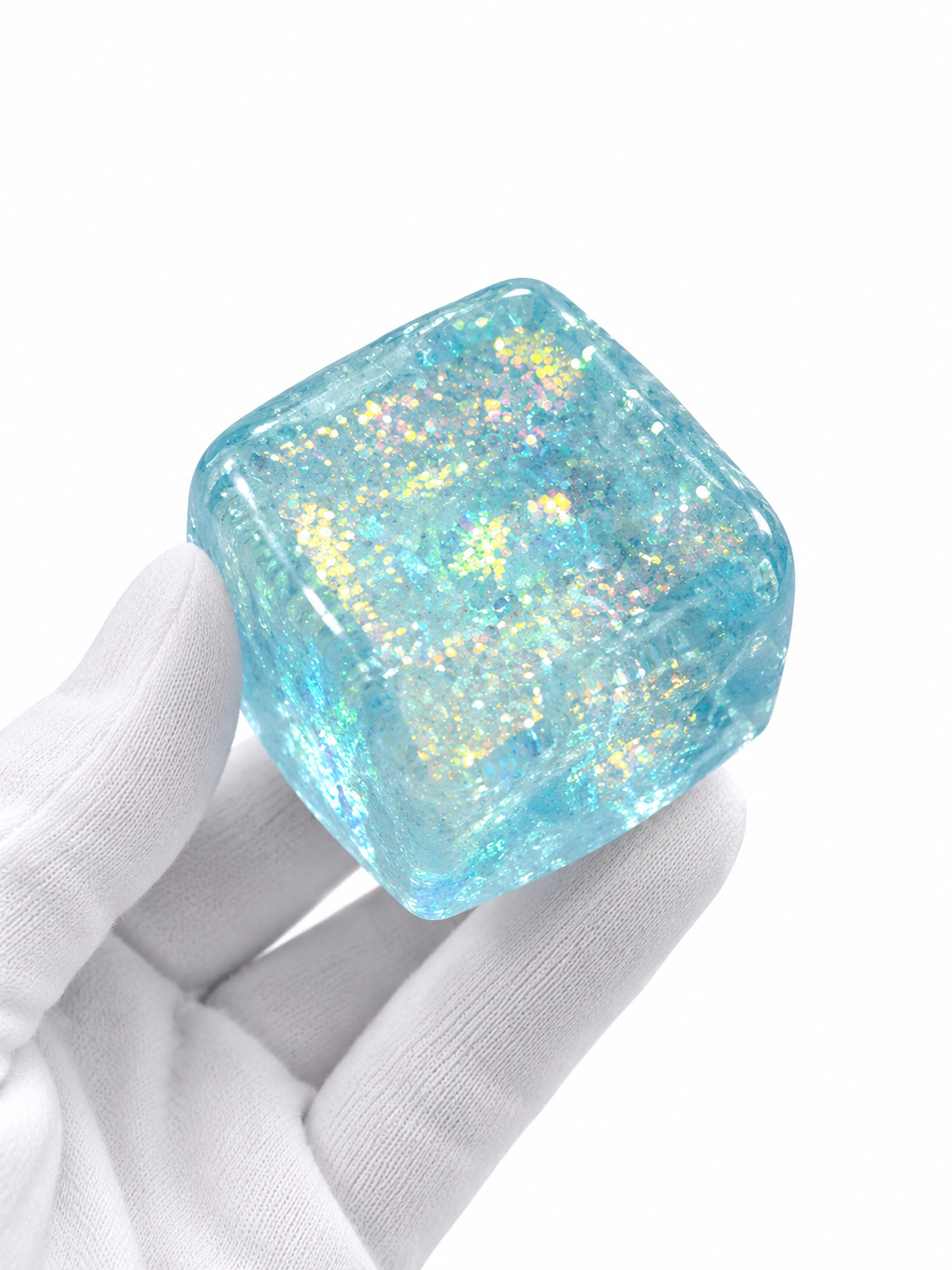
For the stress ball vs bouncy ball decision, separate squeeze resistance from recovery speed. How much effort does compression take? What happens after release? A toy can be easy to compress yet slow to recover, and a faster return is not automatically the better experience. Ask for a physical sample if either characteristic is important to the purchase.
Check Bounce Under Comparable Conditions
Only evaluate bouncing when the supplier identifies it as an intended use. Ask for a clip showing the release, contact with the surface, and upward movement in one shot. A close-up that begins after impact leaves out information you need.
Keep the conditions comparable. One ball thrown hard onto a floor cannot be meaningfully compared with another gently dropped onto carpet. Ask the supplier to identify the surface and release height, and distinguish a simple drop from a downward throw.
This is where a stress ball vs bouncy ball comparison becomes especially practical: a squeeze clip answers a hand-feel question; a bounce clip answers a movement question. Neither should stand in for the other. If bounce height matters to your assortment, request measurements under agreed conditions rather than relying on words such as “super bouncy.”
Keep the approved demonstration with the sample reference. That gives your purchasing team a clearer basis for reviewing later samples and helps prevent a product description from promising more than the demonstration shows.
Check Products That Offer Both Actions
The stress ball vs bouncy ball choice does not always require two separate products. Vilora Toys’ LED Light-Up Bumpy Bouncy Ball is described for squeezing and bouncing, with raised bumps and an LED that flashes when bounced or impacted. Buyers can review both actions on the same sample.
Check the features separately. Does the squeeze experience suit the assortment? Does the ball bounce as expected under the chosen conditions? Does the flashing effect fit the intended setting? A light activating confirms that the light has triggered; it does not establish bounce quality.
For retailers explaining stress ball vs bouncy ball options to customers, the product demonstration should make those functions easy to see. Show the squeeze and release, then show the bounce if the item supports it. Use specific descriptions rather than treating “soft,” “elastic,” and “high bounce” as equivalent claims.
When sending a stress ball vs bouncy ball inquiry, identify the action you need: squeezing, bouncing, or both. Add a product reference and say whether flashing lights are wanted. You can request samples from Vilora Toys using those details, giving the team a concrete starting point for selecting suitable options.
Read More