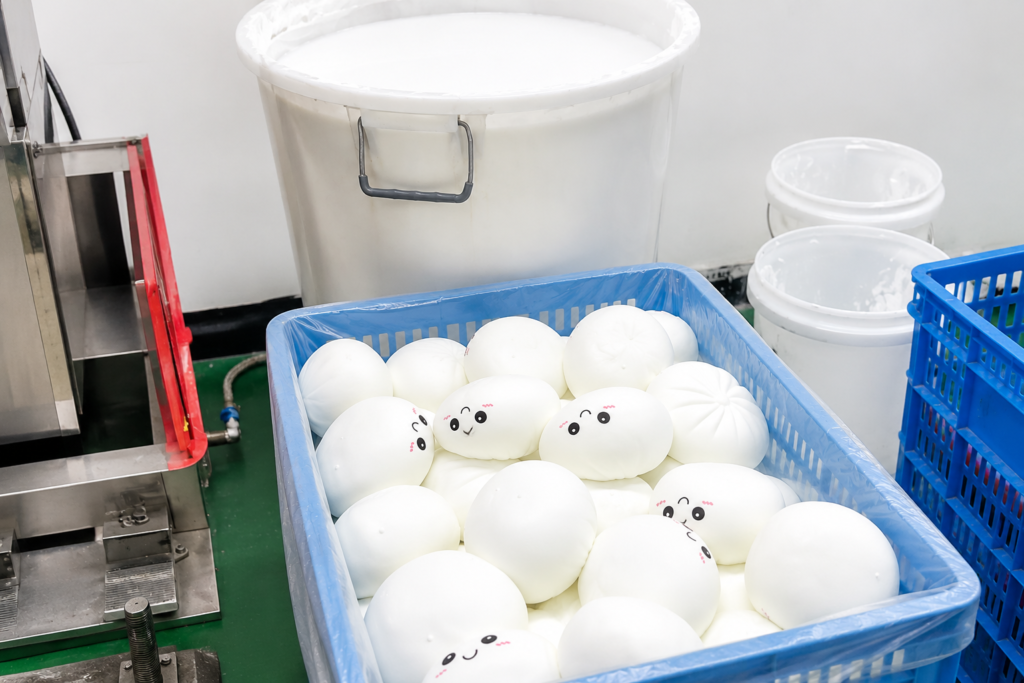
A custom squishy can start with something as simple as a sketch, a reference image, or a character concept. But once the buyer wants a new three-dimensional shape, the project stops being only about design.
The shape has to become something a factory can reproduce consistently.
That is where squishy toy mold development enters the project. Tooling affects more than the outline of the finished toy. Surface detail, proportions, demolding, production consistency, and later sample revisions can all be influenced by decisions made before the mold is finalized.
The expensive mistake is often not a bad first sample. It is approving tooling before anyone has seriously considered how the shape will behave in production.
Table of Contents
A Good Drawing Is Not Automatically a Good Mold
Artwork is created to communicate an idea. A mold has to manufacture it repeatedly.
Those are different jobs.
A character may look excellent with very thin ears, deep folds, narrow legs, or sharply recessed facial details. In a soft molded product, those features can be harder to reproduce consistently or harder to remove from the mold without distortion.
Chinese PU foam manufacturers commonly describe custom development as a progression from buyer drawings or reference images into modeling, mold making, foaming, trimming, decoration, and packing.
The buyer does not need to become a tooling engineer. But before approving squishy toy mold development, it is worth asking whether any part of the design needs to become thicker, shallower, rounder, or structurally simpler.
The goal is not to change the character. It is to preserve the character while making the design manufacturable.
Freeze the Shape Before Tooling Starts
Small revisions are cheap while the product is still a digital model.
They become much less convenient after tooling begins.
Dimensions, proportions, major surface details, and the basic product structure should therefore be confirmed before the supplier starts making the mold. Reviewing the design for potential manufacturing issues before mold production can help prevent delays and unnecessary tooling changes later.
This is also the point where a buyer should challenge the design.
Is the product too large for the intended retail price? Will one thin feature be easy to damage? Does a recessed detail really need to be that deep? Will the proposed logo location still look right after molding and decoration?
For squishy toy mold development, these questions are much easier to solve on-screen than after the first physical sample arrives.
Material and Squeeze Feel Belong in the Mold Discussion
The mold does not work independently from the material.
PU slow-rising products, TPR products, and other soft constructions behave differently during forming and demolding. In molded polyurethane production, material formulation and molding process are closely connected, which is why physical properties should be considered during product development rather than after tooling is complete. Even within molded polyurethane, different foam systems and formulations can produce different densities, hardness, and rebound characteristics.
That means a buyer should not approve the shape first and only later ask for a dramatically softer feel.
The intended squeeze should be part of the development brief.
For a rounded food squishy, a soft body with enough material volume may work well for slow recovery. A narrow character with thin limbs may react differently to the same softness target.
This is where our broader guide to custom squishy toys becomes useful: size, material, shape, and feel should be considered together rather than treated as separate customization options.
The product still has to look right after it is squeezed, released, packed, and handled repeatedly.
Squishy Toy Mold Development: The First Sample Is a Tooling Check
When the first physical sample arrives, buyers naturally look at color and appearance first.
For a new mold, the more useful questions are structural.
Does the silhouette match the approved 3D design? Are small details still visible? Are there areas that distort after demolding? Do seams or parting lines appear in visually sensitive areas? Does the product stand, sit, or display the way it was intended to?
Then squeeze it.
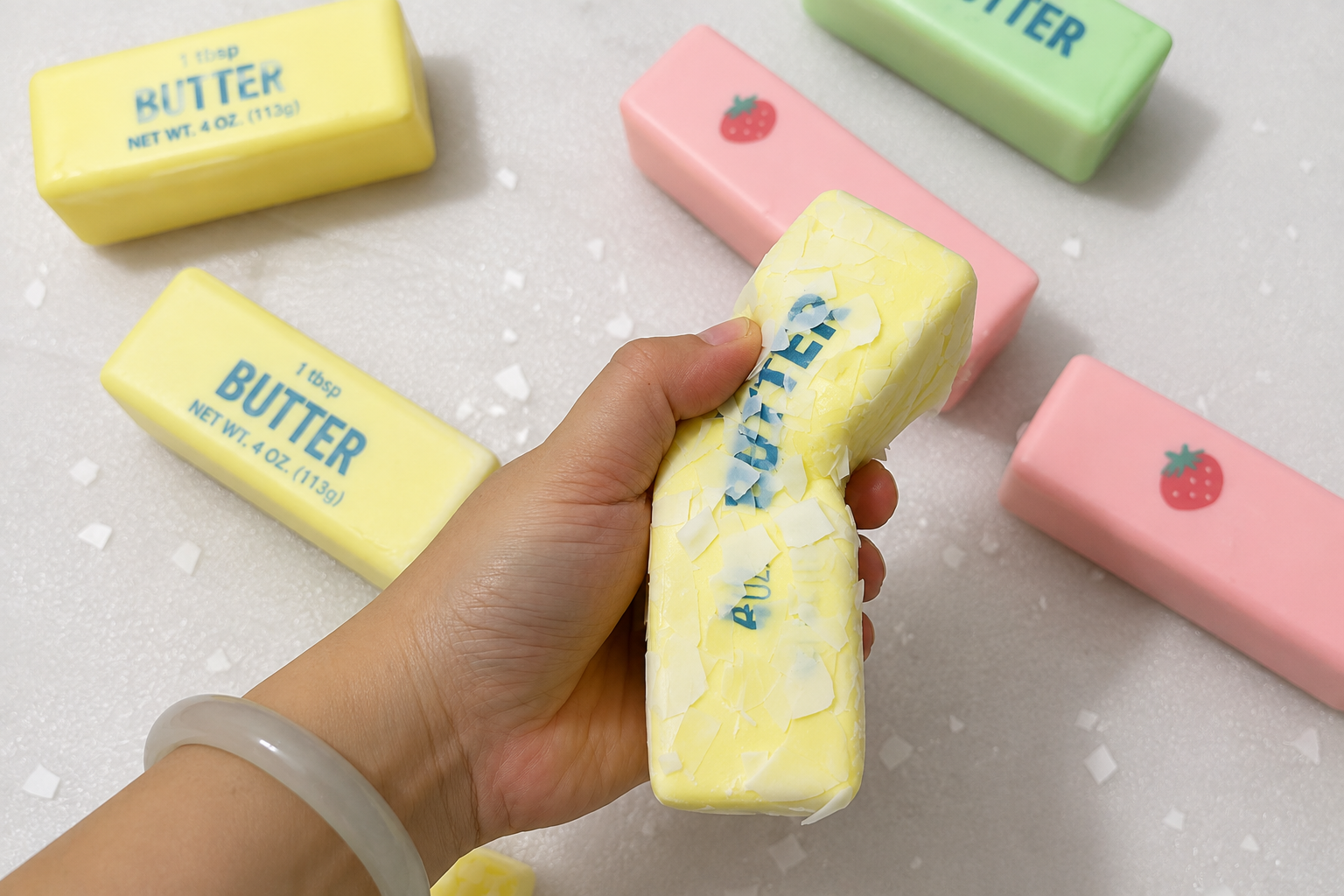
A mold can reproduce the shape successfully while the finished product still feels wrong.
The first sample therefore needs to confirm both geometry and product performance before it becomes the approved sample for mass production.
If the same problem appears repeatedly in early samples, the next question is where that problem comes from. Decoration, material processing, and tooling can create very different defects, and they require different corrections.
The Cheapest Tooling Quote May Not Be the Cheapest Project
A completely new shape may involve a one-time tooling charge in addition to the production price per piece.
That cost should be evaluated separately from unit price.
Tooling pays for the ability to manufacture the custom shape. The unit price pays for producing that shape again and again.
When comparing squishy toy suppliers, ask what the tooling quote actually includes. Does it cover 3D preparation? Initial samples? A revision round? Mold storage? Future production from the same tool?
Two suppliers can quote similar mold prices while offering very different development scope.
Ownership also deserves attention when the design is proprietary. If the buyer is paying for custom tooling, terms around ownership, exclusivity, storage, and future use should be clarified before payment rather than assumed later.
A Mold Should Solve Problems Before Production Starts
Good squishy toy mold development is not simply about creating a cavity that matches a drawing.
It is about resolving design problems while they are still relatively easy to change.
Once the shape, proportions, material direction, squeeze feel, and first molded sample are aligned, the rest of the project becomes much easier to control.
The useful question before authorizing tooling is not simply:
“Can you make this shape?”
It is:
“What needs to be finalized now so this shape can be produced consistently later?”
That is where tooling starts becoming part of good product development rather than just another factory charge.
Read More: Customization Guide · OEM Guide · Buying Guide