Fidget toy retail trends in 2026 are becoming harder to describe with one hero product.
A few years ago, buyers could talk about the category almost entirely through spinners. Today, the shelf can include squeeze toys, sliders, rotating mechanisms, textured sensory products, 3D-printed-style fidgets, clickers, compact desk toys, and collectible formats.
That variety creates more opportunity, but it also changes how buyers should build an assortment.
The question is no longer simply which fidget toy is popular. It is which type of sensory interaction fits the customer, the price point, the retail channel, and the level of product risk a buyer is prepared to manage.
Table of Contents
Fidget Toy Retail Trends Are No Longer About One Product
The category has fragmented.
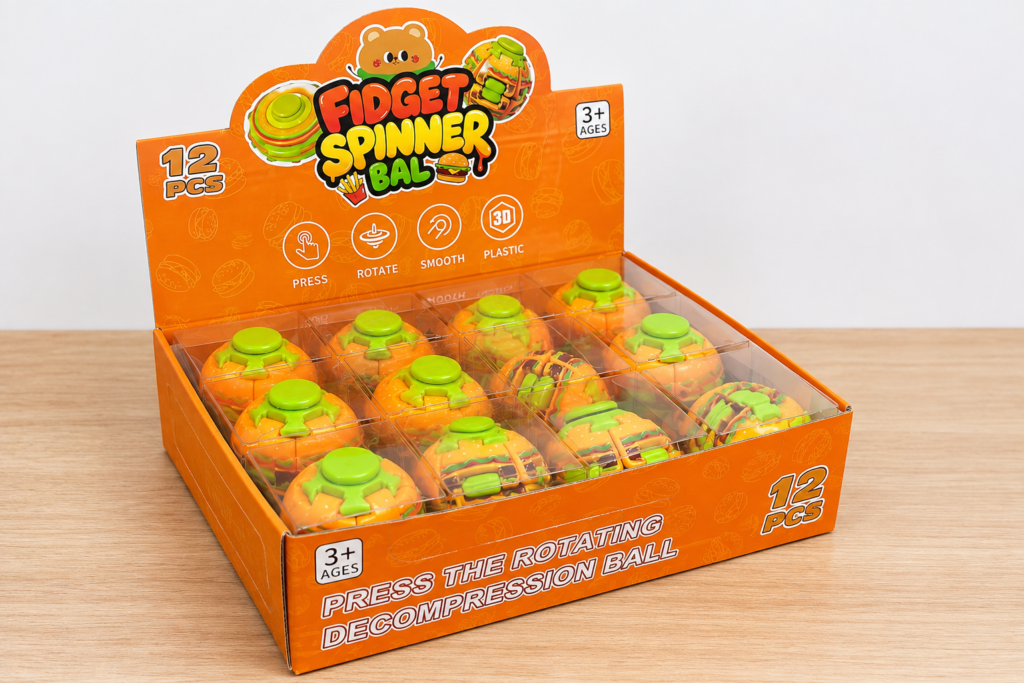
A spinner delivers continuous motion. A slider adds resistance and repetition. A squeeze toy depends on softness and recovery. A rotating ball can combine movement with hand pressure. A textured fidget may rely almost entirely on surface feel.
These products can all sit under the same broad “fidget” label, but the reason people buy them is different.
That matters at retail.
A buyer selecting six nearly identical products with different shapes may have less variety than a buyer choosing four products built around four distinct sensory actions. Mechanism can create more meaningful assortment differentiation than color alone.
This is one of the most important fidget toy retail trends to watch: the category is becoming a portfolio of experiences rather than a single product type.
Sensory Play Is Becoming a Bigger Retail Category
The broader toy market is helping.
Circana reported that U.S. toy sales grew 17% in the first half of 2026, with consumers continuing to gravitate toward collectibles, sensory toys, licensed products, and hobby-oriented play. Earlier 2026 data also showed squishy toys posting triple-digit growth in both dollars and units through April, supported by social media, ASMR, unboxing, and limited-edition collecting.
For fidget buyers, the implication is larger than “squishies are selling.”
It suggests that tactile interaction itself is becoming more commercially important.
Products that can be squeezed, rotated, clicked, stretched, or manipulated give shoppers something that is difficult to understand from a static package alone. They invite demonstration, short-form video, desk use, and repeat handling.
That makes the category especially compatible with social discovery and impulse retail.
Different Mechanisms Create Different Reasons to Buy
Two fidget toys can be the same size and price and still deliver completely different experiences.
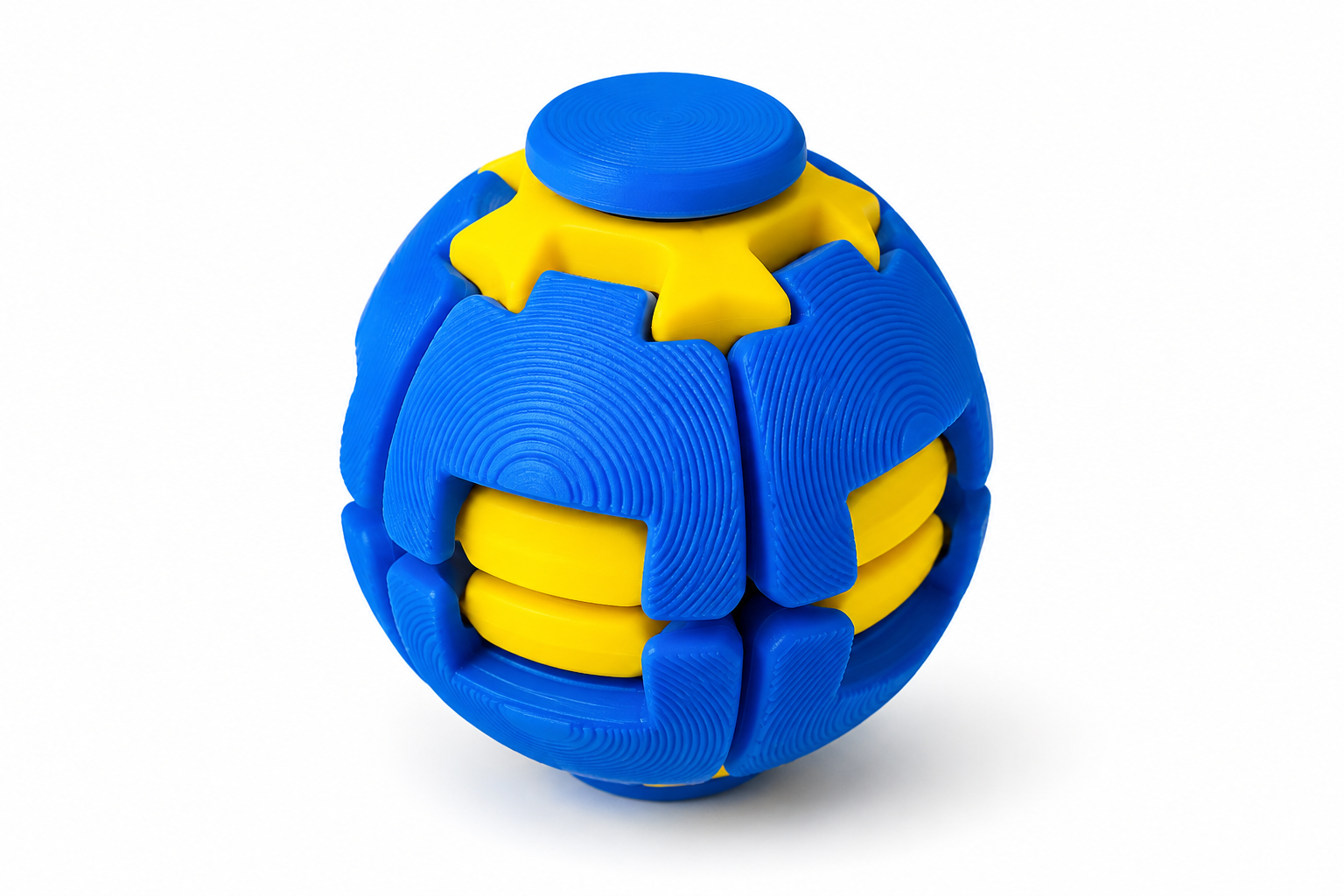
A rotating toy may be purchased for continuous motion. A segmented pressure ball rewards repeated hand movement. A soft squeeze toy may be more about slow recovery and texture. A mechanical clicker can offer sound and resistance.
For buyers, this means “fidget” is too broad a specification.
When reviewing samples, ask what the customer is actually supposed to do with the product.
Spin it?
Compress it?
Slide it?
Fold it?
Press individual sections?
Repeat a clicking action?
The answer affects not only the retail story but also manufacturing and quality control. Different mechanisms introduce different moving parts, joining methods, tolerances, materials, and wear points.
Chinese factory-side listings already show how quickly new formats are multiplying. Current 2026 cross-border products include rotating segmented pressure balls offered in multiple colors and marketed across North America and Europe, while 3D-print-style fidgets increasingly combine rotation, folding, and articulated movement.
The opportunity is real, but buyers should compare function rather than treating all fidgets as interchangeable.
Collectibility Is Moving Into Fidget
Collectibility does not require a blind box.
A product can become collectible through colors, textures, characters, finishes, sizes, or mechanism variations.
This is where fidget toy retail trends begin to overlap with the wider collectible market.
Circana’s 2026 data shows how important collectible and hobby-oriented products have become across the broader toy industry.
For fidget products, a simple color range can already create repeat-purchase behavior if the differences are visible and intentional. A retailer can then go further with seasonal colors, limited variants, texture differences, or coordinated display assortments.
The important part is discipline.
Six colors are not automatically better than three.
A larger assortment increases inventory fragmentation, and custom color programs can change minimum quantities by version. Before expanding the range, buyers should decide whether each variation gives shoppers a real reason to choose another unit.
Adults Are Changing Where Fidget Products Can Sell
The category is also moving beyond a children-only context.
Circana reported that consumers aged 18 and older accounted for 35% of U.S. toy-industry growth through April 2026. By the first half of the year, adult-only households represented 55% of toy sales and grew 16%, slightly faster than households with children.
That changes merchandising possibilities.
Some fidgets can work in gift stores, office-oriented displays, lifestyle retail, novelty shops, checkout areas, or desk-accessory assortments without looking like preschool toys.
Presentation matters here.
Bright cartoon packaging may work perfectly for one channel and undermine another. A compact mechanical fidget in restrained packaging can appeal to a very different shopper than a brightly colored sensory product.
This is why audience should be decided before packaging—not after the product has already been ordered.
More Mechanisms Mean More Product Risk
More variety also means buyers cannot use one safety checklist for every fidget toy.
Magnetic products are a clear example.
In August 2026, CPSC recalled BUSOHA magnetic fidget sliders because loose high-powered magnets could be exposed and swallowed. A separate PIXLABBY recall involved a child who accessed and swallowed magnets from a silicone sensory slider and was hospitalized.
The lesson is not that magnetic fidgets should never be sourced.
It is that mechanism changes risk.
A spinner with a bearing, a slider with magnets, a squeeze toy with filling, and a battery-powered light-up fidget should not be reviewed as if they were the same product simply because all four are called fidget toys.
Buyers should identify the mechanism first, then evaluate durability, component retention, intended age, applicable testing, and packaging around that specific construction.
The strongest fidget assortments in 2026 will probably not come from guessing the next viral object.
They will come from combining several sensory experiences with clear audience positioning, controlled variation, and mechanism-specific product review.
That is the more useful way to read fidget toy retail trends now. Buyers looking for a broader category checklist can also review our guide to Fidget Toys in 2026.
Read More: Buying Guide · Customization Guide · OEM Guide