A toy can be popular and still be a poor fit for a store.
That sounds obvious, but it becomes easy to forget when a new product starts appearing everywhere at once. Retailers see the same character, collectible, squishy or fidget gaining attention and face a familiar question: should we bring it in too?
A better question may be: what job would this product actually do in the assortment?
Some toys bring shoppers into the store. Some turn a quick look into a small impulse purchase. Some encourage customers to come back for another design. Others sell steadily long after the trend around them has cooled.
That distinction is becoming increasingly useful when looking at toy store trends 2026. The products earning retail space are not all succeeding for the same reason—and they should not necessarily be bought the same way.
Table of Contents
Toy Store Trends 2026 Are Changing the Job of a SKU
Shelf space has a cost even when the product itself is inexpensive.
Every new SKU takes inventory dollars, display space and attention away from something else. For a specialty retailer with a limited footprint, adding another product simply because it is trending can quickly create an assortment full of interesting items but no clear structure.
Instead, buyers can think about what each SKU contributes.
A dependable construction set may be a core seller. A small novelty item beside the register may work primarily as an impulse purchase. A collectible series can create repeat visits. A new tactile product might begin as a small trend test before earning a larger order.
These roles can overlap, but identifying the primary one makes the buying decision clearer.
That is an important difference between following a trend and merchandising a trend.
Some Products Earn Space by Bringing Shoppers In
A traffic-driving product does not have to account for the largest share of sales to be useful.
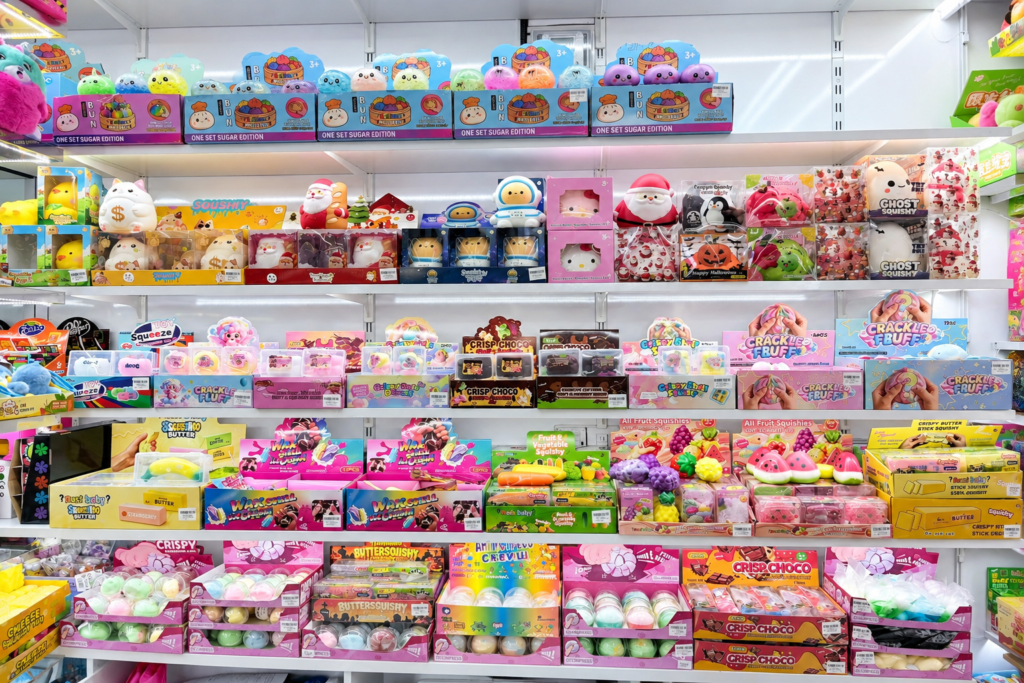
Five Below offers a current example. As the retailer expands its toy positioning, management has pointed to squishies as one of the products attracting shoppers while exposing them to a wider assortment of toys, games, collectibles and crafts.
For an independent store, the exact product will be different. The principle is more useful than the example.
A product people are actively looking for can become an entry point into the rest of the assortment.
That makes placement important. Hiding a high-interest product deep inside a category may waste some of its value. Placing it where shoppers can discover adjacent items gives it another job: introducing products they did not arrive intending to buy.
This is also why retailers should be careful about measuring every SKU only by its individual unit sales. Sometimes the more useful question is what happens around the product.
Small Toys Can Make Limited Space Work Harder
Large boxed products usually have an obvious home. Smaller toys are more flexible.
A compact fidget toy might work on a counter, in a small display near checkout, beside gifts or as part of a rotating novelty section. A squishy toy can occupy a very different amount of retail space depending on whether it is individually packaged, displayed in a tray or sold as part of a larger themed collection.
That flexibility matters when trends move faster than store layouts.
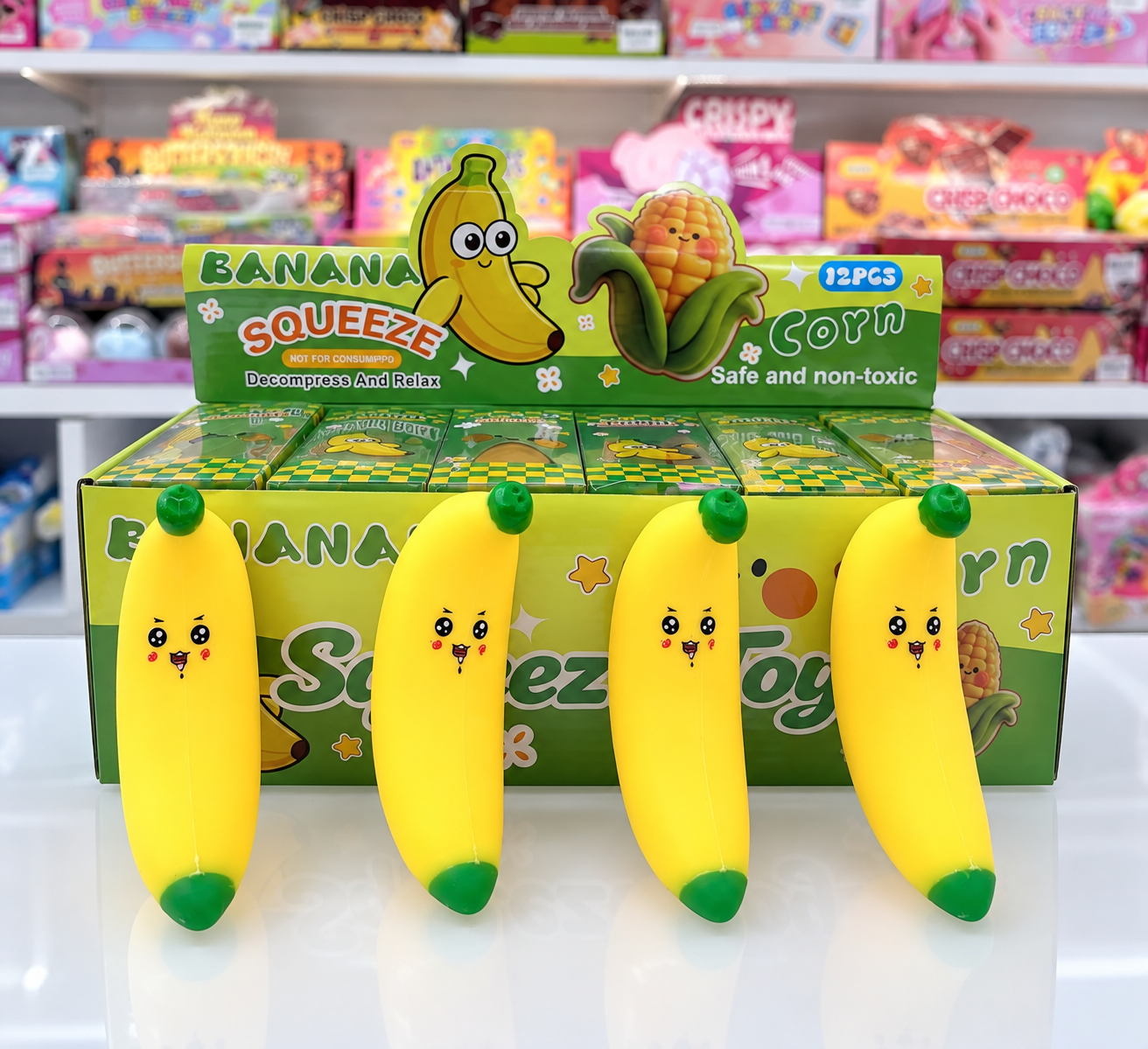
British independent retailers interviewed by Toy World this year described strong recent movement in squishy products, including one retailer reporting substantial increases in sales and foot traffic during the preceding months.
The useful lesson is not simply that squishies are selling.
It is that smaller products can give a retailer a relatively flexible place to respond to changing demand. They can be introduced, moved, expanded or reduced without requiring an entire department to change with them.
For a buyer, merchandising flexibility can be part of a product’s value.
Collectibles Need Depth, Not Just More Designs
Collectibles create almost the opposite problem.
A retailer can technically carry a collectible line without carrying enough of it to make the concept work.
If the appeal comes from finding another character, completing a series or discovering a variation, assortment depth becomes part of the product experience.
That behavior is visible across markets. China’s 2026 industry reporting showed substantially stronger growth in trend and collectible toys than in the broader traditional toy market, while Australian market data has also identified trading cards and fandom-related products as significant contributors to recent growth.
For buyers, however, “collectibles are growing” is not the decision.
The decision is whether a particular concept has enough reason for a second purchase.
Five colors are not automatically a collectible line. Neither are six faces printed on otherwise identical products.
A stronger series gives shoppers something understandable to discover: characters, rarity, themes, sets or another progression that makes the next item feel meaningfully different from the first.
When that logic exists, a retailer may need depth within the concept, rather than more unrelated SKUs around it.
A Core Seller and a Trend Test Should Not Be Bought the Same Way
One of the easiest ways to make a trend expensive is to buy it like a core product.
Core products have evidence behind them. The retailer understands their customer, sales pattern and replenishment rhythm.
A trend test does not have that history yet.
That difference should affect the first order.
A buyer testing an unfamiliar novelty toy may care more about manageable opening quantities, display efficiency and the ability to reorder quickly. A proven everyday item may justify deeper inventory because the store already knows what normal demand looks like.
The same thinking applies when a product suddenly becomes popular online.
A viral moment can justify a test. It does not automatically justify months of inventory.
This is where toy store trends 2026 become an inventory question rather than a trend-report question: How much confidence do we actually have in the role this product will play?
Repeat-Purchase Products Need Somewhere to Go
The first sale is only one measure of a product.
Some concepts have a natural next step.
A shopper buys one collectible and looks for another. A successful small gift develops into several themes. A seasonal design leads into the next occasion. A retailer tests one size and later adds another.
Other products reach the end of their story after the first purchase.
Neither model is automatically better. But buyers should know which one they are buying.
This becomes particularly important when developing private-label or exclusive products. A concept with room for new designs, packaging variations, sizes or seasonal extensions can support a longer program than an isolated SKU.
That is one reason our look at Novelty Toy Trends 2026 focused on whether a novelty idea has somewhere to go after its first order.
Here, the retail question is slightly different:
If this product succeeds, what would the store logically buy next?
What Toy Store Trends 2026 Mean for Assortment Planning
Instead of dividing every product only by category, buyers can give each SKU a working role:
Core seller — dependable product expected to sell consistently.
Traffic driver — gives shoppers a reason to visit or stop.
Impulse item — makes a quick, low-friction purchase easy.
Repeat-purchase product — gives customers a reason to return for another.
Gift item — works around an occasion or easy gifting decision.
Trend test — gives the store a controlled way to try emerging demand.
A product may perform more than one job. The framework is not meant to become another rigid classification system.
Its value is in forcing one useful question:
Why does this SKU deserve space here?
That question makes the strongest toy store trends 2026 easier to evaluate. A retailer does not need every viral toy, every collectible or every new fidget mechanism. It needs products that contribute something identifiable to the assortment.
A shelf becomes stronger when the products on it have different reasons to be there—not simply different names on the purchase order.
Related Reading