Some toys arrive on a shopping list. Others get added somewhere between the shelf and the register.
For retailers, that second purchase is easy to underestimate. An impulse toy is often described by what it costs or where it sits in the store: small, affordable, near the checkout. Those things matter, but they do not explain why one $4 toy moves quickly while another sits untouched in the same display.
The difference often starts with how much work the shopper has to do.
Good impulse toys are usually quick to read. The shape catches attention, the play pattern is obvious, or the product creates enough curiosity to make someone pick it up. Price comes into the decision, but usually after the product has already given the shopper a reason to care.
That makes impulse a useful buying behavior to think about—not simply another toy category.
Table of Contents
Why Impulse Toys Need to Make Sense Quickly
Walk past a shelf of small toys and there is rarely time to study every package.
Some products explain themselves almost immediately. A soft character invites a squeeze. A spinner shows where the fingers go. A brightly colored novelty toy based on a familiar food or everyday object creates recognition before the shopper knows anything else about it.
Others need more help.
If the interesting part of a toy is hidden inside an oversized box, or if the mechanism only makes sense after reading several instructions, the product is asking more from a shopper who was not planning to buy it in the first place.
This is one reason tactile products can work well in impulse-oriented assortments. A squishy toy does not need a long demonstration to communicate softness or squeeze appeal. Many fidget toys have the same advantage: movement is part of what shoppers see.
None of that guarantees a sale. It simply shortens the distance between seeing the toy and understanding why it might be fun.
For buyers comparing impulse toys, that first impression deserves as much attention as the specification sheet.
Cheap Is Not the Same as Easy to Buy
Price still matters, of course. What is changing is the assumption that an impulse toy has to sit at the absolute bottom of the price ladder.
The UK offers a useful example. “Pocket money toys” remains an established retail segment, but the products sitting inside it are much broader than the phrase might suggest. Tesco currently groups fidgets, mystery products, slime and other small toys in the category, while Toy World’s 2026 coverage describes pocket-money products and collectibles as a competitive part of the market that can encourage both impulse purchases and repeat visits.
There is a reason those two ideas—impulse and repeat purchase—often meet.
A shopper may make the first decision because the cost feels manageable. The next purchase may happen because there is another character, color or variation to find.
That is different from competing on price alone.
A very cheap toy with weak presentation can still feel disposable in the wrong way. A slightly more expensive product may be easier to justify when the interaction is obvious and the product feels complete for the price.
So when sourcing impulse toys, unit cost is only one side of the equation. Retail price has to make sense, but so does the amount of interest the product creates at that price.
How Packaging Helps Impulse Toys Sell the Idea
This is where sourcing decisions start showing up on the retail floor.
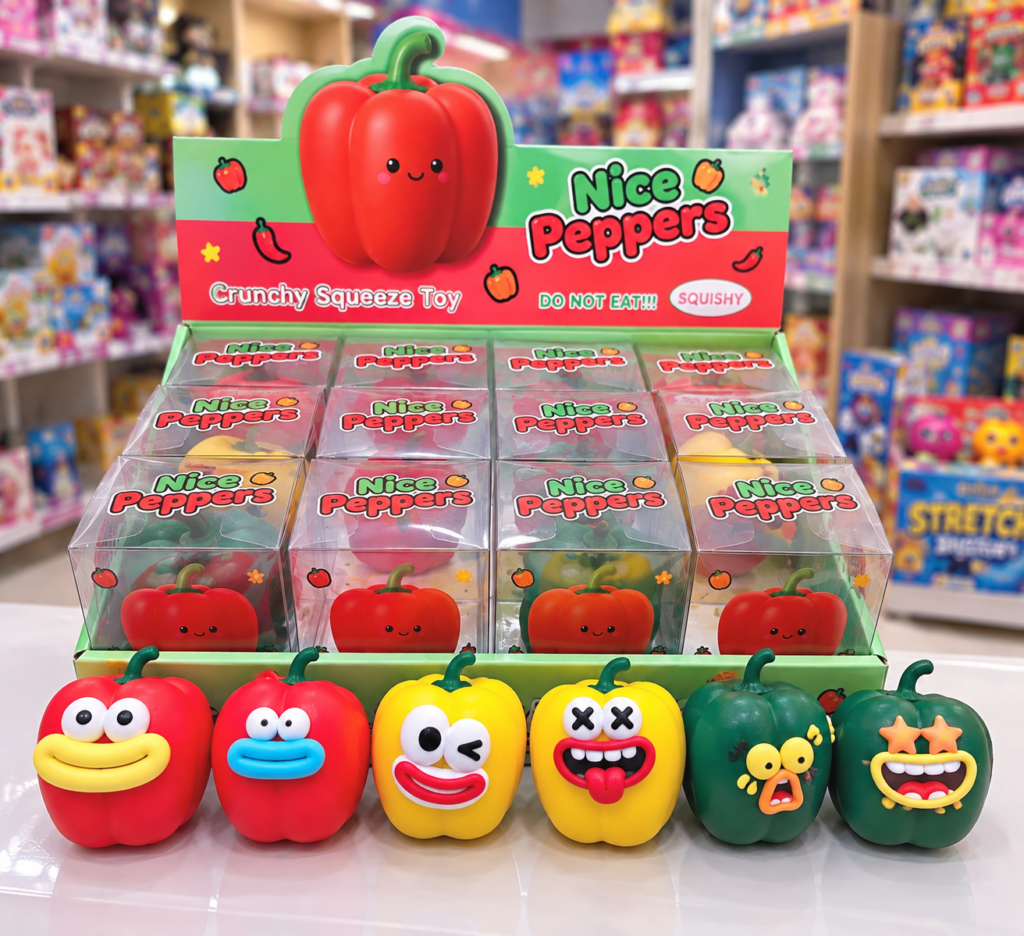
Consider a small squeeze toy sold in six colors. It could arrive individually boxed, hanging from a peg, loose in a countertop display or packed as an assortment in a PDQ. The toy itself has not changed. The way shoppers encounter it has.
For impulse toys that depend on texture, movement or an unusual shape, hiding too much of the product can work against the reason it was selected in the first place.
Packaging research has long pointed to the influence presentation can have on unplanned toy purchases. The practical takeaway for today’s buyer is less complicated: the package should help reveal the reason to pick up the product, not make that reason harder to find.
This also changes how buyers should look at master packs and display packs.
A compact display-ready carton can do more than make unpacking easier. It gives the retailer a ready-made group of products that can move between a counter, an endcap or a small open section of shelving. Mixed colors or expressions can make that footprint look fuller without turning each variation into a separate merchandising problem.
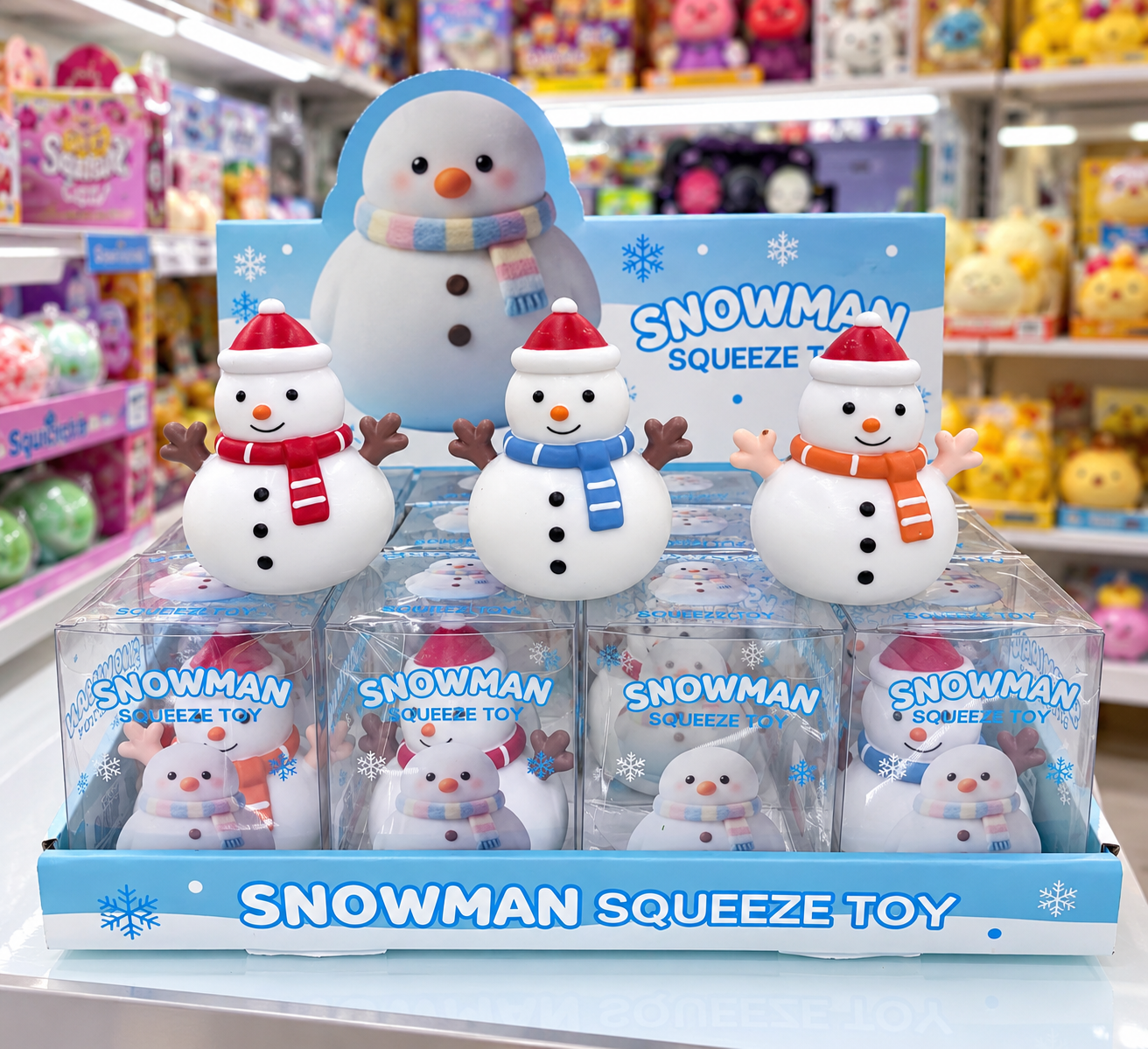
That may sound like a packaging detail at the sourcing stage. In the store, it becomes part of the product.
Variety Works Best When Shoppers Can Still See the Family
Spend a few minutes looking through current pocket-money assortments and the range can be enormous. Tesco alone lists hundreds of products across the broader section, from fidgets and squishies to mystery items and small activity products.
For an individual product program, however, more choice is not automatically better.
Imagine a countertop box containing twelve pieces. Three colors may feel limited for one concept and perfectly adequate for another. Twelve unrelated designs may create plenty to look at, but they can also make the display harder to understand.
The stronger assortments usually give shoppers an easy choice inside something they already recognize.
Which color do I want?
Which face is funniest?
Which one am I missing?
Those are very different decisions from asking the shopper to figure out what twelve unrelated products are supposed to do.
This is also where collectibility can extend the life of an impulse item. Toy World reported in September that pocket-money collectibles remain attractive to retailers partly because affordable products can encourage repeat visits as children build collections.
Not every impulse toy needs to become a collectible. But when multiple designs are planned, buyers should know whether the variation is actually creating another reason to purchase—or simply creating more SKUs.
That distinction matters when developing novelty assortments too, particularly as familiar formats are stretched across new characters, finishes and themes. Our Novelty Toy Trends 2026 article looks at that side of assortment development in more detail.
What Should a Buyer Notice Before Ordering?
By the time a buyer receives a quotation, a product has usually been reduced to familiar sourcing information: unit price, MOQ, dimensions, material, packaging and lead time.
Those numbers are necessary. They still do not tell you whether the toy will make sense from three feet away.
For impulse toys, it is worth looking at the physical sample as a shopper would.
Pick it up without explaining it first. Is the interesting part obvious? Look at it inside the proposed package rather than by itself. Does the packaging show what made the sample appealing? Put several colors or characters together. Does the assortment look intentional, or simply mixed?
Then look at the display carton.
A few centimeters of packaging can matter when a retailer is deciding where a product fits. So can the number of pieces in a display, the way assorted colors are distributed and whether the box still looks presentable after several units have sold.
These are small decisions individually. Together, they influence whether a product is easy for the retailer to place and easy for the shopper to understand.
That is a better test of impulse toys than price alone.
The strongest impulse toys do not need shoppers to stop and build a case for buying them. They create interest quickly, make the product easy to understand and give the price enough context to feel reasonable.
Sometimes that happens beside the register. Sometimes it happens in a fidget section, a gift display or halfway down a toy aisle.
The location can change.
The low-friction buying decision is what stays the same.
Related Reading