A carton of 200 small toys can sound like a better buy than a carton of 100.
Sometimes it is. Sometimes the larger count simply gives you more pieces that do not fit the way the toys will actually be sold, displayed or distributed.
That is the problem with comparing small toys in bulk by piece count alone.
A prize bin, checkout display, goodie bag and claw machine may all use compact toys, but they ask different things from the product. The useful starting point is not:
“How many pieces can I get?”
It is:
Where will these toys actually go?
Table of Contents
Small Toys in Bulk Need a Job Before They Need a Quantity
The category covers a surprisingly wide range of uses. Bulk assortments are sold for classroom rewards, party favors, event giveaways and school carnivals, while specialist prize retailers also organize small toys around treasure boxes, carnival games, fun fairs and parties.
That makes “small toy” a poor buying brief on its own.
Start with the destination.
A toy going into a prize bin needs to be easy to see and grab among other items. A party favor needs to fit comfortably into the bag or container being used. A checkout item has to make sense in a limited display area.
A toy intended for a claw machine introduces another constraint: it has to work with the available machine space and with the other prizes around it.
Once the use is clear, quantity becomes easier to judge.
A 300-piece assortment may make sense for a large event. The same assortment can be excessive for a retailer testing one small counter display.
That is why the first comparison between small toys in bulk should happen at the point of use—not at the carton.
Small Size Does Not Always Mean Efficient Use of Space
Product dimensions are only one part of the space calculation.
Packaging can change the footprint dramatically.
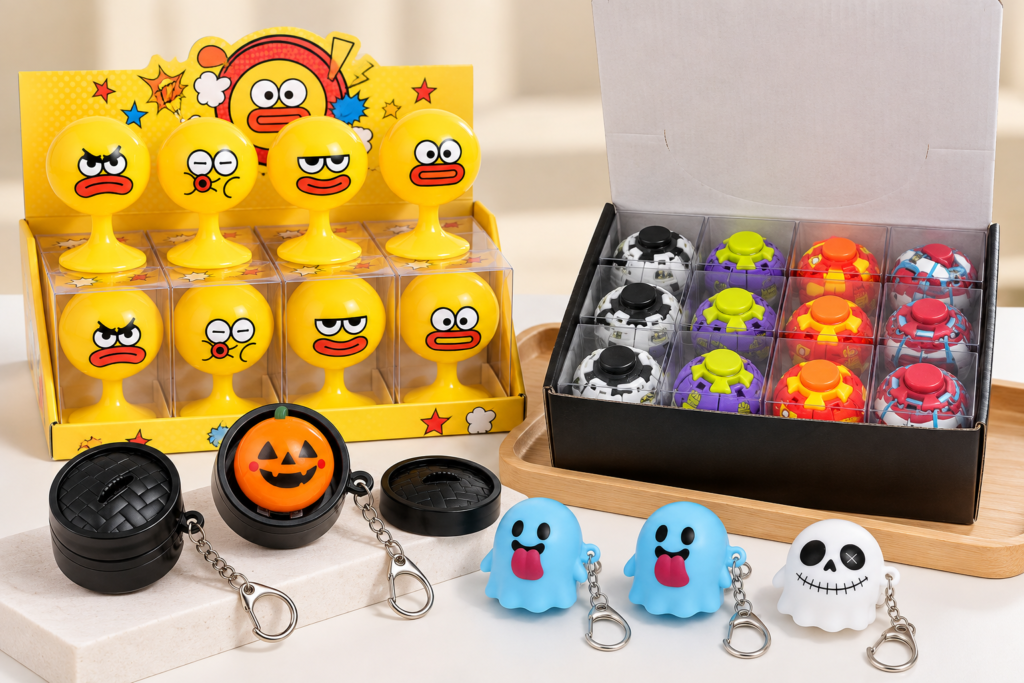
A loose mini toy, an individually bagged toy and the same item in a display-ready box may occupy very different amounts of room. A buyer comparing small toys in bulk should therefore look at the finished packed product, not just the dimensions of the toy itself.
Imagine twelve pieces of the same product.
If they arrive individually packed and are poured into a prize bin, the main concern may be how easily people can see and select them. If those twelve pieces arrive in a countertop display, the display dimensions suddenly matter just as much as the toy dimensions.
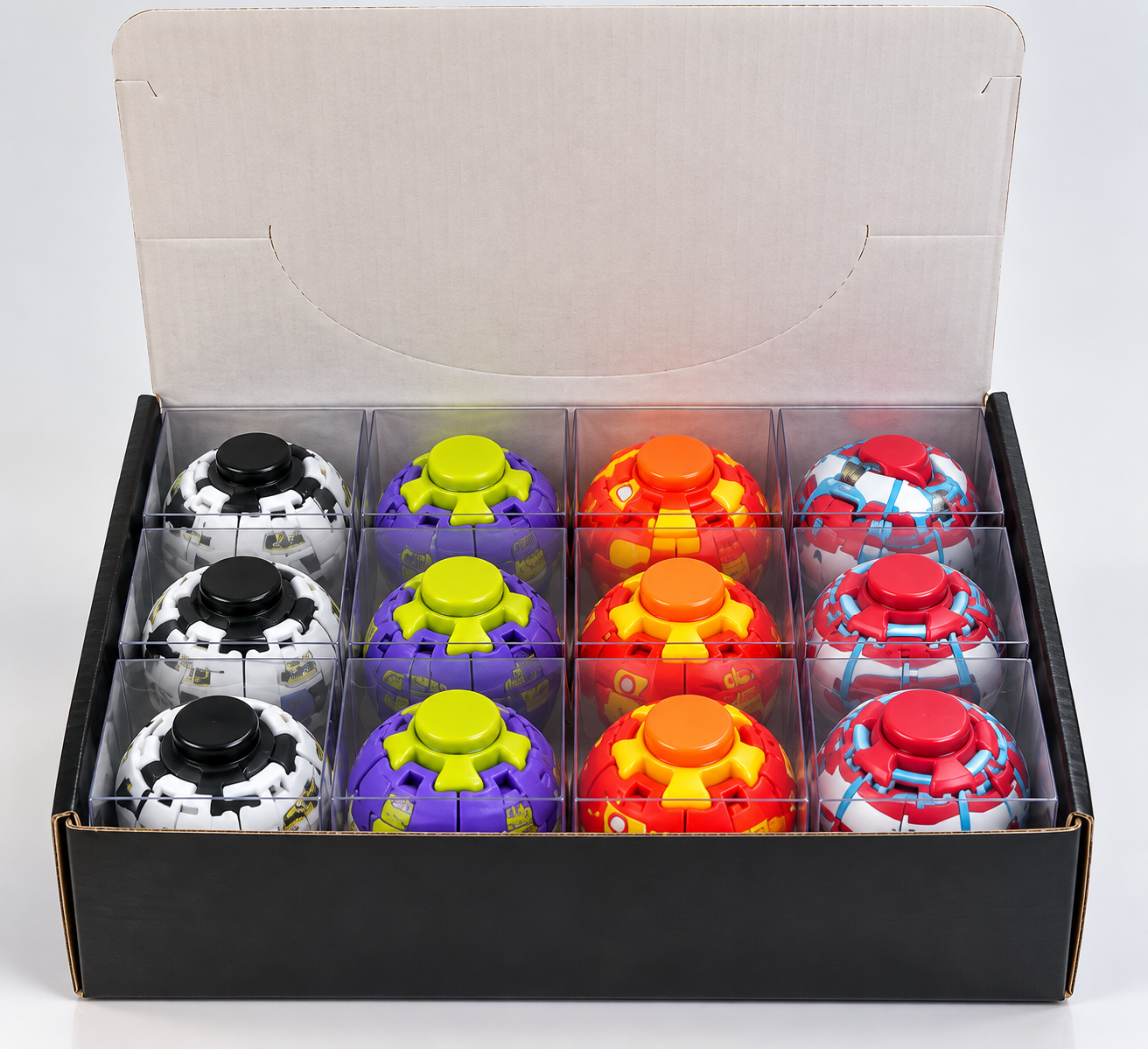
This is one reason carton information should not be separated from merchandising decisions. A compact item can still create inefficient storage or shelf use when its inner packs and display packaging are larger than expected.
Before approving an order, ask for the unit dimensions, individual packaging and inner or display-pack configuration together.
This is also where real product information becomes more useful than a generic “small toy” label.
For example, a compact interactive item such as the UFO Gyroscope Spinning Toy needs to be considered not only by its physical size, but also by how shoppers will see and understand the spinning mechanism.
Count Variety Differently for Small Toys
Large piece counts can make an assortment look diverse even when the actual choice is narrow.
Two hundred pieces in ten colors are not necessarily ten different reasons to choose.
For a prize program or event, color variation may be enough. For a retail display, shoppers may respond more to a change in interaction: something that spins, something that presses, something that squeezes or something that lights up.
A product such as the Light-Up Desktop Punch Ball, for example, contributes a different interaction from a small spinner or squeeze toy. That difference may be more useful to an assortment than simply adding another color of something already represented.
That does not mean every assortment needs as many mechanisms as possible.
It means the mix should match what the space is supposed to do.
A small prize bin can tolerate more repetition because toys are being given away or selected as rewards. A compact retail display may need clearer differences between adjacent SKUs because each item has to earn its place.
When reviewing small toys in bulk, count meaningful choices as well as total pieces.
Packaging Can Be Part of the Product
Small toys often have very little physical area to communicate what they do.
Packaging can solve part of that problem.
A transparent bag may be enough for a simple squeeze toy. A mechanical item may benefit from packaging that leaves the product visible and makes the interaction easier to understand. For a countertop assortment, a display box can organize several pieces without requiring the retailer to create a presentation from scratch.
But more packaging is not automatically better.
If the intended use is a treasure box, carnival prize or goodie bag, elaborate retail packaging may add volume without adding much value.
That changes when the same product is expected to sit on a store counter with a price attached.
Specialist carnival retailers illustrate this difference well: their small prize assortments are organized around treasure boxes, carnival games, fun fairs and parties rather than conventional shelf presentation.
The right question is not:
“Does this toy have retail packaging?”
Ask whether the packaging helps the product do its job in the space where it will be used.
Compare the Carton With the Destination
Before placing a bulk order, put the numbers back into a real scenario.
Suppose a carton contains 144 pieces.
How many fit into one display? How many displays can one carton replenish? If the toys are being divided into event bags, how many complete bags does the carton actually make?
If several SKUs are mixed, will one design run out long before the others?
These questions turn small toys in bulk from an abstract unit-price comparison into an inventory decision.
They can also expose a mismatch before the order ships.
A low unit price loses some of its appeal if the assortment creates awkward leftovers, requires more display space than expected or arrives in pack configurations that do not match the way it will be distributed.
Bulk toy assortments currently appear in very different pack sizes—108 pieces, 144 pieces and even much larger quantities depending on the product and use case.
Bulk buying works best when carton quantity, individual packaging and final use line up.
Buy Small Toys in Bulk Backward From the Space
There is nothing wrong with comparing cost per piece.
It is useful.
It just should not be the first decision.
Start with the counter, prize bin, event bag, display or machine. Work backward to the size and packaging that fit it. Then decide how much variety that space needs and how many pieces can realistically move through it.
Only after that does the carton count tell you whether the order is efficient.
The market for small toys in bulk covers everything from classroom rewards and party favors to carnival prizes and retail-ready assortments. Those uses may share similar products, but they do not share the same space.
Small toys are bought by the piece. They are used by the space.
Read More
• Wholesale Novelty Toys: How to Build an Assortment That Does Not Feel Random
• Wholesale Fidget Toys: Choosing Different Play Mechanisms