A novelty toy buying table can fill up fast.
A squishy looks promising. So does a small spinner. Then someone adds a light-up toy, a stretchy character and a seasonal item with great packaging. Before long, there are ten samples on the table and almost all of them seem worth carrying.
That is usually when the harder part starts.
When buyers source wholesale novelty toys, the question is not whether each product is fun on its own. It is whether the products make sense together.
A good novelty assortment can be colorful, strange and completely mixed in theme. It just should not feel accidental.
Table of Contents
Wholesale Novelty Toys Need More Than More SKUs
Start by looking at the samples as a group.
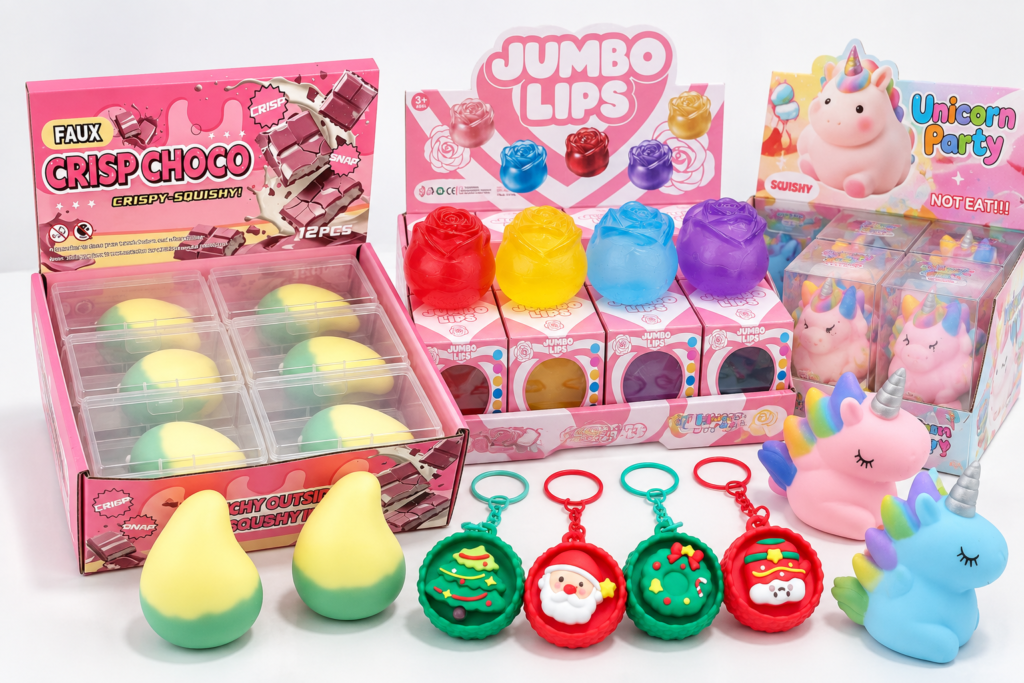
Five different packages do not necessarily mean five different buying reasons. A food-shaped squishy, a soft character and two other squeeze toys may look unrelated in a catalog but feel surprisingly similar once they are out of the box.
This matters because wholesale novelty assortments can get large very quickly. Current bulk catalogs range from small fidget assortments to 100-piece and even 1,000-plus-piece mixed novelty packs.
SKU count is easy to increase. Useful variety is harder.
If two products disappeared from the table, would the assortment actually feel different?
That is a simple test, but it catches a lot. Buyers often find that one product is adding a new color or character without adding a new reason to buy.
Start With What the Product Does
Pick up the samples before spending too much time comparing the artwork.
A slow-rise squishy and a filled squeeze toy may sit next to each other in a catalog, but they do not create the same experience. Neither does a small spinner or a light-up item.
When comparing wholesale novelty toys, that difference matters.
A shopper may squeeze one product, spin another and notice a third because something flashes when a button is pressed. A seasonal character might sell mostly because the timing is right. These products can share a shelf without asking the shopper to make the same decision four times.
You do not need a different mechanism for every SKU. If squishies already perform well in a store, carrying several makes sense.
The problem starts when visual differences hide too much functional overlap.
Try taking the packaging away for a minute. Group the samples by what someone actually does with them. If most end up in the same pile, the assortment may need another kind of product—not another face or color.
Price Is Only Half the Placement Decision
A $3.99 counter toy and a $9.99 boxed novelty item are doing different jobs, even when both are inexpensive enough to feel spontaneous.
Where they will be sold matters just as much.
Wholesale toy assortments are commonly offered in case packs and mixed quantities, while novelty products may be prepared for peg hooks, bins, countertop displays or other retail formats. The right format depends heavily on the sales channel and available space.
For a retailer, that means looking beyond unit cost.
Could twelve pieces sit comfortably beside the register? Does the individual package need a peg hole? Will a display carton take up more counter space than the product deserves? Would the same toy work better individually boxed on a shelf?
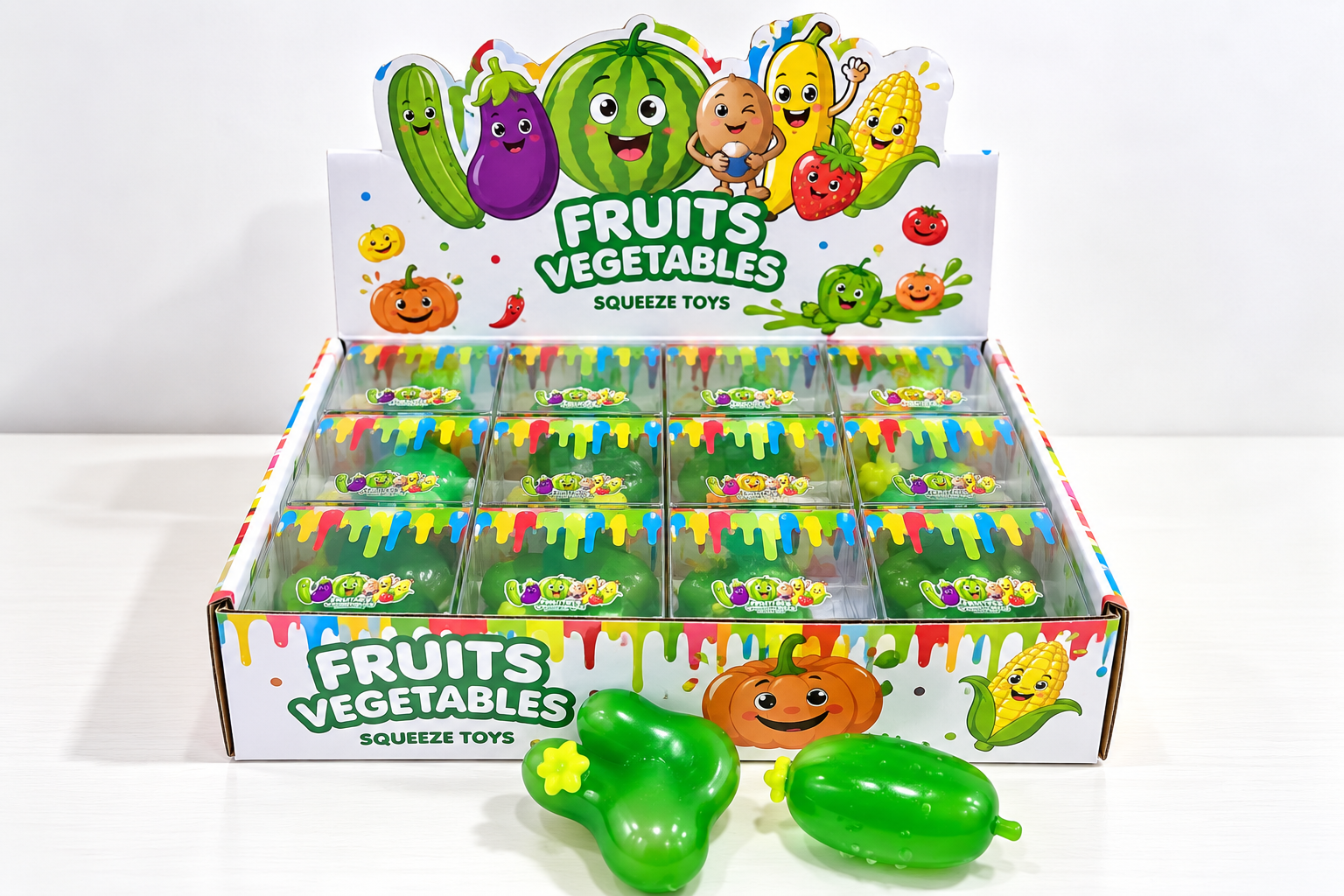
These are ordinary merchandising questions, but they can change which wholesale novelty toys are worth ordering.
A product can be fun, affordable and well made and still be awkward for the store that has to sell it.
That is why the display carton and individual packaging belong on the buying table with the sample.
Let the First Order Answer Something
A first order is useful when you know what you are testing.
Instead of going deep on several products that feel similar, a retailer might start with an easy counter item, a tactile product, something with stronger gift presentation and one seasonal or trend-driven SKU.
Then the customers get a vote.
Maybe the small squeeze toy needs constant replenishment. The beautifully packaged item gets picked up but rarely purchased. A product that looked ordinary in the catalog turns out to be the one people keep handling.
That information is more useful than trying to predict every winner before the first order ships.
For buyers sourcing wholesale novelty toys, this is one reason a broader, shallower opening assortment can make sense. Current buyer guidance in the category similarly emphasizes using the first order to learn what actual store traffic responds to, then reordering the products that move.
It can also guide later custom development.
If an existing squeeze toy performs well, the next step might be a custom color, branded packaging or a more distinctive design. If shoppers ignore the basic product, spending more on customization probably will not solve the underlying problem.
Before sending the order, look at the samples one more time as a group.
If two products compete for the same shopper, the same space and nearly the same interaction, you may not need both.
Good wholesale novelty toys do not have to match. The assortment simply needs enough difference that each product earns its place.
If removing one SKU leaves a real gap, that is usually a better sign than having another item to count.
Read More
• Novelty Toy Trends 2026: How the Category Is Expanding at Retail
• Impulse Toys: What Makes a Product Easy to Buy?
• Toy Store Trends 2026: What Is Earning Space on the Retail Shelf?