A product spec that says “TPR squishy” may sound specific. For a filled squeeze toy, it really isn’t.
TPR might describe the outside of the toy, but what is inside can be just as important. Change the filling and the same basic shape can feel heavier, softer, firmer, more fluid, or completely different when squeezed.
This is why squishy toy filling materials need their own line in a product specification. The shell material and the filling shouldn’t be treated as the same thing.
Table of Contents
Start With What’s Outside and What’s Inside
Filled squishies are easier to compare when the construction is described in plain language.
What is the outer shell made from? What is inside it? How is it sealed?
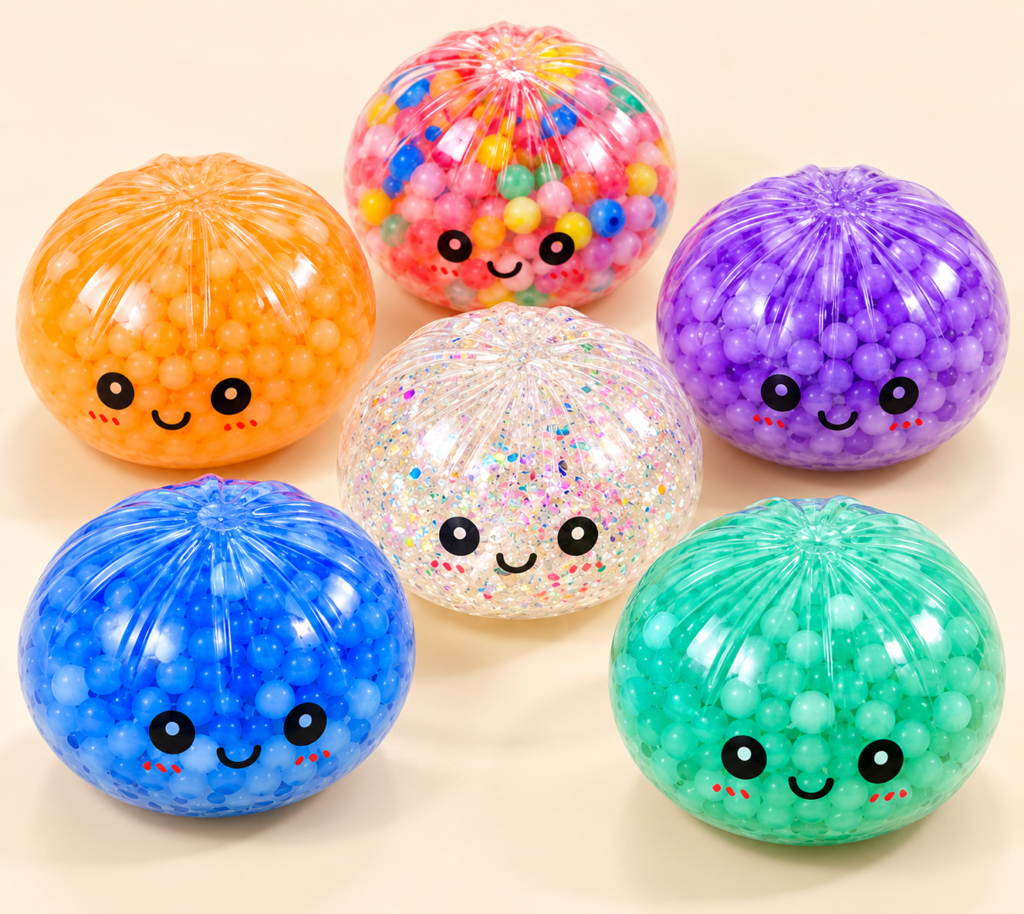
For example, two toys can both have TPR shells and still be very different products. One might contain a soft, uniform filling. Another might contain visible beads, glitter, or other moving pieces.
Terms like “jelly,” “crunchy,” or “butter” can be useful when talking about the feel of a toy, but they don’t tell a buyer enough to place an order.
When comparing squishy toy filling materials, ask the supplier to list the shell and fill separately.
The Same Fill Can Feel Different in a Different Toy
The filling matters, but it isn’t working alone.
Size, shell thickness, flexibility, and the amount of material inside all change what happens when someone squeezes the toy. That makes it difficult to compare fillings using two products with completely different constructions.
If you are deciding between two fills for the same design, samples are more useful when the basic shell and size stay similar. Then you can actually feel what changed.
This also helps when a buyer likes a factory sample and wants the production run to feel the same. “Use the same filling” may not be enough if the fill quantity or shell construction changes later.
For Clear Squishies, the Filling Is Part of the Look
With an opaque toy, most customers never see what is inside. With clear products, squishy toy filling materials can also become part of the design.
Take Vilora’s Rainbow Glitter Bead Dumpling Squishy. The transparent TPR body lets the colorful beads and glitter become part of the product itself. They move when the dumpling is squeezed, so the inside is doing visual work as well as creating the tactile effect.
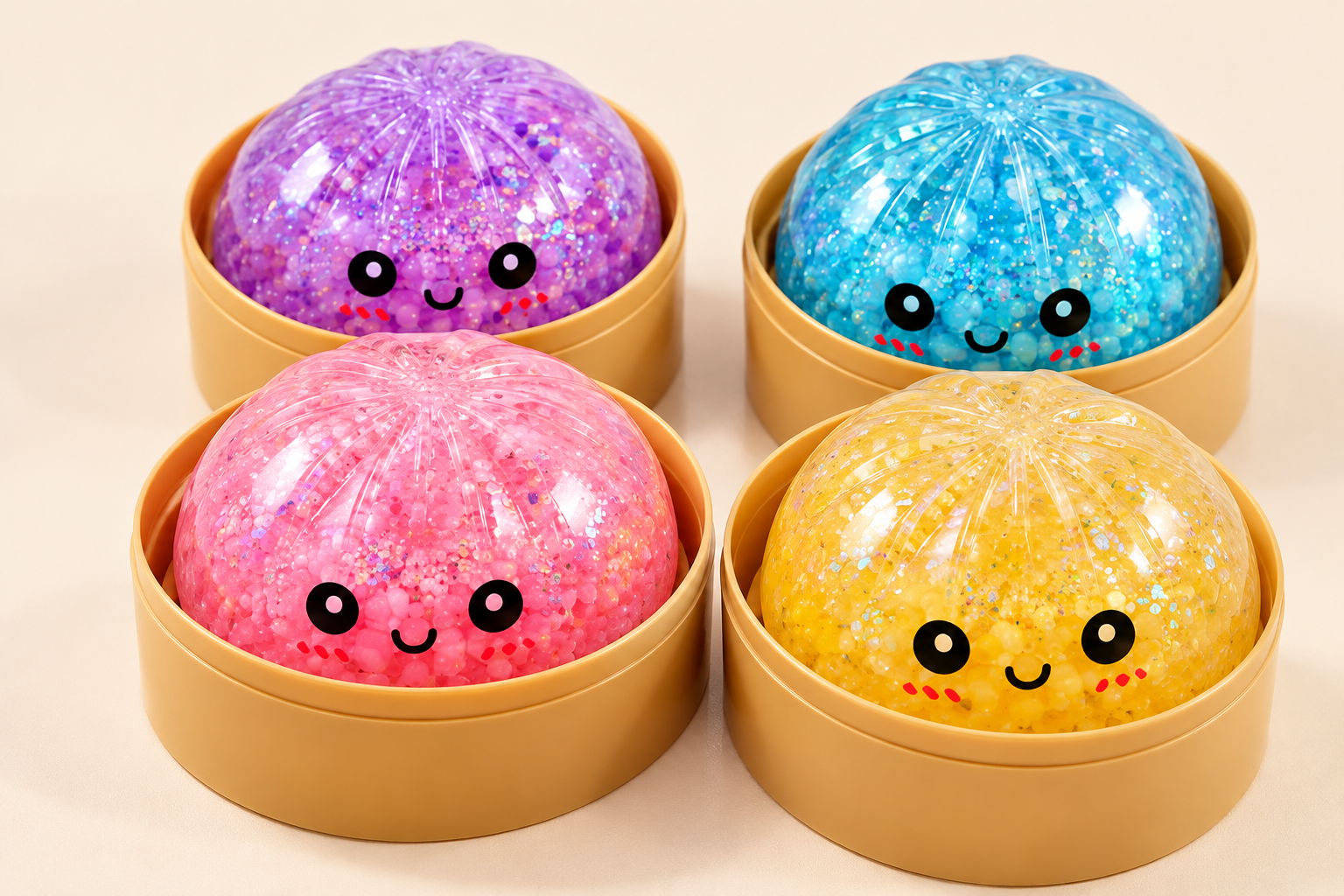
In that kind of product, “beads and glitter” is only a starting point.
The color mix, particle size, amount of glitter, and how everything is distributed can noticeably change the finished piece. Those details are easier to approve from an actual sample than from a written description.
Don’t Forget How Much Filling Goes Inside
Even with the same shell and the same type of fill, changing the amount can change the product.
A toy with more room inside may allow the filling to move around more freely. Add more filling and it may become heavier or firmer. In a transparent toy, the difference can also be visible.
This doesn’t mean every buyer needs to specify a complicated formula. Usually, there just needs to be a clear production reference.
Depending on the product, that might be the approved finished weight, a fill-weight target, or a physical sample that is tied to the final specification.
It is a small detail, but an important one when working with squishy toy filling materials across a larger production run.
The Seal Matters Too
Filled toys have another part that is easy to overlook: the closure.
Every squeeze moves the material inside the shell and puts pressure somewhere. How much pressure reaches the sealed area depends on the construction of the toy and the behavior of the filling.
That is why changing the inside of a toy isn’t always an isolated material change. A different fill, a different quantity, or a different shell can change how the finished product behaves as a whole.
For custom development, it makes more sense to approve the finished construction than to approve each material in isolation.
Be Specific About Water Beads
“Bead-filled” and “water-bead-filled” are not interchangeable descriptions.
That distinction is particularly important for products intended for the U.S. market. The U.S. Consumer Product Safety Commission says the federal water-bead toy requirements also apply to products that contain water beads inside another toy, including water-bead-filled balls.
The mandatory standard took effect on March 12, 2026 and includes requirements involving bead expansion, extractable acrylamide, labeling, and certification for covered children’s products.
So if a product contains beads, find out what they actually are.
And if the project calls for no water beads, put that directly in the specification. Don’t rely on a product nickname or assume that everyone is using “bead-filled” to mean the same thing.
This is one area where clearly documenting squishy toy filling materials can prevent a much bigger problem later.
A Fill Change Can Affect the Package
Changing squishy toy filling materials may not change the dimensions on paper, but it can change how the finished toy sits in its package.
Weight can change. The resting shape can change. A softer construction may settle differently inside a display box.
If the fill or fill quantity changes after the packaging has already been selected, it is worth checking the packaging decisions again with the finished product inside.
Put the Finished Construction on the Spec
For most buyers, the useful information is straightforward: shell material, filling, visible inclusions, finished weight, closure, dimensions, packaging, and the sample version that was approved.
That is more useful than a broad description such as “TPR squeeze toy.”
Scientific American recently looked at this same issue from the consumer side and found that some commercial squishies identify TPR as the outer material while listing substances such as PVA or maltose separately as the filling. In other words, knowing the shell still doesn’t tell you everything that is inside the toy.
For sourcing, the goal is simply to remove that uncertainty before production starts. A clear squishy toy filling materials specification gives the factory a better reference and gives the buyer something concrete to approve.
Read More