Finding a squishy toy manufacturer is easy. Figuring out whether that manufacturer is set up for the product you actually want to make takes more work.
A squishy toy manufacturer may produce thousands of squeeze toys every month and still be a poor fit for a particular project. A transparent TPR dumpling with moving filling, for example, raises different production questions than a painted slow-rise foam character. A simple stock shape in retail packaging is different again from an original design that needs new tooling.
For buyers, the useful question is not simply whether a factory “makes squishies.” It is whether the factory’s production capabilities match the construction, finish and scale of the product being sourced.
Table of Contents
Start With the Type of Squishy You Are Making
The word squishy covers products that can be quite different once they reach the production floor.
Some designs use molded TPR skins with a filling inside. Others rely on PU foam for the squeeze and recovery behavior. Products may be opaque, translucent or painted, and some include glitter, foam pieces or other internal elements.
That changes what the manufacturer needs to control.
If the product depends on a clear outer skin, buyers may care about clarity, bubbles, seams and how the filling looks through the material. A painted character introduces a different set of concerns: surface finish, color application and alignment of facial or decorative details.
Before evaluating a squishy toy manufacturer, define the construction of the product first. A long equipment list means very little if the relevant process is not the one your SKU needs.
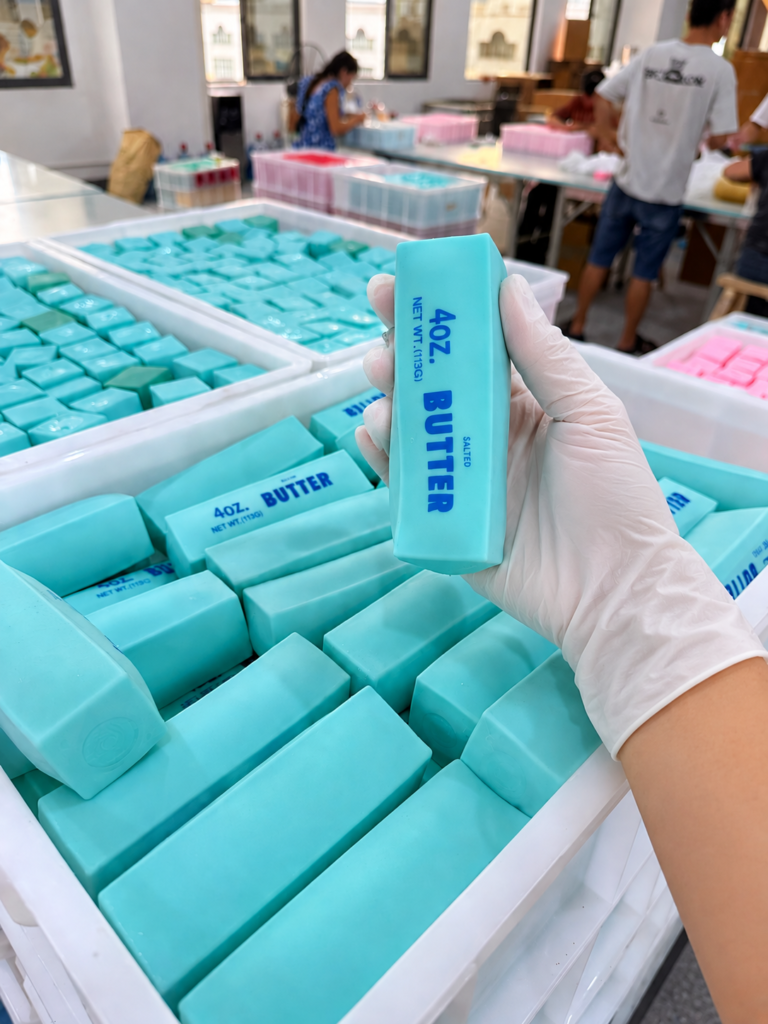
Ask to See Production That Resembles Your Product
Factory photos are useful, but generic workshop photos only go so far.
Suppose a buyer wants to develop a filled TPR squeeze toy. Seeing a warehouse full of finished foam squishies proves that the supplier works in the category, but it does not show how it handles the TPR skin, filling process or closure required for the new product.
A better reference is something structurally similar.
It does not need to look like the buyer’s design. In fact, it often should not. What matters is whether the squishy toy manufacturer can show a comparable material, construction or production process.
For an original project, that might mean reviewing:
- a TPR product with a similar wall and squeeze behavior;
- a filled toy using a comparable closure method;
- a translucent product if visual clarity matters;
- or a molded item with roughly the same level of detail.
That gives the conversation something physical to work from before a new mold or production run is approved.
Separate Development Capability From Production Capacity
Capacity numbers sound reassuring. They also need context.
A factory capable of producing a large number of units per month may still need several rounds of development before a new SKU is ready for that production line.
The two questions are different:
Can this manufacturer develop the product correctly?
Can it repeat the approved result at the quantity you need?
The first may depend on design support, tooling, material selection and sample revisions. The second depends more on production scheduling, process control, labor, equipment and the ability to maintain the approved specification through a larger run.
This distinction matters when comparing an existing product with an original OEM project.
If a buyer chooses a proven 8.5 cm squishy and changes only the packaging, most of the manufacturing questions are already known. If the buyer wants an original shape, different squeeze feel and new filling combination, production capacity becomes relevant only after those details have been worked out.
That is why a useful squishy toy manufacturer should be able to discuss both stages separately rather than treating “customization” as one generic service.
Look at What the Factory Has to Control Repeatedly
A good sample is important. Bulk production asks a harder question: what has to remain consistent across the run?
For a squishy toy, that may include dimensions, color, surface appearance, softness, recovery behavior, fill quantity, printed details, seams or closure, depending on the construction.
Not every characteristic needs a complicated numerical tolerance. But the important ones should have an agreed reference.
Imagine approving a sample because the squeeze feels right. Three weeks later, production begins and the finished units look almost identical—but feel noticeably firmer.
The problem is no longer whether the factory can make the shape. It is whether the production process can reproduce the characteristic the buyer actually approved.
This is where physical samples become more useful than a catalog specification alone. The approved product gives both sides a practical reference for production and later inspection.
Testing Support Should Match the Destination Market
A factory saying “we can do ASTM” is not the end of the compliance conversation.
For toys intended primarily for children 12 and under in the United States, applicable children’s product safety requirements can require third-party testing by a CPSC-accepted laboratory. The responsible domestic manufacturer or importer then bases the Children’s Product Certificate on the applicable passing test results.
That makes product-specific documentation more useful than a general claim that a factory has produced compliant toys before.
A buyer should be able to identify the actual product being tested, the applicable requirements, the laboratory and the report associated with that product. The CPSC specifically notes that laboratory accreditation is rule-specific, so not every accepted laboratory is accredited for every required test.
For an overseas order entering the U.S., this is also something to plan early rather than after cartons are packed.
Packaging Capability Is Part of Manufacturing Capability
The production line does not really end when the toy comes out of the mold.
A squishy may need an individual bag, clear box, printed retail box, countertop display or another pack format. The finished product has to fit that packaging without being excessively compressed or presented poorly.
This becomes especially noticeable with soft products.
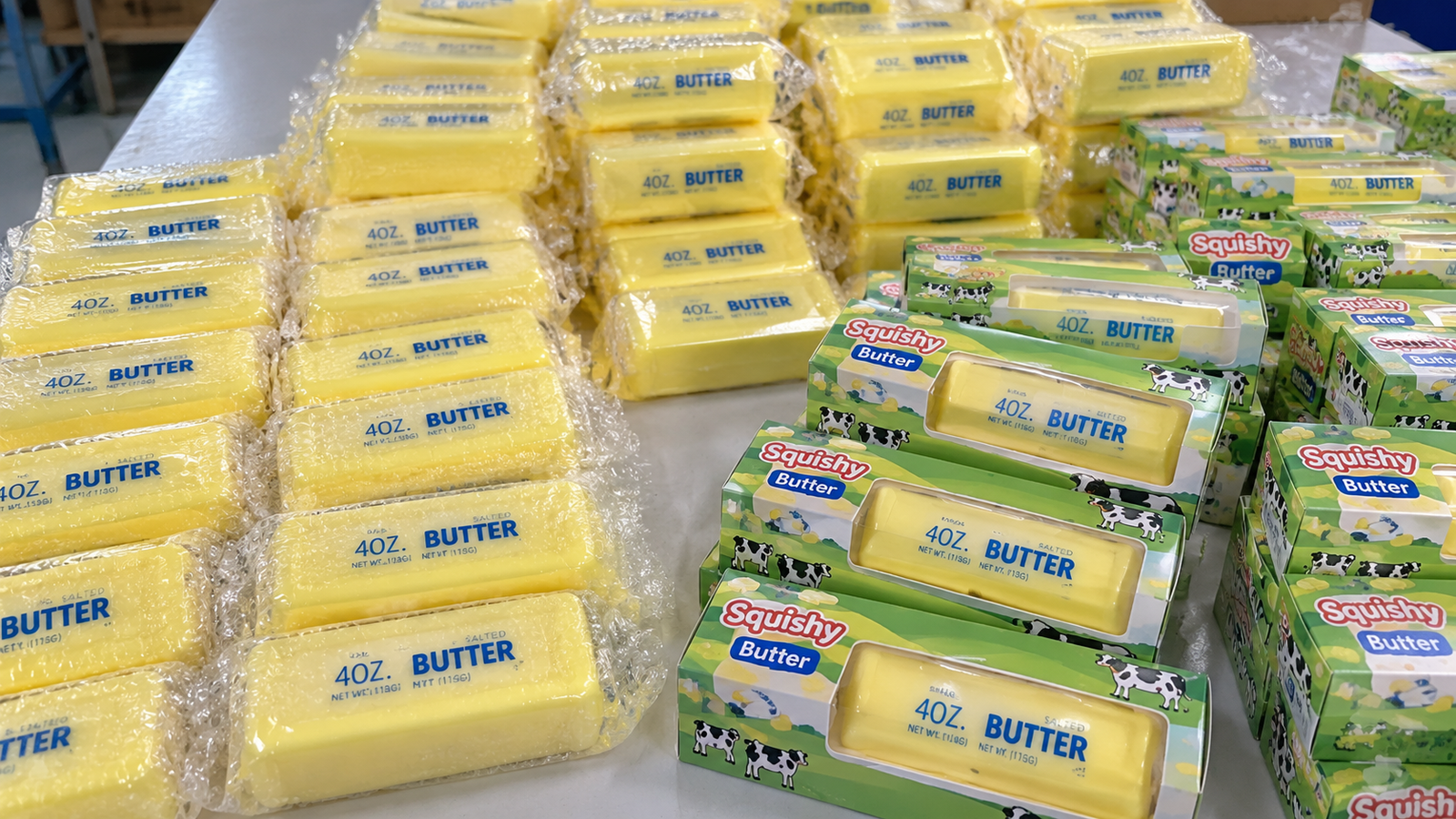
Changing a squishy from 8.5 cm to 15 cm can affect much more than the amount of material used. The retail pack gets larger, fewer pieces may fit in a display, carton dimensions change and freight volume can move with them.
A squishy toy manufacturer therefore needs enough final packaging information to understand the product as a sellable SKU, not only as a loose toy.
For buyers, this is one reason to discuss the intended sales channel early. A loose promotional squeeze toy, a boxed gift-shop item and a 12-piece countertop display may start with a similar product but finish as very different manufacturing orders.
The Best Factory Evidence Is Specific to Your SKU
A squishy toy manufacturer’s factory size, employee count and machine count can help establish scale. They should not replace product-level questions.
If you are evaluating a manufacturer for a translucent filled dumpling, ask to see relevant filled TPR work. If you are developing a detailed molded character, look at comparable mold detail and sample revisions. If the product needs a display box, review how the finished units will sit in that display before approving the full order.
The more specific the evidence becomes, the easier it is to separate general factory capability from capability that actually matters to your project.
Choosing a squishy toy manufacturer is ultimately less about finding the factory with the longest capability list and more about matching the product you want to make with the processes that have to produce it repeatedly.
For a buyer preparing an OEM project, that is a much stronger starting point than asking only, “Do you make squishy toys?”
Read More