
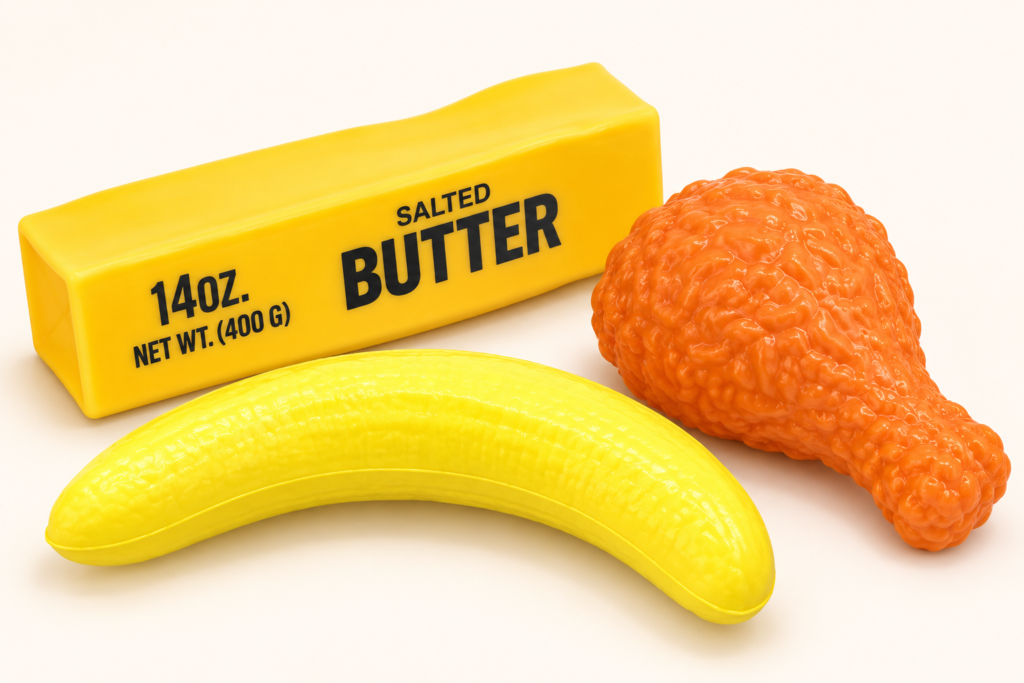
A toy butter stick can look ready for a play kitchen, yet offer none of the actions a shopper expects from a cooking set. Can it be divided into pats? Spread with a toy knife? Put back together afterward? Comparing food squishies vs pretend play food starts with those expectations. Both can borrow the same familiar food shape, and both can be soft. The buying decision depends on what the product is designed to let someone do with it.
Table of Contents
Food Squishies vs Pretend Play Food: Follow the Action
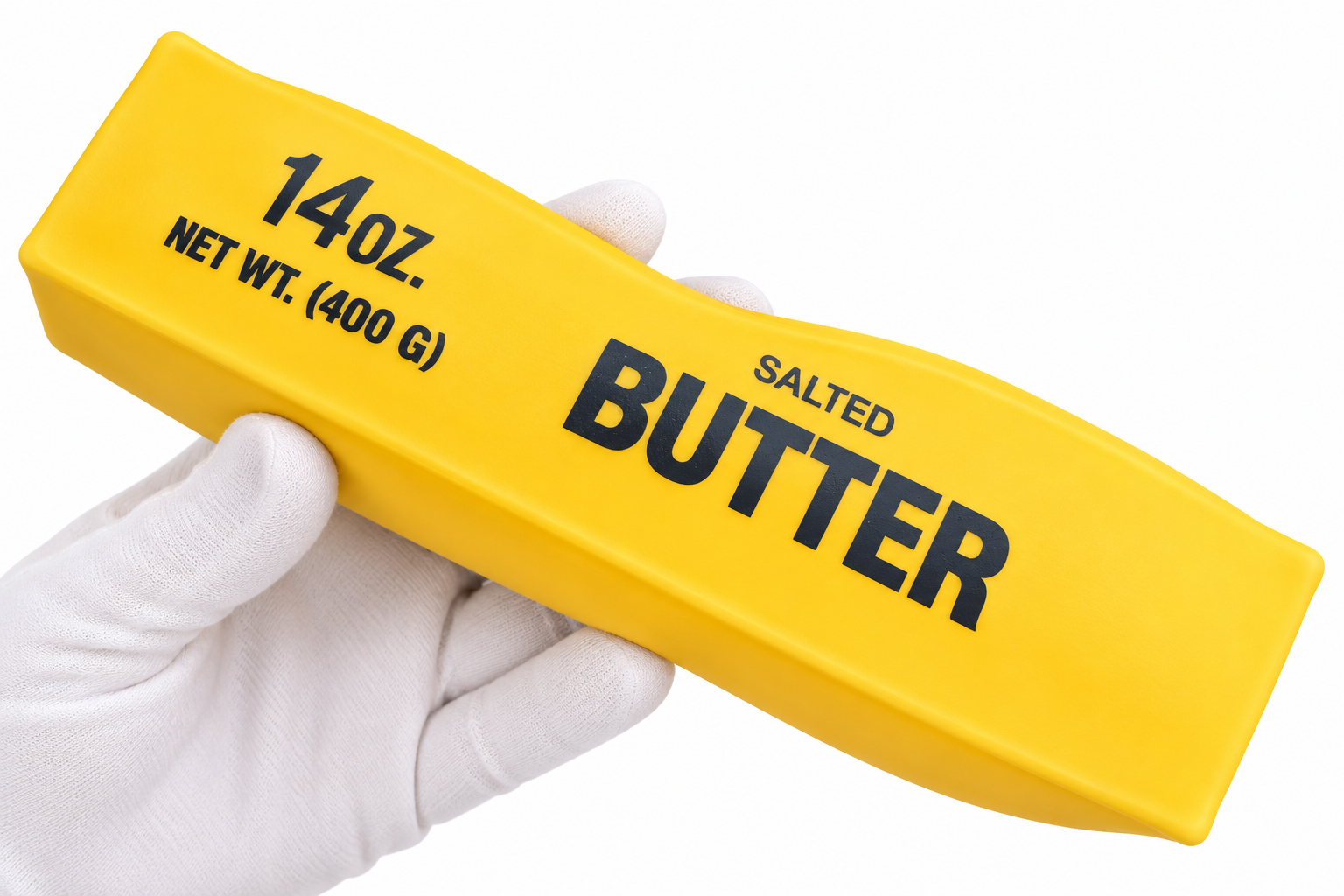
For a squeeze toy, pressing and releasing the body is usually the main interaction. A recognizable food shape adds humor or character. Vilora’s Realistic Butter Stick Squishy, for example, is presented as a flexible squeeze toy. Its butter appearance does not establish a slicing mechanism or make it a spreadable play compound.
A cutting-food set needs a different construction. The Melissa & Doug Cutting Food Set uses wooden sections joined by self-stick tabs. A toy knife separates those sections; joining them again resets the activity. The separation is built into the product rather than created by cutting through its material.
That distinction makes food squishies vs pretend play food useful to a buyer preparing a cooking-themed offer. “Looks like bread” describes appearance. “Separates into slices and reconnects” describes a function that must actually be supplied. A one-piece squeeze loaf cannot fulfill that second description simply because it resembles the same food.
Pretend play does not always require detachable parts, either. Whole food props can be used for make-believe shopping or serving. Ask whether the planned activity needs a recognizable object, a squeeze response or an assembly feature. A grocery game and a sandwich-building activity may require different products even when both use bread-shaped toys.
Soft Play Food Makes the Categories Overlap
Food squishies vs pretend play food is not a reliable shorthand for soft versus hard. HABA’s Roast Chicken Soft Play Food has detachable wings and drumsticks attached with hook-and-loop strips. Its soft construction works alongside a serving activity, rather than defining a separate category.
A child may also include a suitable food-shaped squeeze toy in an imaginary restaurant. That possibility does not establish every cooking action as an intended use. A product can serve as a recognizable prop while having specific limits on how it should be handled.
When reviewing food squishies vs pretend play food, inspect what the sample includes. Are burger layers separate or molded together? Does a decorative line mark a joint that opens? Is the basket a play accessory or a presentation container? A photograph of the assembled product may leave those questions unanswered.
Request a short demonstration of the action the retail listing will promise. For a reconnecting design, watch the parts separate and rejoin. For a squeeze toy, watch compression and release. Keep demonstrations within the manufacturer’s instructions; placing a toy knife beside a squishy does not establish that the toy is designed to be cut.
Let the Retail Description Match the Product
Once buyers have compared food squishies vs pretend play food, the findings should carry through to the product listing. Describe a squeeze item through its intended handling and recovery. For a cooking set, explain the assembly or serving features and identify the accessories included. Give shoppers enough detail to picture the activity before opening the package.
For example, “butter-shaped squeeze toy” creates a different expectation from “pretend butter with removable pats.” Photographs should support the wording: show the squeeze interaction for the first product and the separate components for the second. Clearly distinguish included pieces from dishes, utensils or other props used to style the photograph.
A comparison of food squishies vs pretend play food also needs to preserve each product’s age guidance and care instructions. A soft body alone does not establish suitability for toddlers. Likewise, a kitchen theme does not establish suitability for washing, heating or contact with real food. Those details must come from the exact product’s instructions.
For a food-shaped squeeze toy project, send Vilora your reference design and intended squeeze action, together with the target size, quantity and destination market. If your brief began with food squishies vs pretend play food, explain which handling features led you toward a squeeze format. A reference photo shows the appearance; a short description of what should happen during use gives the team a clearer basis for assessing the concept and discussing samples.
Read More