

Novelty toys that launch through the air using elastic tension provide engaging interactive play, but their launching action places them under closer regulatory scrutiny than stationary squeeze toys. For U.S. importers and retail compliance teams, stretchy finger flinger toy safety requires evaluating mechanical projectile criteria alongside standard chemical and small-parts rules.
Addressing stretchy finger flinger toy safety before approving mass production helps buyers avoid customs holds, laboratory retesting delays, and retail onboarding rejections.
Table of Contents
Understand How Projectile Toy Rules Apply to Elastic Flingers
In U.S. toy regulation, the actual launching configuration determines which projectile-related provisions apply.
When reviewing stretchy finger flinger toy safety, compliance teams must consider how federal standards classify elastic launching toys:
Mandatory Standard Framework: Under federal regulations enforced by the Consumer Product Safety Commission (CPSC), children’s toys must comply with ASTM F963, which includes dedicated sections governing projectile toys.
Kinetic Energy and Energy Density: Laboratories measure the velocity and mass of a launched toy to calculate its kinetic energy and kinetic energy density. Do not infer low impact energy from softness alone. The laboratory must determine whether relevant kinetic-energy and contact-area provisions apply to the finished design and measure the product under the specified procedure.
Other Projectiles: Some launching devices may be assessed for their ability to launch objects other than the supplied projectile. A finger-worn elastic novelty is not automatically the same mechanism; have the laboratory determine whether this provision applies.
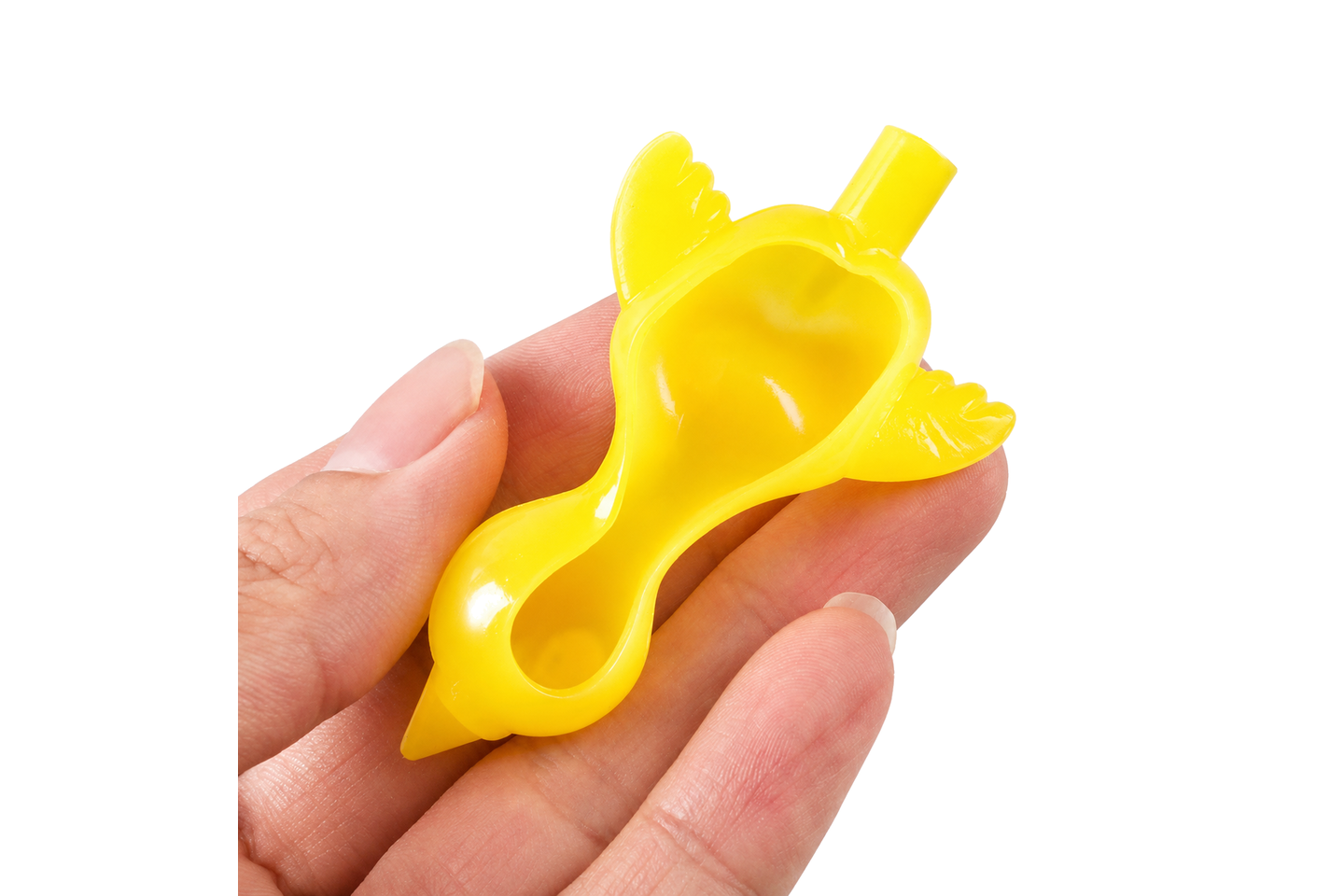
Evaluating actual product geometry on items like our Stretchy Chicken Finger Flingers allows testing laboratories to apply the appropriate mechanical test protocol.
Inspect Tip Geometry, Softness, and Mechanical Abuse Resilience
Physical construction directly governs how a launched novelty behaves upon contact with surfaces or users.
When auditing samples for stretchy finger flinger toy safety, quality assurance teams examine structural details:
Leading-Edge Radius and Softness: The front tip of a finger flinger—such as the rounded beak or head area—must be free from rigid, sharp points. Flexible construction may influence contact behavior, but a visual inspection cannot establish safe impact performance.
Tension and Tear Abuse Testing: Under ASTM F963 use-and-abuse protocols, toys undergo standardized tension, torque, and drop tests. If an accessible part detaches during applicable testing, the age grade and small-parts requirements must be evaluated together. A 3+ label is not a substitute for fixing a design that fails requirements applicable to its intended users.
Finger-Pocket Structural Integrity: Inspect the hollow finger launch pocket to ensure thin edges do not rip under normal pull forces, referencing general tactile construction principles in our wholesale novelty toys collection.
Documenting physical sample checks helps ensure production lots match the tested configuration for stretchy finger flinger toy safety.
Verify Chemical Composition and Surface Decoration Limits
Because users place their fingers directly inside the hollow pocket and handle the elastic body repeatedly, chemical safety is essential.
Ensuring stretchy finger flinger toy safety requires confirming third-party chemical testing across all accessible components:
Lead and Phthalate Scope: Identify accessible components and determine which lead and phthalate requirements apply to the intended children’s product; do not assume every material requires identical testing.
Surface Decorations: Ask the laboratory which ASTM F963 chemical provisions apply to the actual printed or coated components and retain reports tied to the finished SKU.
Material Traceability: Buyers should request clear component descriptions tied to the specific SKU, cross-referencing procedures outlined in our OEM and ODM quality workflow, rather than relying on generic supplier statements.
Verifying component-level test coverage prevents documentation gaps during retail compliance audits.
Coordinate Age Grading, Warning Labels, and Certificate Records
Accurate labeling and complete import records connect physical laboratory results to retail packaging.
To complete this launching-toy assessment documentation before shipment, importers should verify three administrative items:
Age-Grade Alignment: Confirm that the printed age grade on both individual 5-piece boxes and 30-piece countertop displays matches the age group evaluated in the laboratory test report.
Precautionary Usage Statements: Include clear, legible consumer guidance advising users not to aim or launch the toy at faces or eyes, where recommended by compliance reviewers.
Children’s Product Certificate (CPC): Identify the responsible domestic manufacturer or importer that must issue the CPC, and verify that the certificate identifies the product, applicable rules, test records, and required parties.
For a related product or sourcing reference, see toy laboratory sample submission.
Establishing clear compliance records for this launching-toy assessment supports smooth customs clearance and retail onboarding. To request product specifications, sample units, or compliance support details for our finger-flinging novelties, contact Vilora Toys with your destination market and target order volume.
For the U.S. regulatory framework, consult CPSC toy safety business guidance. The applicability of any external guidance to a particular finished SKU must be checked separately.
Read More