
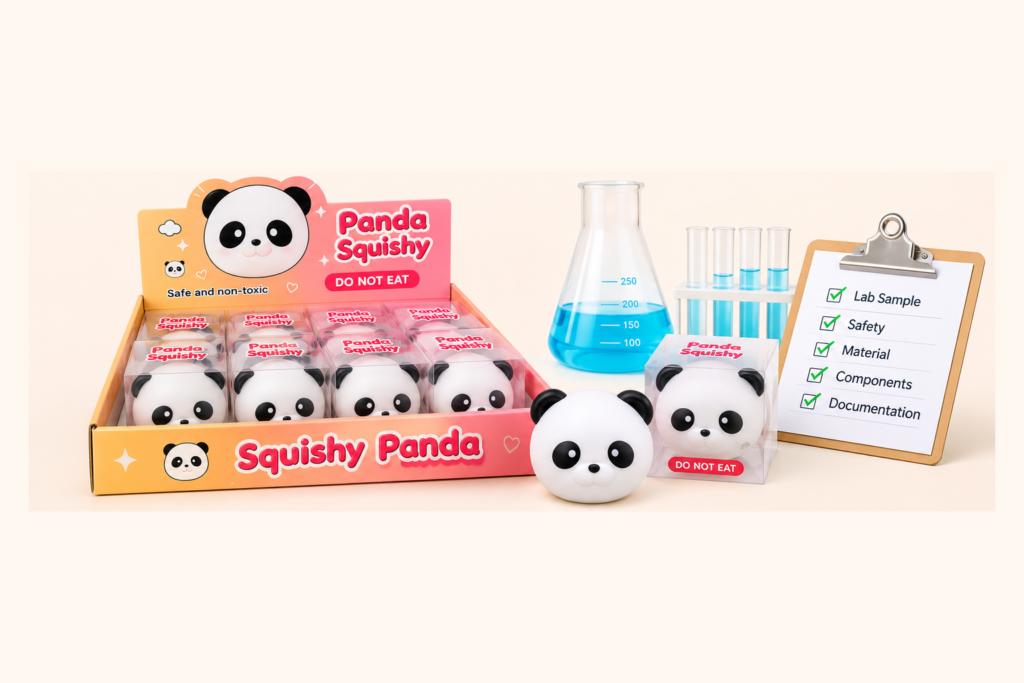
A laboratory receives three loose squishies with no clear link to the artwork, filling description or intended age group. The samples may be genuine, but the submission leaves essential questions unanswered. Toy laboratory sample submission should connect the finished product to a defined testing request before the parcel leaves the supplier. For a U.S. importer, that means confirming what the qualified laboratory needs, which variant is represented and who will resolve any mismatch between the physical samples and the supporting documents.
Table of Contents
Confirm toy laboratory sample submission requirements first
Begin toy laboratory sample submission with the proposed product description, intended market, intended age and relevant construction information. Ask the laboratory to identify the submission details and sample quantities needed for the agreed scope. Do not publish a universal number of toys to send. Required quantities and component access can vary with the product and testing plan, and additional pieces may be needed if questions arise.
For U.S. children’s products subject to applicable requirements, the CPSC testing and certification overview explains the role of testing and certification, including CPSC-accepted laboratories where required. Confirm the laboratory’s acceptance and relevant scope through appropriate channels. A supplier’s general statement that it uses a famous laboratory does not establish coverage for this particular submission.
Give every submitted variant a clear identity
For toy laboratory sample submission, label the pieces and the submission list so photographs, specifications and sample identifiers refer to the same item. Identify differences in colors, fillings, finishes and accessories without guessing that one sample covers every variant. Ask the laboratory how the proposed selection relates to its testing scope. The buyer should not independently declare a mixed assortment equivalent because the shapes look similar.
Vilora’s panda squishy is described with a TPR outer body and clay filling, while the press-to-spin fidget ball is a different plastic mechanism product. Neither should be submitted under a vague squishy toy label that conceals its construction. Confirm the actual order specification rather than treating public catalog copy as a complete technical dossier.
Include the pack and the component facts requested
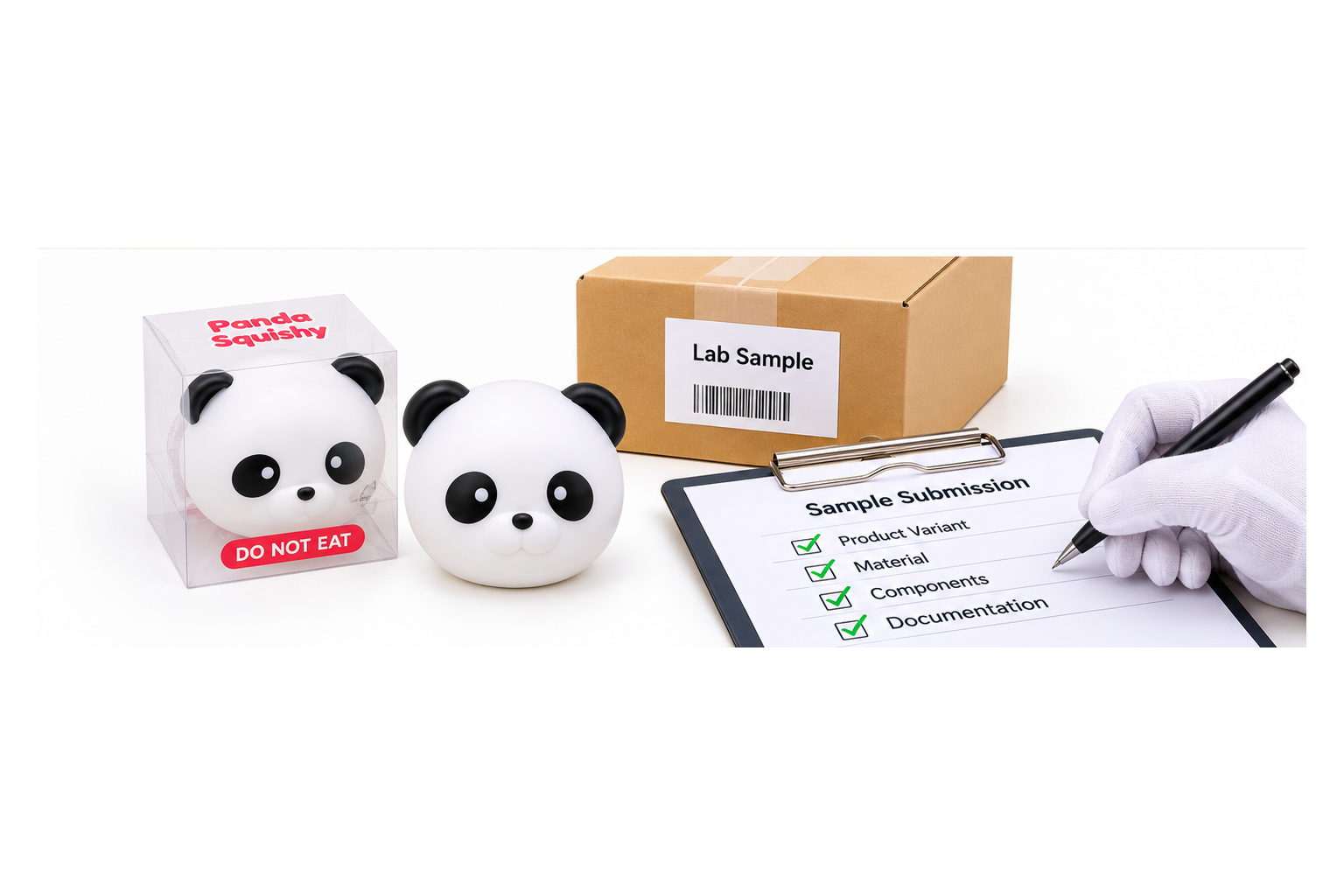
Include the intended individual packaging in toy laboratory sample submission, with warnings, instructions and artwork revision when requested. A loose sample cannot show whether a wrapper obscures a warning or whether the finished retail presentation matches the submitted labeling. If final artwork is not available, identify that limitation explicitly and ask what further review will be needed. Do not imply that an unfinished presentation has already been cleared.
Supply the component descriptions and other supporting records the laboratory requests through a suitable confidential channel. Resolve conflicts between product nicknames and current composition before dispatch. A legacy name containing flour, silicone or foam does not prove what is actually inside the sample. Keep a copy of the submission list and the confirmed construction with the buyer’s project records.
Keep the report connected to the approved order
For toy laboratory sample submission traceability, record who selected the samples, their source and available revision or production identification. Retain photographs of the submitted pieces and packing list. This is a practical traceability record, not a claim that every commercial submission requires one universal custody form. Agree on any special handling, opening or destructive examination directly with the laboratory before sending the parcel.
When results arrive, review the report’s sample description, photographs, dates and scope against the submission. Ask questions about discrepancies rather than assuming the report covers the entire catalog. A later material, finish or packaging change may require review of whether the evidence still applies. Keep the approved sample process linked to the final tested configuration.
A successful toy laboratory sample submission leaves a clear trail from actual pieces to the requested assessment and the product the buyer plans to order. It does not guarantee a passing result or eliminate the importer’s responsibilities. Its purpose is to prevent avoidable uncertainty before testing begins, so the eventual evidence describes the product being considered rather than an unidentified collection of toys.
Read More