A toy sample can look finished without actually being ready for production.
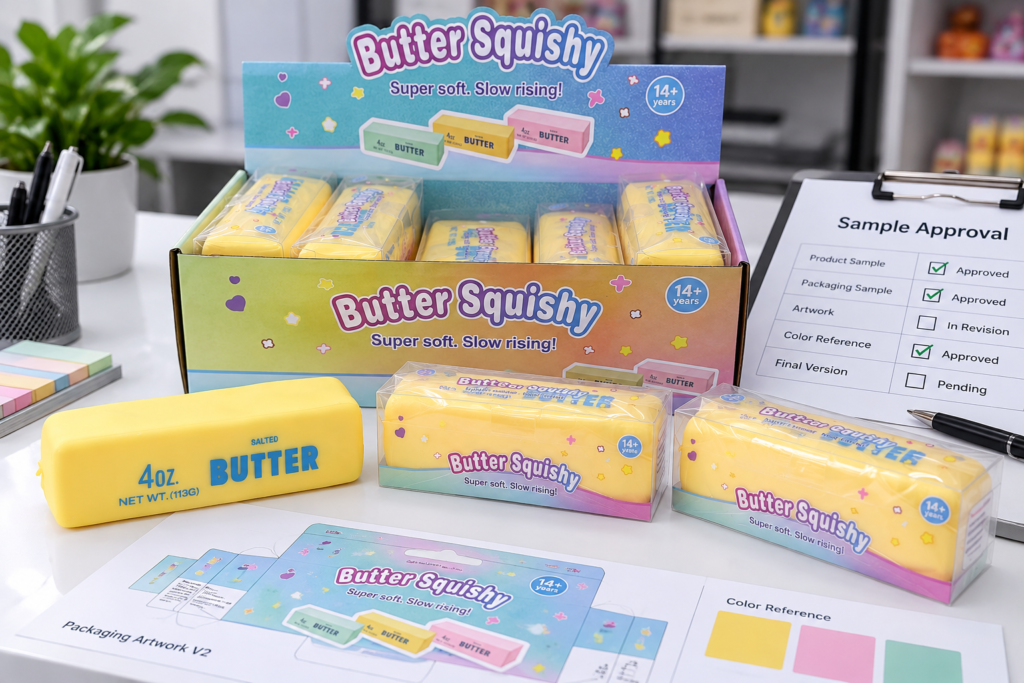
The shape may be right, the colors may look good, and the mechanism may work. But if the buyer and factory are still referring to different artwork files, measurements, or sample versions, a simple “approved” can create more confusion than clarity.
That is where toy sample development becomes more than making another physical unit. The goal is to turn the latest sample into a controlled production reference: one version, tied to the right specifications, with approved details clearly separated from anything still open.
Table of Contents
The Latest Sample Is Not Automatically the Final Sample
Several samples may exist during development. One may have the correct shape but an earlier color. Another may use the final print but an older mechanism. A third may have the right product but temporary packaging.
Together, they create a basic production question: which one should the factory follow?
Toy sample development therefore needs simple version control. The sample under review should be identifiable by product or SKU, revision number, date, and the artwork or specification files associated with it.
“Use the blue one we approved last week” leaves room for interpretation. “Revision 04, approved September 18, using artwork V6 and specification sheet V3” leaves much less.
Approve Attributes, Not Just the Whole Toy
A sample review does not always need to end with one broad approved-or-rejected decision.
Imagine a desktop fidget toy. The buyer may approve its size, shape, mechanism, and base but request a change to the printed face. Those physical decisions do not necessarily need to be reopened because one decoration detail changed.
A practical record might show:
Approved: shape, dimensions, mechanism, base
Revision required: face artwork
Not yet reviewed: retail packaging
This is especially useful in private-label projects because different customizations affect production differently. Changing a printed card is not the same as changing dimensions, internal construction, or a molded feature.
One Sample May Not Approve an Entire Assortment
The issue becomes more important when one product expands into several colors, characters, or SKUs.
Suppose the same unicorn squishy is planned in pink, blue, green, and purple. One physical sample may be enough to approve the shared shape and construction. It does not automatically approve every production color, printed expression, or accessory.
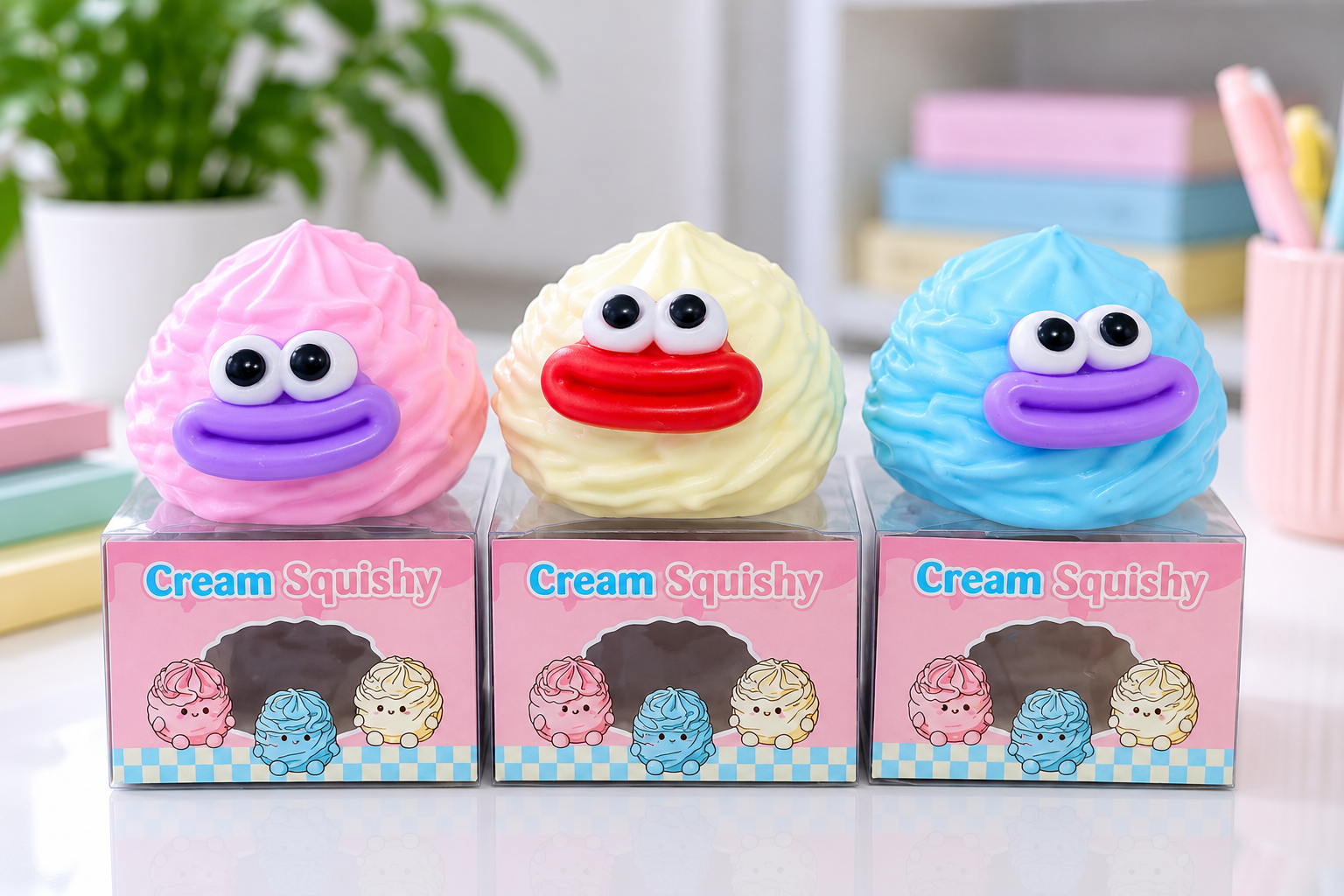
For a multi-SKU toy sample development project, separate shared attributes from SKU-specific ones. The buyer might approve one reference for overall dimensions and construction, then individual references for colors or graphics that vary across the assortment.
Packaging Can Have Its Own Approval Version
The toy and its packaging do not always reach approval on the same day.
The product may already be stable while the box dieline is still being adjusted. Or the packaging artwork may be ready while a product dimension is changing. For soft toys, even a small size difference can affect how the product sits inside a box or window.
In toy sample development, packaging should therefore have its own revision number. A physical packaging sample should also be checked with the actual product inside before the final structure is locked.
A digital proof can show artwork and layout, but it cannot show whether a squishy presses against a window, rotates inside the box, or sits too tightly after packing.
A Production Reference Needs More Than the Toy
Eventually, the approved physical sample needs to connect to the information production will actually use.
Depending on the project, that may include the current specification sheet, artwork file, color reference, material description, packaging version, and critical dimensions or functional requirements. The physical unit is valuable for qualities that are difficult to describe perfectly in writing, but it should not be the only reference.
This also matters later during inspection. ISO 2859-1:2026 defines acceptance sampling plans for lot-by-lot inspection. Sampling can help a team assess whether a production lot meets defined acceptance criteria; it does not decide what the intended product was supposed to be.
Changes after approval also deserve attention. For children’s products sold in the United States, the U.S. Consumer Product Safety Commission explains that a change to product design, the manufacturing process, or the source of component parts can be a material change if it could affect compliance. Depending on the change, additional testing and a new Children’s Product Certificate may be required.
So when an approved sample changes, the practical question is not only whether the new version looks acceptable. Buyers should also ask what specifications, packaging, testing, or documentation the change affects.
Sample Revisions Belong on the Project Calendar
A revised sample has to be made, reviewed, and sometimes shipped. Product and packaging revisions may also move at different speeds. Two or three seemingly small corrections can add days or weeks before the production order is ready to schedule.
That is why toy sample development should be visible in lead-time planning rather than buried inside a single “production time” estimate.
Not every correction needs another complete physical sample. Depending on the issue, an updated artwork file, measurement, photo, or component check may be enough. The team should decide what evidence is needed to close each open point instead of automatically starting another full sample round.
Know When Toy Sample Development Is Finished
Sampling can continue indefinitely if nobody defines the point at which the sample has done its job.
A project is approaching production readiness when the buyer can identify one current product version, state what it approves, identify anything still open, and connect that version to the correct supporting files. Packaging and SKU-specific references should be equally clear where they apply.
This is also where the sample stage separates from prototype development. A prototype helps answer whether the product idea, shape, or mechanism works. The sample stage asks whether the intended product has been represented accurately enough to reproduce.
Before approval, ask:
“If production follows this exact version, what has actually been approved?”
Either way, good toy sample development leaves less room for interpretation. The finished sample matters, but the more valuable outcome is that the buyer, factory, and later inspection team are all working from the same version.
Read More