A custom squishy toys often starts with something surprisingly simple: a sketch, a reference photo, or an idea for a product that doesn’t exist yet.
Maybe you already know the shape and size you want but haven’t decided on the material. Maybe you’ve found an existing squishy and want to change the colors, feel and packaging for your brand. Or maybe you’re starting with an original character and need to figure out whether it can actually be manufactured.
All of these are normal starting points for an OEM project.
You don’t need to solve every production detail before contacting a manufacturer. What you do need is a clear idea of the product you want to create and, if possible, where you plan to sell it.
The technical details can be worked out from there.
Table of Contents
Custom Squishy Toys Start With the Product Idea
A useful OEM inquiry doesn’t need to be complicated. But the more clearly you can describe the product, the easier it is for a manufacturer to evaluate how it can be made and what will affect the cost.
A good starting point includes:
- Product design, sketch or reference image
- Approximate size
- Preferred colors
- Squeeze feel or effect
- Logo requirements
- Packaging preference
- Estimated order quantity
- Target market
If you already have Adobe Illustrator (AI) files, CAD drawings or a 3D model, great.
If not, that’s fine too.
A sketch or reference photo can be enough to begin. Even a description such as, “I want to make a strawberry cake squishy with a soft filling that moves when squeezed,” gives us somewhere to start.
For a first custom project, it’s more important to know what you want the product to do and feel like than to know every technical specification.
Don’t Start With the Material. Start With the Feel.
One of the first questions buyers often ask is:
“Should I use TPR or PU?”
But when developing a squishy, there’s usually a better question to answer first:
How do you want it to feel in someone’s hand?
Do you want a slow rebound?
Something extremely soft?
Do you want the filling to visibly move when squeezed?
Should there be more resistance?
Or are you looking for a softer, almost jelly-like feel?
Different experiences can require very different materials, fillings and product structures.
Some squishies use slow-rising foam. Others use a flexible outer skin with gel or liquid inside. Different fillings can create completely different squeeze effects.
You don’t need to become a materials expert before developing an OEM product.
Start with the experience you want. The material can be selected around it.
Turning a Design Into Something That Can Actually Be Made
A design can look great on a screen and still be difficult to manufacture.
Imagine a character with very thin ears. They may look perfect in the artwork but become too fragile when made in a soft material. Deep grooves, extremely small details or unusual shapes can also create problems with molding and production.
Part of OEM development is finding the balance between the original design and manufacturability.
Depending on the product, the design may need small adjustments to improve durability, molding, decoration or production consistency.
That can mean making one area slightly thicker, adjusting a small detail, deciding where a logo should go or changing something that would make the product difficult to remove from the mold.
The goal isn’t to redesign the customer’s idea.
It’s to turn an idea that works on paper into a product that can be produced consistently.
For a completely new shape, the project can then move into tooling and sample development.
A Sample Isn’t Just About Whether It Looks Right
When the first sample arrives, most people immediately look at two things:
Is the shape right? Is the color right?
Both matter. But with a squishy, you also need to pick it up and actually squeeze it.
How soft is it?
Is the rebound speed what you expected?
Does the filling move the way you imagined?
What happens after you squeeze it repeatedly?
Do the print and colors look right?
Is the logo the right size and in the right position?
Are any attached parts secure?
And once it’s inside the packaging, does the finished product still look the way you wanted?
The first sample isn’t always perfect, and that’s exactly why sampling exists.
Changing a detail at the sample stage is much easier than discovering the same problem after thousands of pieces have been produced.
Why Do Fully Custom Squishy Toys Have MOQs?
MOQ is one of the most common questions in OEM manufacturing.
Why can an existing product sometimes be ordered in a smaller quantity, while a completely new design requires a larger order?
It isn’t simply because a factory doesn’t want a small order.
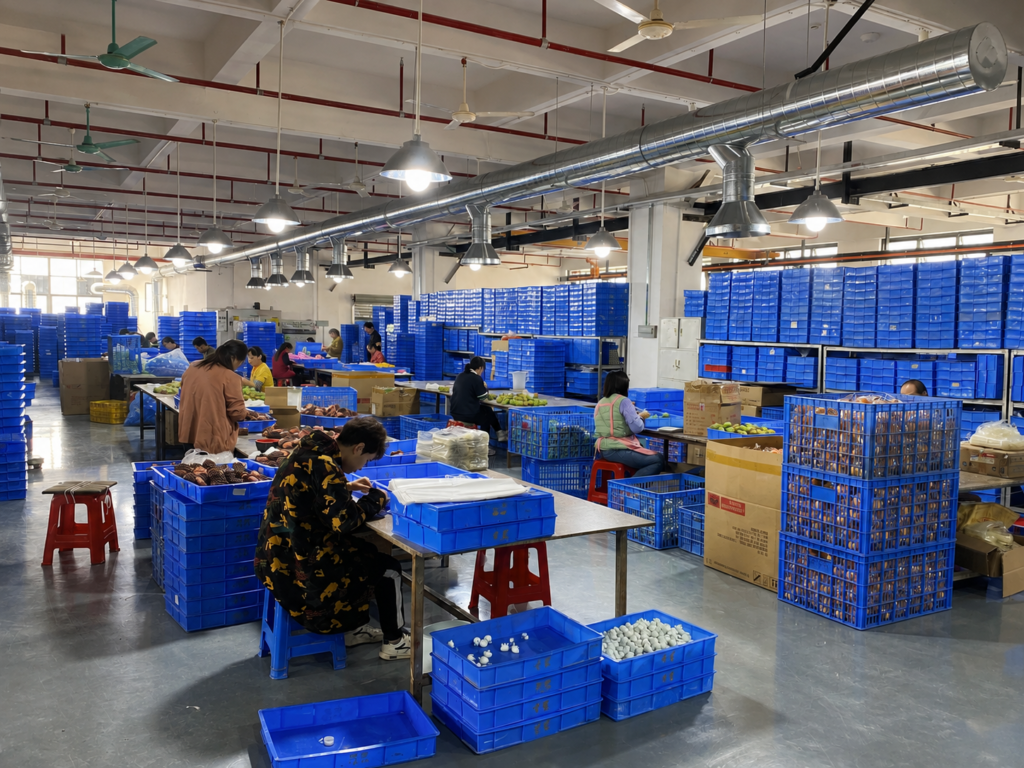
A new product may require tooling, machine setup, raw-material purchasing, color matching, printing, labor, packaging setup and changes to the production line. Much of that work still has to happen whether the first run is 300 pieces or several thousand.
That’s why customizing an existing mold with your logo, colors or packaging is different from developing an entirely new product from scratch.
For a brand that is still testing the market, starting with an existing design can sometimes make more sense.
You might choose a shape that already exists and customize the color, logo, packaging or selected details. If the product performs well, you can move on to developing an exclusive mold for the next collection.
OEM doesn’t always mean starting from zero.
Think About Testing Before Mass Production
If your product will be sold in the U.S., EU or another international market, compliance shouldn’t be discussed for the first time after production is finished.
The target market should be considered early in development.
Children’s toys sold in the United States may need to meet applicable ASTM F963, CPSIA and other requirements. Products sold in the European Union may involve EN 71, REACH and other applicable requirements.
What needs to be tested depends on the finished product.
The material, filling, construction, intended age group and destination market can all affect the testing requirements.
This is particularly important for customized products. If you change a material, filling, pigment or component, you shouldn’t automatically assume that an existing report for another version covers the new one.
A more practical development sequence is:
Design → Materials & Construction → Sample → Testing Requirements → Final Approval → Mass Production
Thinking about testing early doesn’t make development more complicated. It helps avoid discovering a problem after the products are already finished and ready to ship.
After Sample Approval, Production Begins
Once the final sample is approved, the project moves into mass production.
At this stage, one of the most important things is consistency.
If the approved sample has a certain color, squeeze feel and filling, production should follow those approved specifications as closely as possible.
Quality checks can include appearance, color, weight, filling, sealing, printing, assembly and packaging.
For squishy toys, feel matters too.
Two products may look identical, but if one production batch is noticeably harder or contains a different amount of filling, the customer experience changes.
That’s why quality control shouldn’t only mean opening a few cartons at the very end.
It should be part of the production process.
Packaging Is Part of the Product
Once the squishy itself is ready, there’s one more part of an OEM project that’s easy to underestimate: packaging.
For a retail brand, the package may be the first thing a customer sees.
Depending on the sales channel, a product might use an individual bag, retail box, display box or fully customized packaging.
Your logo, brand colors, product name, barcode, warnings and applicable market information may all need to be considered.
If you’re selling through e-commerce, the package also needs to protect the product during shipping. For physical retail, how the product looks on a shelf may matter more.
Packaging isn’t simply something you add after the product is finished.
For a private-label product, the packaging is part of the product.
From an Idea to Your First Production Run
One of the biggest misconceptions about OEM manufacturing is that everything needs to be figured out before you contact a manufacturer.
It doesn’t.
You can start with a sketch.
You can start with an existing product and ask to change the color, squeeze feel and packaging.
Or you can simply say:
“I want to develop a dessert-themed squishy collection for my brand.”
From there, the unknowns get worked out one at a time:
Shape → Size → Feel → Materials → Sample → Testing → Packaging → Production
A good OEM relationship shouldn’t be limited to sending a drawing to a factory and waiting for finished goods.
A manufacturer should also help determine whether the idea can be made, how it should be made and what may need to change to make production more reliable.
At Vilora Toys, we work with wholesalers, distributors, retailers and private-label brands on OEM and ODM squishy toy projects.
You can start with an existing product and customize the color, logo and packaging, or develop a new product from a sketch, reference image or original design. Based on the product specifications and destination market, compliance testing can also be arranged for applicable requirements such as ASTM F963, CPSIA, EN 71 and REACH.
Have a squishy idea you’d like to turn into a real product?
Send us your design, reference image, approximate size, estimated quantity and target market, and we’ll take it from there.