Creating custom squeeze toys involves much more than changing a color or adding a logo. Shape, size, material, softness, recovery, surface details, and packaging can all affect how the finished toy looks and feels—as well as how it is manufactured and priced.
For brands, wholesalers, distributors, and retailers developing a custom squeeze or squishy toy, understanding these options early can make the development process much smoother.
Here are the key decisions to consider before starting your project.
Table of Contents
Product Shape and Design
A custom squeeze toy can start with something as simple as an idea. When developing custom squeeze toys, the shape and structure are usually the first elements to consider.
You can provide a sketch, reference image, existing sample, or completed design file. Popular concepts include food, animals, cartoon-inspired designs, brand mascots, and other original shapes.
You don’t need to have every detail finalized before contacting a manufacturer. If you only have a concept or reference image, the design can first be evaluated for structure and manufacturing feasibility before moving forward.
Product Size
The length, width, and height of a squeeze toy can be customized based on the product concept and intended use.
Size affects more than appearance. It can also influence the toy’s weight, material usage, feel in the hand, packaging dimensions, carton configuration, and shipping volume.
Having an approximate size in mind early in the project makes sampling and quoting more efficient.
Material and Feel
Different materials such as TPR or PU can be selected for custom squeeze toys depending on the product structure and desired feel.
Buyers don’t necessarily need to choose a material before starting a project. In many cases, it’s more useful to describe how you want the finished toy to feel.
For example:
Soft
Elastic
Slow-rising
Firm
Lightweight
More resistant when squeezed
The appropriate material and manufacturing process can then be evaluated based on the shape, structure, desired feel, and other product requirements.
Start With the Feel, Not Just the Material
Two products made for the same purpose can deliver very different experiences depending on their formulation, structure, and production process.
Instead of starting with “I need TPR” or “I need PU,” it can be more helpful to start with how you want the toy to feel when squeezed.
Softness and Recovery
Two squeeze toys that look almost identical can feel completely different in your hand.
Softness, elasticity, squeeze resistance, and recovery speed all contribute to the finished product experience.
If you already have a product with the feel you’re trying to achieve, providing a physical reference sample can be especially helpful during development. A reference sample often communicates the desired softness and recovery more clearly than descriptions such as “softer” or “slower.”
These characteristics should be evaluated during the sampling stage before mass production.
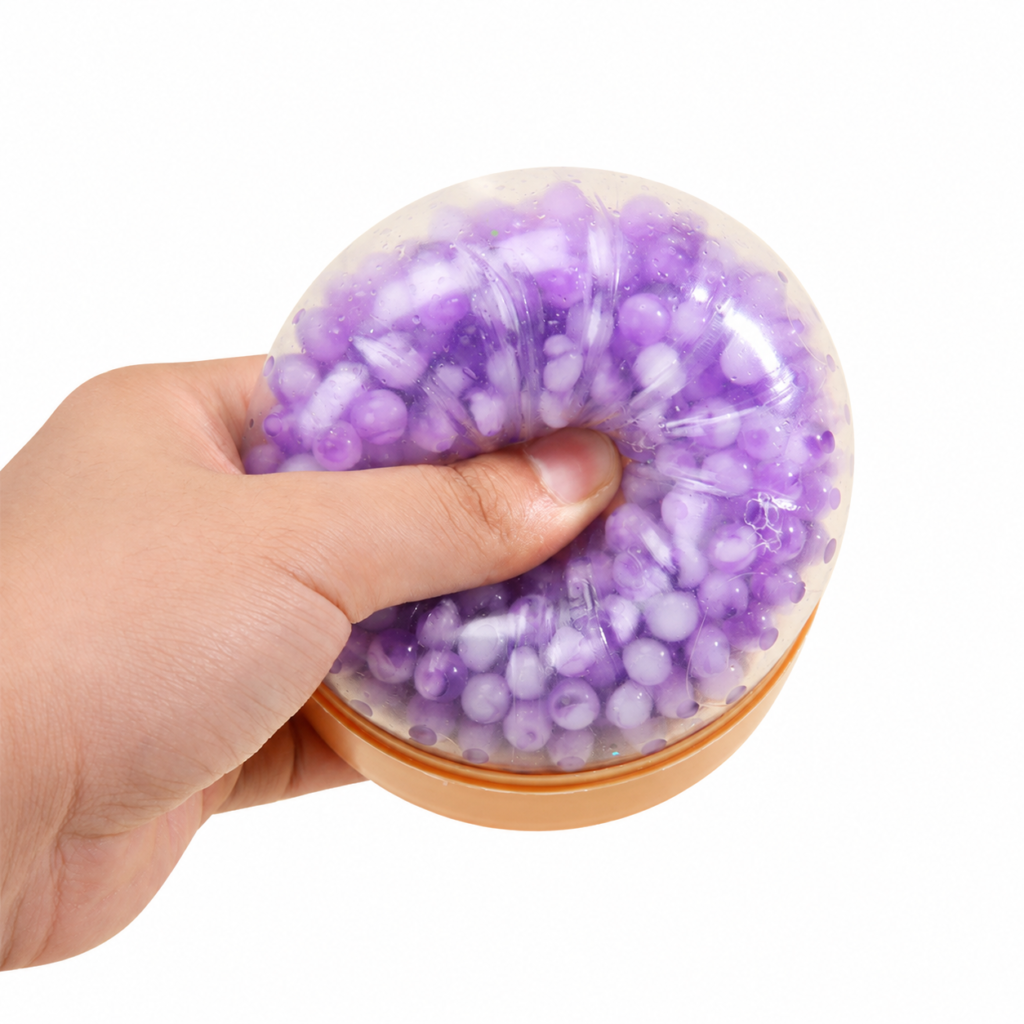
Colors and Surface Finish
Custom squeeze toys can be developed in single colors, multiple colors, or specific brand colors.
If your company uses established brand colors, Pantone references can help communicate the intended color more accurately.
Depending on the material, product structure, and manufacturing process, different visual effects may also be evaluated, including:
Solid colors
Multi-color designs
Transparent or translucent effects
Glossy finishes
Matte finishes
More complex color combinations and surface details may require additional production steps, which can affect pricing.
Graphics and Logo Customization
Facial features, graphics, text, decorative details, and brand logos can be incorporated into the product design where appropriate.
The best application method depends on factors such as the material, surface shape, artwork size, number of colors, and overall design.
Logo size, placement, color, and appearance should be reviewed during sampling so that these details are approved before mass production begins.
For private label squeeze toys, branding can also extend beyond the toy itself to the retail packaging.
Custom Packaging
Packaging should be considered as part of the product—not as an afterthought.
Depending on the sales channel and project requirements, packaging options may include:
OPP bags
Color boxes
Display boxes
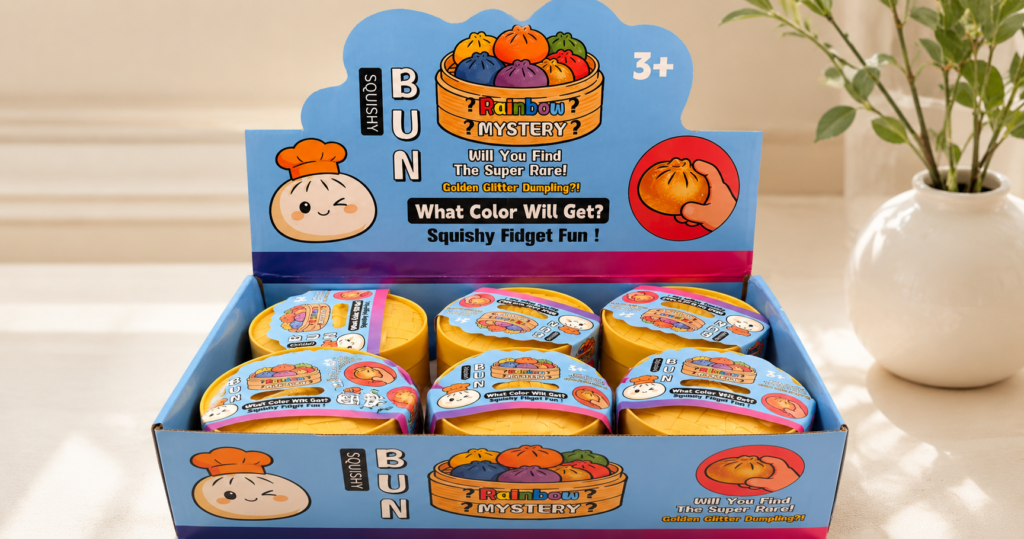
Custom retail packaging
The right packaging depends on how the product will be sold and displayed.
Packaging can also affect unit cost, carton quantity, carton dimensions, shipping volume, and retail presentation. For that reason, packaging requirements are best discussed during product development rather than after production is complete.
Customizing an Existing Product vs. Developing a New Design
There are generally two ways to approach a custom squeeze toy project.
Customize an Existing Product
An existing design may be customized with changes such as color, graphics, logo, or packaging.
Because the basic product has already been developed, this route can often involve a simpler development process.
Develop a Fully Custom Product
If you’re creating an original shape, mascot, character, or branded product concept, a new product may need to be developed from the ground up. Vilora Toys supports OEM and ODM squeeze toy development
The process can include:
Design evaluation → mold development → sampling → revisions → sample approval → mass production
The right approach depends on your product concept, budget, timeline, and customization requirements.
What Should You Check During Sample Approval?
Sampling is one of the most important stages of custom toy development.
Before approving a sample for mass production, review the key product details carefully:
Shape
Dimensions
Color
Overall feel
Softness
Recovery
Surface details
Graphics or logo placement
Packaging
If something needs to be changed, the sampling stage is the right time to make those adjustments.
A clearly approved sample helps establish the product specifications for mass production.
What Affects the Cost and MOQ of Custom Squeeze Toys?
There is no single price or minimum order quantity that applies to every custom squeeze toy.
Pricing and MOQ can vary based on factors such as:
Product size
Material
Product structure and complexity
Mold requirements
Number of colors
Surface decoration
Logo requirements
Packaging
Order quantity
A simple modification to an existing product and a completely new molded design are very different projects, so they shouldn’t be expected to have the same development cost or MOQ.
An accurate quote is usually provided after the basic product specifications are understood.
What Should You Include in Your First Inquiry?
You don’t need a finished technical specification to start discussing a project.
However, providing as much of the following information as possible can help a manufacturer understand what you’re looking for:
Product concept, sketch, or reference image
Approximate dimensions
Desired softness and recovery
Preferred colors
Logo or graphic requirements
Packaging requirements
Estimated order quantity
Target sales market
If some of these details haven’t been decided yet, that’s okay.
A product idea, sketch, or reference image is enough to start the conversation.
Ready to Develop a Custom Squeeze Toy?
Whether you want to customize an existing product or custom squeeze toys from a new concept, the process starts with understanding the product you want to create.
Vilora Toys supports OEM and ODM squeeze toy development, including product customization, sampling, branding, packaging, and production coordination for wholesalers, distributors, retailers, and private label brands.
Have a product idea? Send us your concept, sketch, or reference image to start discussing your project.