Custom squishy toys for retail should not begin with a list of every color, shape, and package a factory can make. A better starting point is much more practical: what does each SKU need to do on the shelf?
A line can look exciting on a sample table and become frustrating three months later when every item has its own mold, color split, package, and reorder minimum. The first assortment does not need to prove how much you can customize. It needs to prove which products deserve to come back.
Table of Contents
Give Every SKU a Reason to Exist
Maybe one jumbo cheese squishy stops shoppers from across the aisle. A smaller butter stick works closer to the register. Three colors of the same core shape give repeat buyers something to choose from.
Those products are doing different jobs.
If two SKUs attract the same shopper, at the same price point, for the same reason, one of them may not need to be there.
For custom squishy toys for retail, this matters early because every extra SKU can add another color split, packing requirement, minimum quantity, or inventory decision. A tighter opening line is usually easier to read at retail and easier to reorder.
Think in terms of a hero product, a dependable core seller, and a small amount of controlled variation. Seasonal or experimental pieces can come later, once the first order tells you what shoppers actually respond to.
Not Every Product Needs a New Mold
A custom line does not have to mean a new mold for every item.
Existing shapes can still carry a private-label program through color, print, surface treatment, or packaging. Save new tooling for the product whose shape actually needs to be proprietary.
This is where buyers sometimes over-customize. Four unrelated molds may look more “custom” in a presentation, but they also create four separate development paths. One original hero SKU supported by simpler variations can still look like a coherent branded range.
For custom squishy toys for retail, the useful question is not “How much can we customize?” It is “Which part of this line needs to be unique enough to justify the extra work?”
If the answer is the product shape itself, our custom squishy toys OEM guide covers the broader path from concept through sampling and production.
Variation Should Create a Reason to Buy Again
Color only earns its place when it changes the buying decision.
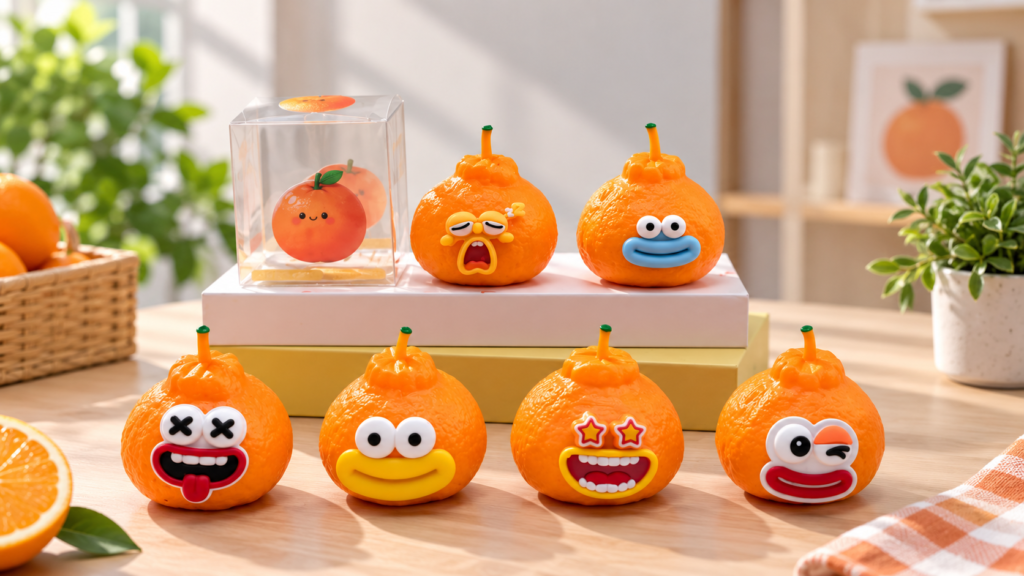
Take a food-themed line. The same basic size and package can support strawberry, butter, toast, or seasonal colorways without turning every variation into a separate manufacturing program. The range still feels fresh, but the buyer is not rebuilding the product from zero each time.
The National Retail Federation recommends starting assortments with a strong core, then layering in trends, seasonal colors, and newness while replenishing what actually sells. That is a useful discipline for squishies too.
A repeatable core gives the retailer something to restock. The changing part gives shoppers a reason to look again.
For custom squishy toys for retail, six colors are not automatically better than three. If the sixth color creates another MOQ split but very little extra demand, it is not helping the line.
Decide the Size Mix Before Adding More Colors
Size decisions can multiply a range faster than buyers expect.
A compact squishy may work well in a checkout display or small gift assortment. A jumbo item can create more visual impact, but it also uses more shelf and carton space and commits more inventory dollars per SKU.
The Realistic Butter Stick Squishy is a good example of a recognizable core format that can sit inside a broader assortment without every other item needing the same size or presentation.
Now add the math.
Two sizes, four colors, two finishes, and two packaging formats already create 32 possible combinations.
That does not mean the buyer will order all 32. It means custom squishy toys for retail can become complicated very quickly when each decision is made separately.
Choose the size mix first. Then decide which colors are worth carrying at each size.
Keep the Packaging Family Together
Packaging can quietly turn one product line into several unrelated projects.
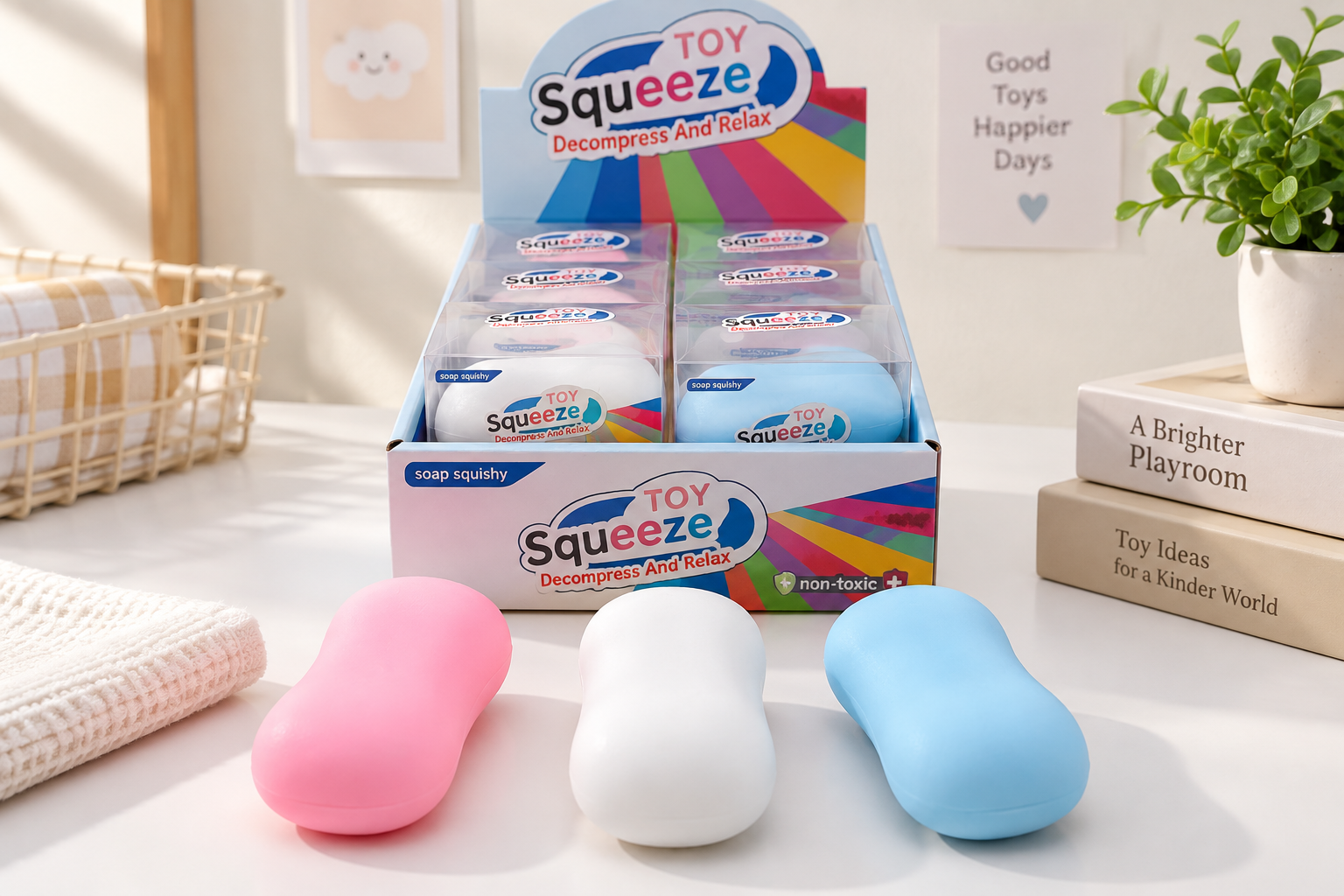
A hero SKU may justify a stronger retail box, while smaller pieces share a common display carton or simpler individual pack. What matters is that the packages still look like they belong to the same range.
Whenever possible, keep the structural logic repeatable. Artwork and color can change more easily than a completely new packaging construction for every SKU.
Our custom squishy toy packaging guide goes deeper into product fit, dielines, artwork, labeling, and physical packaging approval. For this article, the bigger point is simpler: packaging should help organize the assortment, not create another layer of SKU complexity.
Let the First Order Teach You Something
The market is giving retailers a reason to pay attention to sensory products. The Toy Association, citing Circana, reported that squishy toys posted triple-digit growth in both dollar and unit sales through April 2026, with viral trends and social commerce helping drive momentum.
That is a reason to test the category. It is not a reason to overbuild the first order.
Which size moves fastest? Does the hero item actually pull attention? Are shoppers buying more than one color? Does the premium package earn its extra cost? Which SKU gets reordered first?
Those answers matter more than whether the launch started with ten designs or four.
The second PO should look different from the first one. If it does not, the first order did not teach you enough.
Custom squishy toys for retail work best when the opening assortment leaves room to learn: one clear hero, a dependable core, controlled variation, and packaging that can support the next launch without starting over.
The strongest line is not the one with the most options. It is the one that gives the buyer a clear reason to reorder.
Planning a private-label or fully custom squishy line? Explore Vilora Toys’ OEM & ODM process for product development, sampling, production, and packaging.
Read More: Buying Guide · Customization Guide · OEM Guide