

The first molded sample arrives, and something is wrong. The shape looks close to the approved drawing, but squeezing it feels more like pressing a rubber block than a soft toy.
The supplier recommends changing the mold. Before approving another tooling charge, the buyer needs to know whether the problem is actually in the steel.
Custom toy mold modification can be worthwhile when the geometry is responsible for the poor squeeze response. But material formulation, processing conditions, and internal construction can produce similar symptoms. The first task is to separate those causes.
Table of Contents
Find Out Why the Sample Feels Too Hard
A stiff sample doesn’t automatically indicate a tooling defect.
For custom toy mold modification, start by comparing the physical sample with the approved specifications. Was the target softness defined using a reference product, an agreed measurement, or only a description such as “extra soft”?
Ask the supplier to identify the actual material grade, formulation reference, and production conditions used for the sample. A different compound or processing setup may explain the result without requiring changes to the mold.
Construction matters just as much. A solid elastomer body can resist compression differently from a hollow shell, even when both use relatively soft materials. Slow-rising polyurethane foam products also behave differently from molded TPR or silicone toys.
If the sample is solid, don’t assume that a simple mold adjustment can turn it into a hollow product. That may require a fundamentally different mold design or manufacturing process.
A useful diagnostic review compares three things: the intended squeeze feel, the material actually used, and the finished part’s geometry.
When evaluating custom toy mold modification, ask the engineering team to document which factor is most likely responsible before recommending machining.
Check Whether the Existing Mold Can Be Changed
Once geometry is identified as a likely cause, the next question is whether the existing tool can produce the revised design.
In injection molding, removing metal from a cavity generally creates more space for plastic. Removing metal from a core, however, can reduce the molded hollow space and increase wall thickness. The direction of the change depends on which tool surface is being modified.
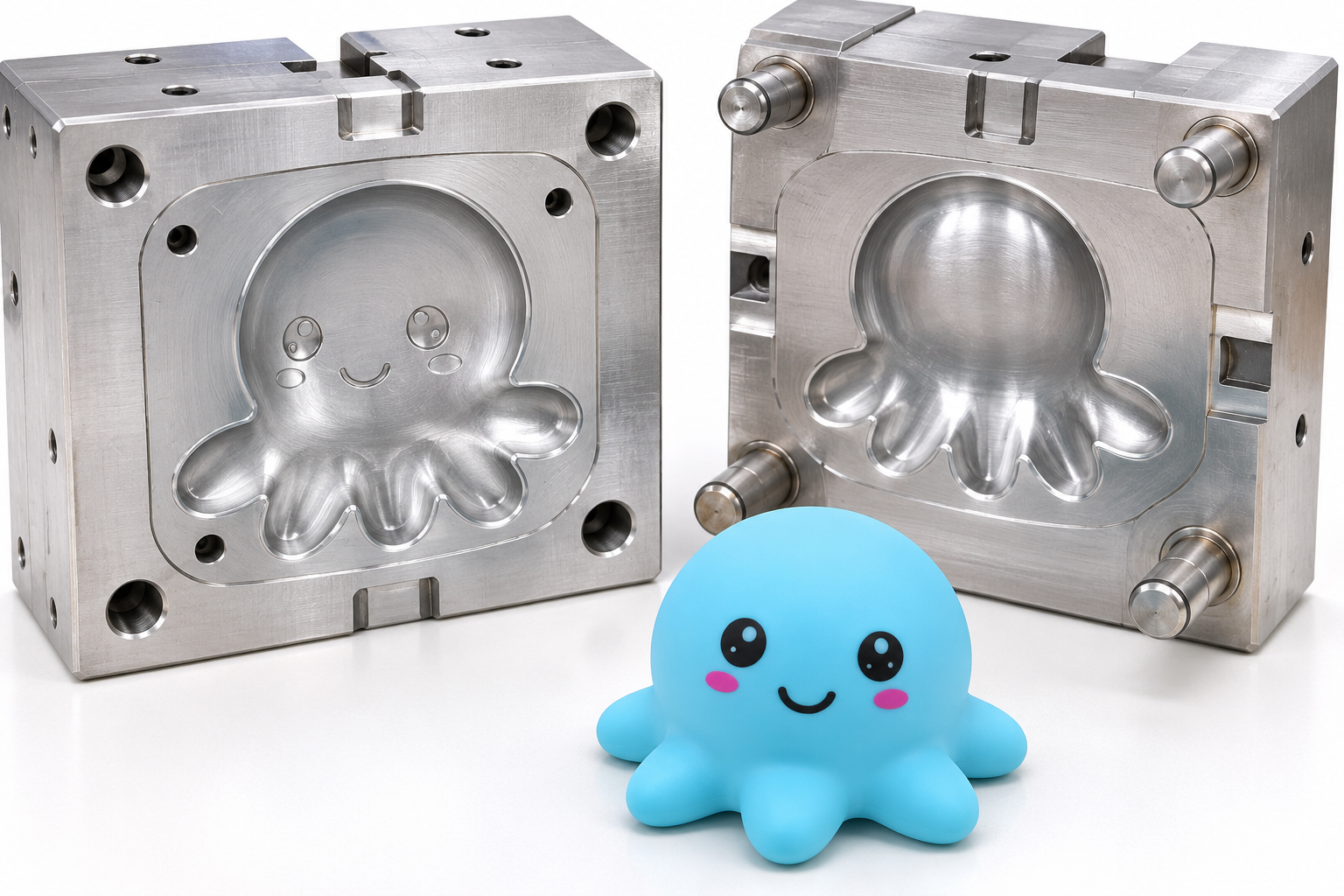
That distinction is central to custom toy mold modification. A proposal to make the toy softer by “machining the core” is not detailed enough to approve.
Ask the toolmaker to mark the proposed changes on a sectional drawing showing the cavity, core, and resulting part wall thickness.
For a hollow molded toy, increasing the internal volume may help achieve a more compressible structure, but doing so can require enlarging or replacing core features rather than simply removing steel.
Some changes are relatively straightforward. Others may require new inserts, welding, substantial re-machining, or replacement tooling.
Protolabs explains the underlying steel-safe approach to mold changes, including why removing mold metal is generally easier than adding it back.
Also consider whether thinner walls would introduce new problems. A softer squeeze is not an improvement if the revised toy tears, leaks, collapses permanently, or fails applicable safety requirements.
Compare a Tooling Revision With a New Mold
A supplier may offer to enlarge a gate, polish a cavity, or alter an insert. Those changes can address legitimate manufacturing problems, but they don’t all solve the same issue.
Before approving custom toy mold modification, ask what defect each proposed operation is intended to correct.
Gate adjustments may improve filling behavior. Surface polishing or draft changes may improve release from the tool. Revised internal geometry may change the way a hollow part compresses.
None of these should be presented as a guaranteed way to reduce material hardness.
Request two quotations when the change is substantial: one for modifying the existing tool and another for replacement tooling. Compare the complete cost, not just the machining charge.
The comparison should cover engineering review, machining or insert fabrication, sampling, any necessary testing, expected downtime, and the risk of further revisions.
For example, a low-cost modification may be unattractive if it permanently alters a reusable mold and leaves little room for another adjustment.
The Protolabs injection molding design guide explains how wall thickness, draft, gate design, and part geometry can affect molding outcomes.
For custom toy mold modification, the best option is the one that delivers a repeatable product within an acceptable cost and schedule—not necessarily the cheapest immediate repair.
If the original tool has serious damage or cannot accommodate the required geometry, replacement may be more practical.
Approve the Revised Sample Before Production
A successful machining operation doesn’t automatically mean the finished toy is ready for mass production.
After custom toy mold modification, request a new sample made using the intended production material and documented processing conditions.
Compare it with the original sample and the approved product requirements. Check the squeeze response, recovery, surface appearance, dimensions, seams, and any construction-specific performance concerns.
If the revision affects wall thickness or internal geometry, pay particular attention to areas that may now be more vulnerable to tearing, leakage, or deformation.
Ask the supplier to identify the mold revision and connect it to the revised sample. This helps prevent an older configuration from being used during later production.
For projects involving more substantial tooling decisions, our guide to squishy toy mold development explains the earlier design and sampling considerations. The purpose here is narrower: confirming that a proposed correction actually resolves the identified problem.
Don’t approve a production run based only on a short squeezing video. Request physical samples when practical and agree on the acceptance criteria before release.
A disciplined custom toy mold modification process should end with evidence that the revised design works—not merely confirmation that the machining was completed.
If your custom squeeze toy sample isn’t meeting its intended specifications, contact Vilora Toys to discuss the product, available samples, and manufacturing requirements before deciding on the next development step.
Read More