“Can you make our service van into a stress toy? It’s in all of our advertising.”
That’s the kind of request that may justify a new mold. The van is already familiar to customers, and the company expects to keep using it. The shape has a job before a designer ever opens a 3D file.
Other requests are harder to defend. “We want something completely unique” sounds exciting, but it doesn’t tell the factory what people are supposed to recognize or why the item needs to be new. A mold can be made for almost any reasonable object. Whether it’s worth making is a different question.
Custom-shaped stress toys work best when the object itself carries part of the campaign. If the product still needs a long explanation after it’s sitting on the table, a stock shape and a well-designed insert may do more for the buyer.
Table of Contents
Start With Something People Already Know
For custom-shaped stress toys, a restaurant’s signature pastry is a natural candidate.So is a long-running mascot or a building with an unusual roofline. People have already seen those things in ads, storefronts or packaging. The giveaway doesn’t have to introduce the idea from scratch.
That recognition matters at a trade show. Visitors aren’t going to study every item on a crowded table. They notice a familiar shape, make the connection and pick it up. The logo is still useful, but it isn’t doing all the work. PPAI’s Product Power 2026 research discusses design, purpose and personal relevance in the way people value promotional products. A shape tied to the brand has a head start.
Not every logo translates well. Thin lettering and flat line art often lose their character once they’re turned into a soft object. The same goes for a campaign character nobody has met yet. One low-tech test is surprisingly helpful: show the reference to a few people outside the project and ask what they see. If the answers are all over the place, turning it into foam probably won’t fix the problem.
Check the Catalog Before Paying for a New Mold
When sourcing custom-shaped stress toys, a construction company may ask for an exact model of its cement mixer, then find a stock hard hat that gets the message across just as quickly. Put it in the company color, add a clean one-color imprint and the project may already be there.
There’s nothing second-rate about that decision. For a one-time event, avoiding tooling leaves more money for individual boxes, a printed card or air freight when the schedule gets tight. It also removes a round of development from the calendar.
Still, don’t choose from one front-facing catalog image. Ask for the finished dimensions, the actual imprint area and photographs of the sides and back. Seams and curves have a way of showing up exactly where the marketing team imagined the logo. If the item is going into a mailer, check its packed size too.
Vilora’s guide to custom stress toys starts with the campaign, quantity and arrival date. Those details often settle the stock-versus-custom question earlier than buyers expect.
“Modified” Can Mean Two Different Things
There is a useful middle ground between taking a catalog item as-is and building a product from the ground up. A stock delivery truck can look surprisingly specific after the cab color, side panel and route number are changed.
With custom-shaped stress toys, “modified” can be a slippery word.A supplier may be talking about paint and printing. The buyer may be picturing a taller roof, a raised emblem and different wheels. Once the outline or molded surface changes, the project may need a new tool even though most of the truck still looks familiar.
Ask the supplier to separate three routes:
- Existing shape with new color and imprint
- Existing concept with physical changes
- Entirely new three-dimensional shape
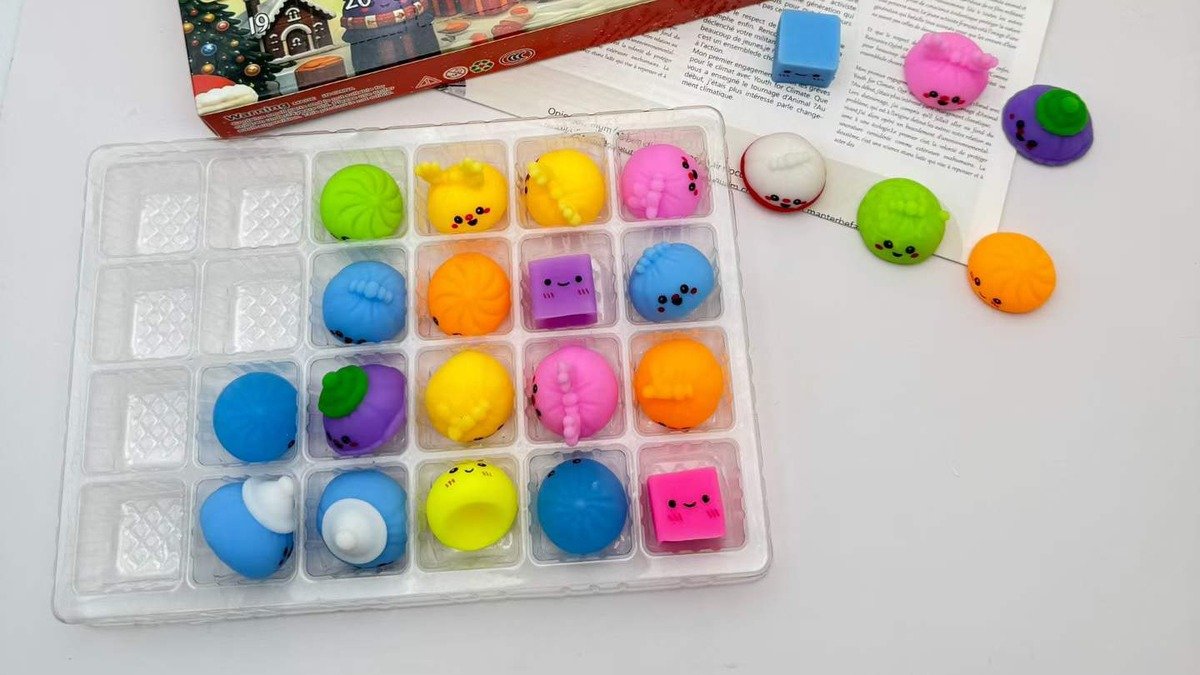
Put all three routes in the RFQ and ask the supplier to price them separately. One-time charges and sample work should be visible rather than buried in a unit price. It’s also worth asking when revisions begin to create new costs. Moving a logo on a rendering is one thing. Reshaping the roof after tooling has started is another.
Vilora’s OEM & ODM process shows where design review, sampling, production and packaging sit in the larger project.
The Rendering Has to Survive the Factory
On screen, the service van can have thin mirrors, open wheel wells and every line in the grille. The factory has to decide which of those details can be molded consistently, painted without a mess and squeezed more than once.
Usually something has to give. The mirrors get thicker. The wheel wells become shallow recesses. Seven grille lines become three. A mascot’s individual strands of hair turn into one broader section. None of that is automatically bad. The trick is protecting the details people actually use to recognize the object.
Custom-shaped stress toys are not scale models. They have to feel balanced in the hand, release from the mold and return to a recognizable form after being squeezed. A beautiful rendering that ignores those requirements is only delaying an argument until the sample stage.
Logo placement should be reviewed with the 3D model. Curved surfaces are less generous than a flat proof, and the usable area may be smaller than expected. Sometimes a subtle side panel solves it. Sometimes the object should carry the visual idea while the insert carries the URL, campaign line and QR code.
One Event Rarely Carries the Whole Investment
Suppose a restaurant group wants its signature dumpling for one grand opening. The idea is good, but the mold may be difficult to defend for a single afternoon. The math changes if the group has twelve openings ahead, plus a franchise meeting and an annual distributor promotion.
Write down the programs that are reasonably likely to happen over the next year or two. Don’t count a possible national rollout as though the purchase order already exists. The confirmed and repeatable uses should carry the decision.
With custom-shaped stress toys, the molded form can stay the same while the decoration changes.One order might carry the restaurant logo. The next might use no product imprint at all and rely on a seasonal box. That flexibility is useful, but it needs to be discussed before a permanent date or campaign line ends up in the mold.
Tool ownership belongs in the quote as well. Who owns it? Where will it be stored? How long will the factory keep it if no reorder comes in? If the shape uses licensed artwork or someone else’s character, merchandise rights should be cleared before modeling begins.
Approve the Sample as a Product, Not a Picture
Review the 3D model for custom-shaped stress toys from the front, back and both sides. Then look at it at the proposed finished size. Tiny details are easy to approve when the image fills a monitor; at three inches tall, they may barely be there. The back deserves attention too. That’s often where an awkward flat area or rushed transition is hiding.
The physical sample answers different questions. Will it stand on a desk? Does the shape still read correctly after several squeezes? Are the painted edges reasonably clean? Can the logo be seen without turning the product to an odd angle? Put the sample in the actual bag or box before approving the packaging.
Compliance documents have to follow the finished SKU. For a product designed or intended primarily for children 12 or younger in the United States, CPSC guidance calls for third-party testing by a CPSC-accepted laboratory and certification to the applicable requirements. Toys placed on the EU market require conformity assessment and CE marking. A report for another shape or coating isn’t blanket approval for the new item.
For an initial review, send the reference object, intended audience, destination market, approximate size, quantity, delivery ZIP code and required arrival date. Mention the programs where the shape could be used again. Vilora Toys can then compare an existing product, a lighter modification and fully custom-shaped stress toys before the buyer pays for a new mold.
Read More