A novelty toy has very little time to explain itself.
A shopper may see it in a countertop display, near a register or mixed into a larger toy assortment. Before anyone reads the packaging or picks it up, something about the product has to create interest.
That makes custom novelty toys different from products purchased mainly for function. The starting question is not simply, “What can we customize?” It is:
What is the first thing someone should notice about this toy?
Maybe it looks like a familiar food. Maybe the expression is unusually funny. Maybe it lights up when touched. Maybe a holiday character makes its purpose immediately obvious.
Once that idea is clear, the rest of the design has something to support.
Table of Contents
Custom Novelty Toys Need a Recognizable Idea
Novelty does not necessarily mean complicated. A dumpling with a face works because two familiar ideas come together quickly. A monster becomes more memorable when the expression is exaggerated. A Christmas character does not need an elaborate explanation because shoppers already recognize the seasonal cue.
That instant recognition matters when developing custom novelty toys.
Imagine starting with a funny monster squeeze toy. The original appeal may come from oversized eyes, an awkward expression and the way the face changes when the toy is squeezed. Changing the color or adding a logo is easy, but neither automatically makes the idea stronger.
A more useful design discussion might be about which expression should lead the assortment, whether several faces work better together, or which details remain visible inside a display box. The buyer is no longer choosing customization from a menu. The buyer is deciding what deserves attention.
Familiar Shapes Can Make Strange Products Easier to Understand
Food is especially useful in novelty design because recognition happens before explanation.
A burger, dumpling, donut or piece of butter already carries a visual reference. Turning that familiar object into something soft, oversized, miniature or interactive creates the surprise. That contrast can matter more than adding extra detail.
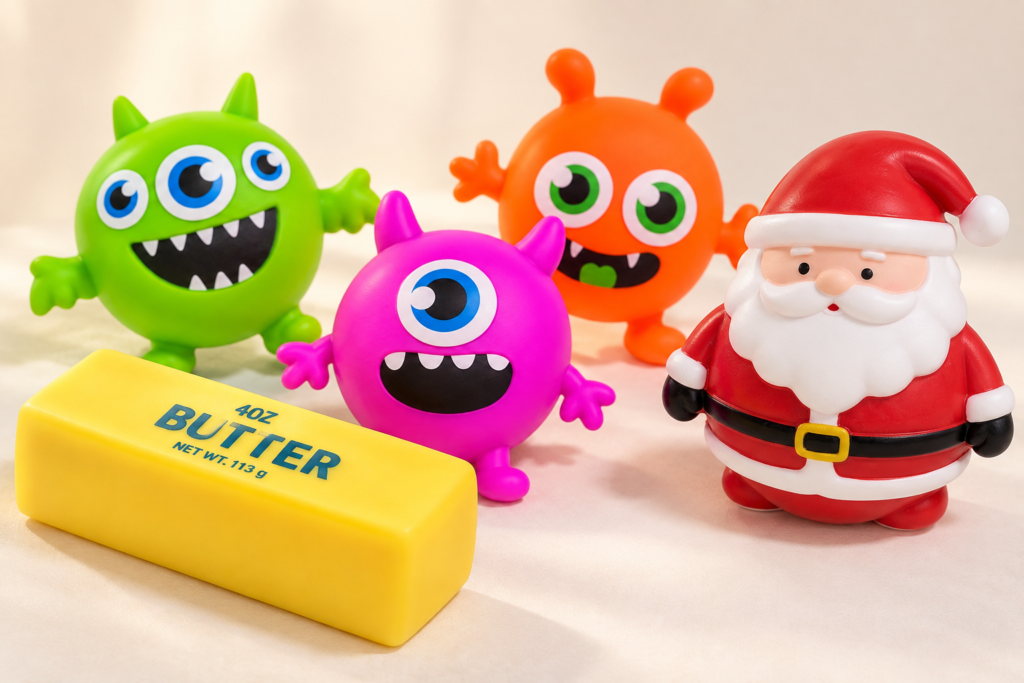
For example, a Butter Squishy does not need twenty decorative elements to communicate the joke. Looking unexpectedly like a familiar grocery item is already the idea.
This is also why changing a successful novelty shape deserves some restraint. If too many decorative features are added, the object can become harder to recognize. If the proportions move too far away from the familiar reference, the original visual joke may weaken.
When reviewing custom novelty toys, try reducing the concept to one sentence:
It looks like ___, but it does ___.
If that sentence is easy to complete, the product probably has a clear starting point.
A Collection Needs Variation Without Losing the Joke
One novelty idea can often support more than one SKU. The challenge is deciding what should change.
Take an expressive-face collection. Different colors can create assortment variety, but different facial expressions may give shoppers a stronger reason to compare pieces. A seasonal collection can use several recognizable characters while keeping a common size, material or packaging format.
Vilora’s Funny Face Flour-Filled Monster Squishy is a useful example. Individual monsters can vary in color and expression while still reading as part of the same product family.
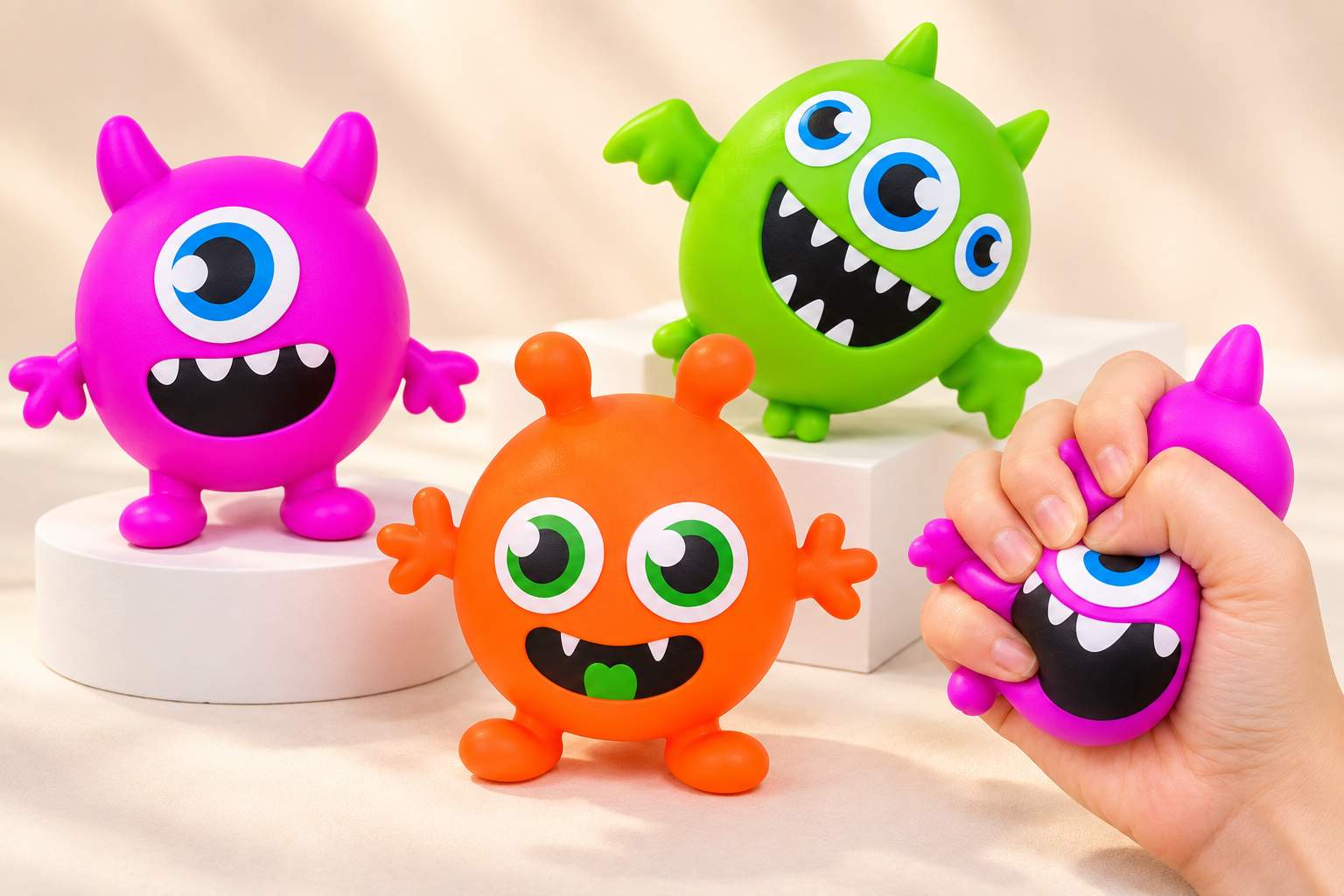
That is different from putting several unrelated designs into one display and calling them a collection. For custom novelty toys, variation works best when shoppers can recognize both the shared idea and the reason to choose one version over another.
Instead of asking how many random designs should be produced, a buyer can decide which variations actually extend the original concept.
Seasonal Novelty Has to Be Obvious at the Right Time
Seasonal products have another constraint: the selling window is visible in the design.
A Christmas toy usually needs to communicate Christmas quickly. The same is true for Halloween, Valentine’s Day or another short retail season. That does not mean covering every surface with seasonal graphics. A recognizable character may already do enough.
A Christmas Squishy Toy Collection built around Santa Claus and a snowman, for example, can establish the theme through the products themselves. Packaging can reinforce the season without carrying the entire job.
For custom novelty toys developed around a seasonal program, the strongest customization may therefore be the character assortment or color direction rather than a completely different construction.
Seasonal novelty also competes with a much wider mix of small gifts, collectibles and impulse products during the holiday selling period. The concept needs to register quickly when the surrounding retail environment is already crowded.
Packaging Should Finish the Idea, Not Invent One
Packaging can make a novelty product easier to sell, but it cannot rescue a weak concept.
If the toy is already visually interesting, the package can frame it, organize an assortment or make the key feature easier to see. A countertop display may let several characters work together, while an individual box can give a more developed product room for graphics and information.
A light-up product presents a different challenge from a funny-face squishy. If its feature is difficult to understand while the product is sitting still, the package may need to communicate what happens when it is used.
But the package should still support something that exists in the product itself.
For custom novelty toys, packaging decisions are better made after the novelty idea is clear—not as a substitute for one. Buyers planning the retail presentation can then consider how visibility, display format and packaging information support the finished product.
Know What You Are Asking the Factory to Preserve
By the time a concept reaches sampling, there may be many details on the approval list: color, print position, dimensions, packaging artwork and product construction.
Keep the original idea on that list too.
Place the sample on a table and look at it from roughly the distance a shopper might first see it. Is the food shape still recognizable? Does the funny expression still read clearly? Does the seasonal character immediately belong to the intended holiday?
Those questions are easy to overlook when a project becomes a list of specifications.
The strongest custom novelty toys do not need every possible customization option. They need a clear reason to be noticed, followed by design choices that protect that reason all the way to the finished product.
Before approving the next sample, describe the toy without using the words custom, unique or fun.
If the actual idea is still easy to explain, the product has something worth building on.
Read More