A toy can look great in a sample and still end up with the wrong packaging. Maybe the box takes up too much shelf space. Maybe the product is hard to see. Or the artwork gets approved before anyone realizes that a barcode, warning or tracking information still needs a place to go.
These issues are easier to solve before production starts. For retailers and private-label brands, novelty toy packaging is part of the product decision from the beginning, not something to figure out after the toy itself has been approved.
The right package depends on where the toy will be sold, how shoppers will interact with it and how the order will be packed and shipped. A countertop display might make sense for a small impulse toy, while another product may need its own retail box. There is no single format that works for every program.
Table of Contents
How Novelty Toy Packaging Fits Different Retail Channels
Before choosing a package, think about what happens when the product reaches the store.
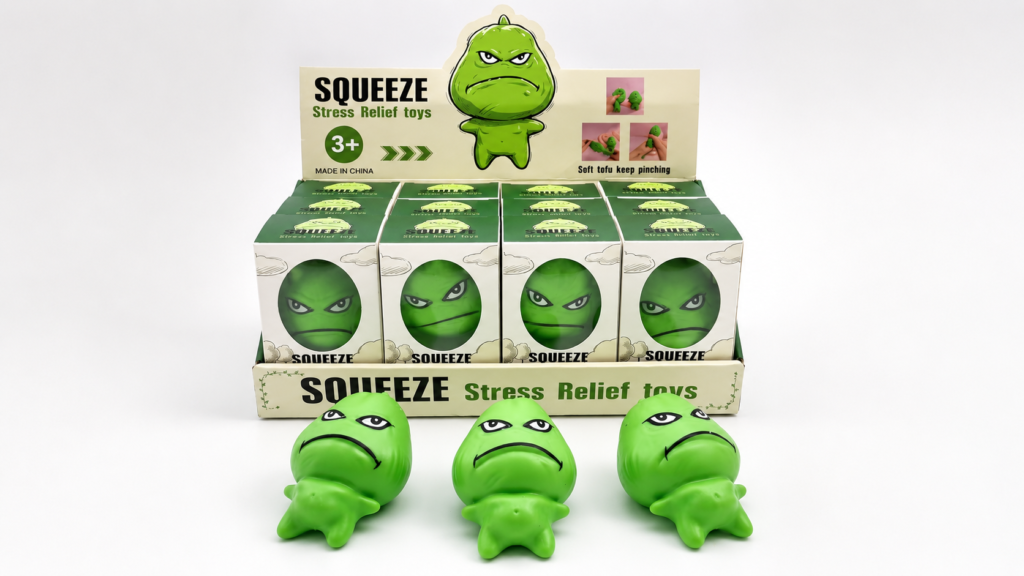
A small squeeze toy sitting near the register has a different job from a larger toy displayed on a shelf. The first needs to be easy to notice and easy to pick up. A countertop display can work well because it keeps several units together while using relatively little space. A higher-priced item may benefit from an individual box that gives the product more presence and provides room for additional information.
Visibility matters too, especially with tactile and novelty products. If the color, shape or unusual design is what catches a shopper’s attention, hiding most of the toy behind printed cardboard may work against the product. Clear boxes, windows and open displays can make more sense when the product itself does most of the selling.
This is one reason packaging belongs in the conversation when buyers are evaluating wholesale novelty toys. A product that works in a catalog still has to make sense on an actual retail shelf.
Novelty Toy Packaging Has to Protect the Product Too
Retail presentation is only part of the job. The package also has to survive everything that happens between the factory and the shelf.
Products are packed into master cartons, moved through warehouses, stacked during transportation and handled again when they reach a distributor or retailer. A package with too much empty space can add unnecessary carton volume. One that is too tight can put pressure on a soft toy or damage the retail box before it ever reaches the customer.
For squishy toys, this deserves extra attention. Soft products can be compressed or misshapen if the package does not fit properly, and a clear box that looks good in a sample may scratch or deform after being packed tightly into a shipping carton.
The Toy Association points out that toy packaging serves an important protective role during shipping and display, while also carrying information such as age grading, warnings and usage instructions.
That is a useful way to evaluate novelty toy packaging: not just by how it looks in a product photo, but by whether it still works after the product has traveled through the supply chain.
Custom Packaging Can Change the Order
Customization does not always mean designing a completely new box.
For a first order, the practical option may be an existing package with a branded sticker, printed insert or other simple change. A larger private-label program may justify custom artwork, a new display box or packaging built specifically around the product.
Those choices can affect more than design cost. Printing, inserts and custom display cartons may have their own production minimums. A factory might be able to make the toy at one quantity while the packaging supplier requires a larger print run. Suddenly, the package—not the toy—is determining how many units make sense to order.
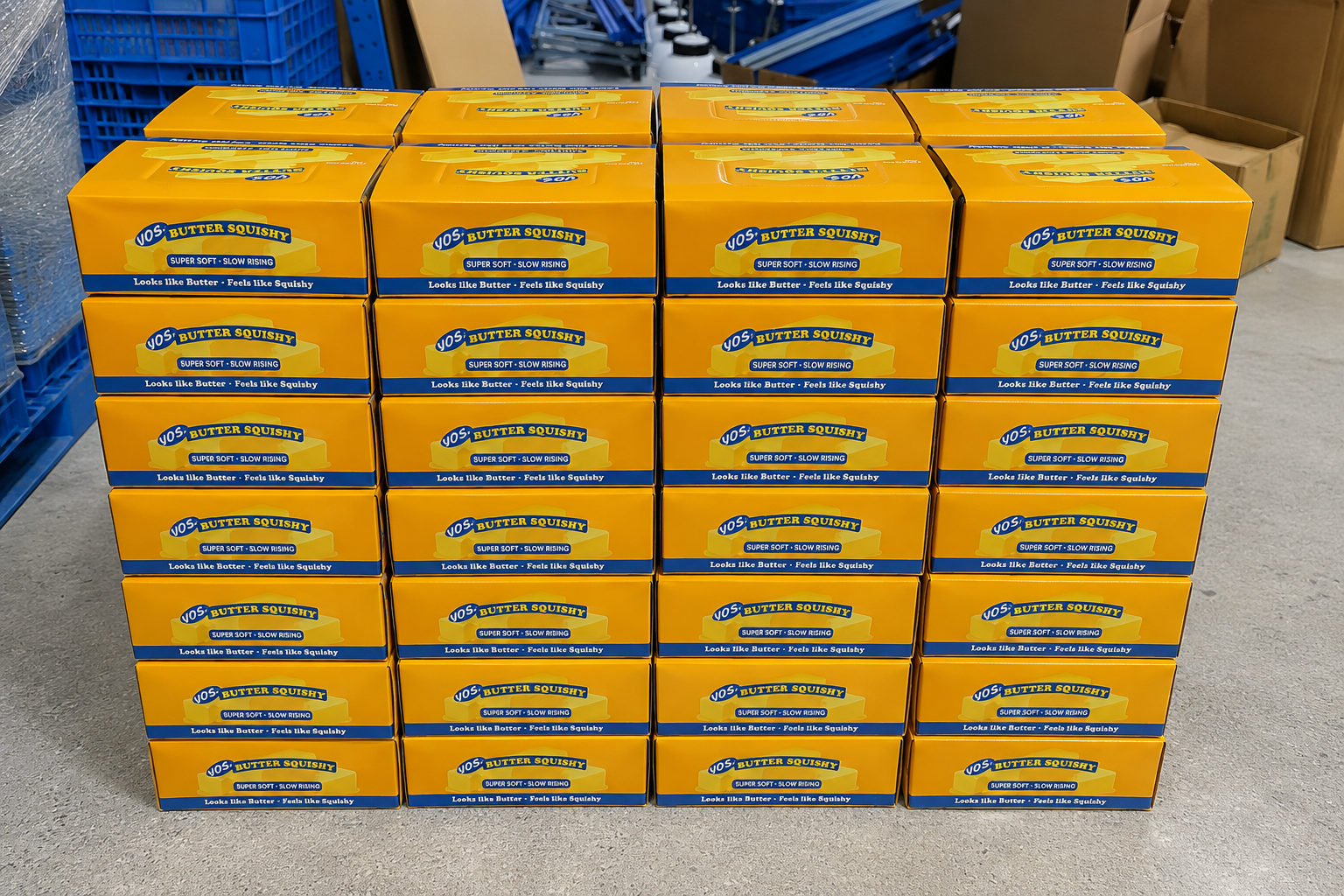
This is where novelty toy packaging and MOQ become closely connected. Before approving a custom package, confirm whether the quoted minimum applies to the toy, the packaging or both.
That question is especially important when comparing novelty toy MOQ requirements across suppliers. Two quotes can look very different simply because one uses existing packaging and the other includes a custom printed retail format.
For a product that has not been tested at retail yet, simpler packaging can sometimes be the smarter first move. There is little benefit in ordering thousands of custom boxes before knowing whether the product itself deserves a larger second order.
Make Room for the Information That Actually Has to Be There
Packaging artwork can get crowded quickly. A logo and product name are only part of what may need to fit on the finished package.
For children’s products sold in the United States, CPSC requirements can include tracking information on the product and its packaging, where practicable. The required information is intended to make details such as the manufacturer or private labeler, production location and date, and batch or run information identifiable.
Other labeling requirements depend on the product itself, its components and the intended age group. CPSC guidance specifically notes that different requirements can apply to different products, including age grading and certain small-parts warnings.
For a private-label project, it makes sense to identify these needs before the designer finishes the artwork. Moving a logo or redesigning the back panel after everything has been approved creates work that could have been avoided.
The destination market matters as well. Packaging prepared for the U.S. should not automatically be treated as finished artwork for every other market.
Approve the Package With the Product
A product sample tells you whether the toy feels and functions the way it should. A packaging sample answers a different set of questions.
Does the toy fit correctly? Can shoppers see enough of it? Does the box feel too large for the product inside? Is the printing clean? Are the barcode and required information easy to find? If the order includes a countertop display, does the full display look right when all the units are loaded?
These details are much easier to catch with a physical sample than on a flat artwork file.
For a custom order, the approved package should be documented along with the approved product. If the box size, insert, artwork or labeling changes after approval, the final version needs to be clear before production begins. This is also something worth discussing when evaluating a novelty toy supplier, since packaging can affect assembly, carton packing and the final quote.
Good Packaging Starts With the Buying Plan
There is no reason to make novelty toy packaging more complicated than the product requires. A simple toy intended for an impulse display may not need an elaborate box. A private-label item going into a larger retail program may need much more attention to branding, labeling and shelf presentation.
Start with the product and the way it will actually be sold. Then look at packaging size, visibility, protection, order quantity, branding and market requirements together.
That usually leads to a better decision than choosing a package because it looks good in a supplier catalog. The package should help the product reach the shelf in good condition, make sense to the shopper and fit the economics of the order. If it does those things well, it is doing its job.
Read More: Buying Guide · Customization Guide · OEM Guide