Private label does not have to mean redesigning a toy from the ground up.
A retailer may already like the product itself and only need branded packaging. Another brand may want an exclusive color combination. A third may need changes to the product before it feels different enough to belong in its assortment.
All three can be private label toys, but they are not the same sourcing project.
The useful question is not how many things a factory can customize.
It is:
What actually needs to change for this product to feel like part of your brand?
That question can prevent a relatively straightforward private-label program from turning into a longer product-development project without a clear reason.
Table of Contents
Private Label Toys Do Not All Start at the Same Point
Imagine a buyer finds a small fidget toy with the right play action, size and target price.
The product already works.
The generic packaging does not.
For that buyer, changing the package design, adding the brand and preparing the correct retail information may create enough distinction. Changing the mechanism or opening a new mold would solve a problem the buyer never had.
Now consider another retailer looking at the same product. Its assortment already contains several similar toys, so a standard version would disappear into the range. An exclusive color combination or a different product set may be much more important.
Then there is the brand developing an original character or play feature. That project begins somewhere else entirely.
This is why requests for private label toys should start with what is already acceptable—not with a list of everything that could potentially be changed.
Start With What the Customer Needs to Recognize as Yours
Brand identity does not always live on the toy itself.
For some products, shoppers first encounter the package. The color system, product name, graphics and display presentation may do most of the work connecting the item to a particular brand.
That can be especially relevant for relatively simple impulse and novelty products.
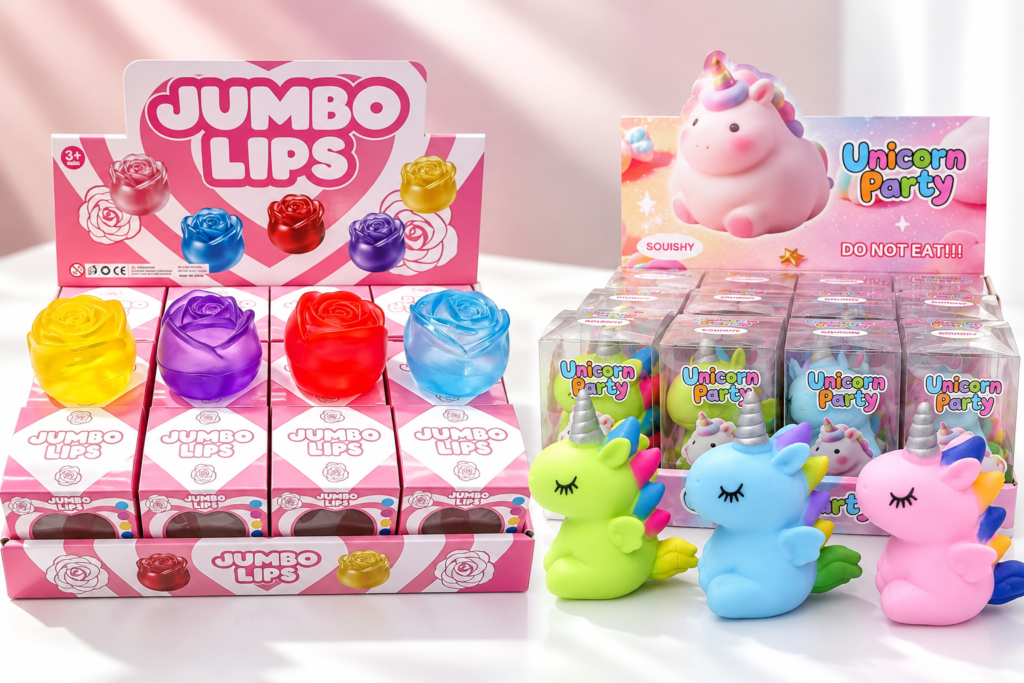
Suppose a retailer selects a squishy toy whose shape and hand feel already fit the assortment. The buyer may gain more from a strong branded display box than from changing a small physical detail that shoppers barely notice.
A fidget product can present a different problem. If similar mechanisms are widely available, a distinctive color combination, accessory set or product grouping may help create a more recognizable SKU.
The decision changes by product.
Before asking for modifications, identify the part of the product experience the customer will actually notice: the toy, its color, its presentation, its combination with other items, or the packaging around it.
That gives the customization brief a purpose.
Sometimes Packaging Is Doing Most of the Brand Work
Packaging can be one of the most visible changes in a private-label program without changing the basic product.
A display box can organize several pieces at a counter. A printed retail box can give the buyer room for branding and product information. A simpler bag or label may make more sense when elaborate packaging adds little to the selling environment.
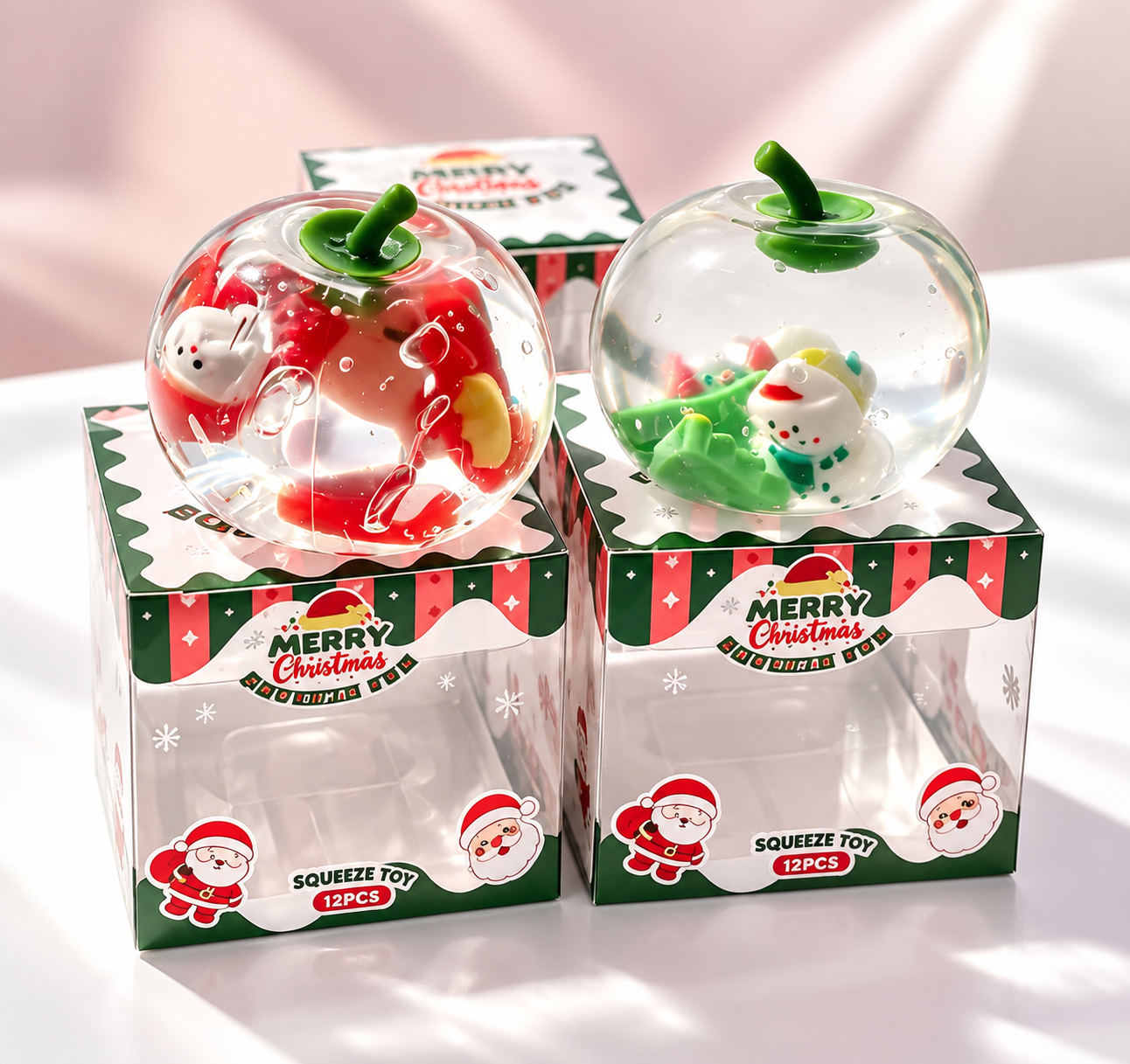
The important part is matching the package to the channel.
Consider a small toy intended for checkout displays. The dimensions of the display, number of pieces inside and visibility of the product may matter more than adding another decorative feature to the toy.
The same product sold online has different needs. The package may need to photograph clearly, protect the product during fulfillment and make the branded SKU easy to identify.
This is where private label toys can remain relatively close to an existing product while still becoming commercially distinct.
It also explains why “custom packaging” should not automatically mean the most elaborate box available. Packaging earns its place when it improves presentation, identification, protection or merchandising.
Product Changes Should Have a Reason
Moving beyond packaging can make sense when the change creates a difference customers can actually see or experience.
Color is an obvious example.
A retailer building a coordinated seasonal assortment may need a specific palette. A brand may want colors that connect the toy to the rest of its product line. A distributor may need a different assortment mix for a particular market.
The same logic applies to finishes, accessories and product combinations.
But every change introduces another specification that has to be communicated, sampled and approved.
That is why buyers should avoid treating the customization menu like a checklist.
Instead of asking, “Can we change the color, logo, package and product?”
Ask what each change accomplishes.
If an exclusive color makes the SKU recognizable, there is a reason for it. If a different accessory improves how the product is sold as a set, there is a reason for that too.
When developing private label toys, every requested change should have a job.
A buyer should be able to explain what each requested change is supposed to improve—brand recognition, merchandising, product experience or something else.
If a modification exists only so the product can be described as “more custom,” it may not improve the assortment at all.
Know When You Have Crossed Into Product Development
There is a point where a private-label project stops being mainly about branding an existing product.
Changing a printed package is one thing. Changing the structure, dimensions, mechanism or molded components of the toy can be another.
A buyer who wants a different internal mechanism, an original shape or a new molded part may now need engineering review, prototypes, tooling or additional sample stages before mass production.
At that point, the project has moved further into product development, and the timeline should reflect it.
That does not make deeper customization a bad choice.
It simply means the project should be planned as product development rather than treated like a packaging change.
The distinction matters because buyers can otherwise build a timeline around a relatively simple private-label order while requesting changes that require a much longer development path.
There is another reason to define the final version clearly: the product being sold needs to be evaluated as the product it actually is.
For children’s products in the U.S., federal tracking-label requirements include identifying the manufacturer or private labeler, the location and date of production, and batch, run or other identifying information.
So before approving production, the final product specification, packaging and required documentation should all refer to the version that will actually reach the market.
Choose the Simplest Version That Creates a Real Difference
There is no prize for making private label toys more complicated than they need to be.
If an existing toy already has the right function, feel and price position, branding and packaging may be enough.
If the product fits but looks too generic beside competing items, color, finish or assortment changes may create the distinction the buyer needs.
And if the idea depends on an original shape, structure or play experience, the project may deserve a true development process from the beginning.
Start with the difference the customer needs to notice.
Then customize only as far as necessary to create it.
That keeps the product decision connected to the brand rather than to the number of options on a factory customization list.
Read More