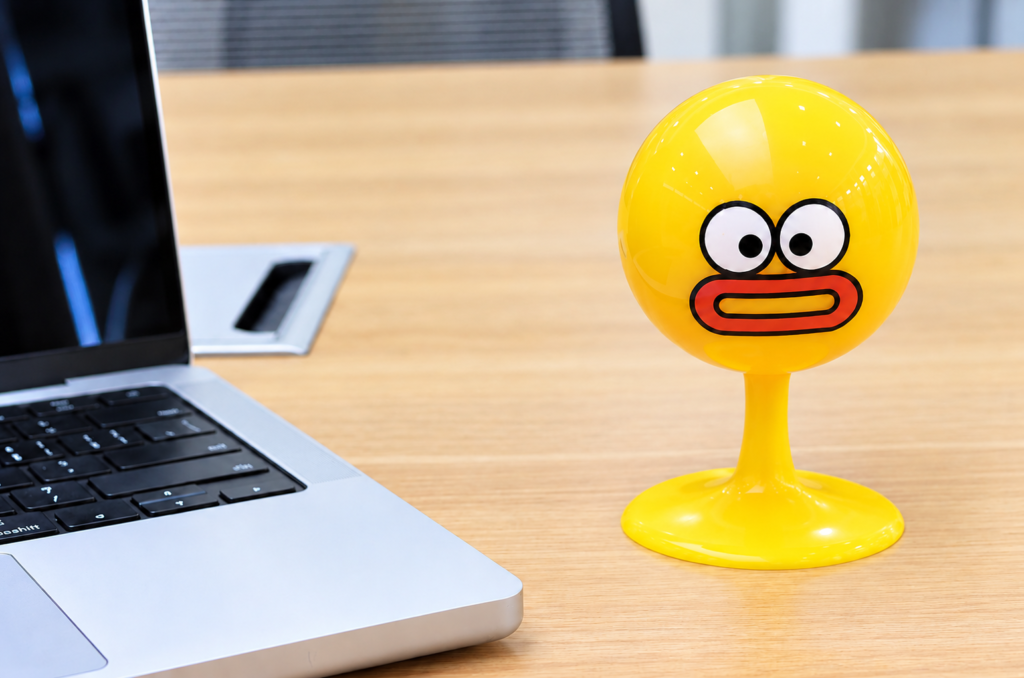
The original request was for 600 “fun desk gifts.” That was about all the buyer knew.
The company had three offices, a mix of onsite and remote employees, and a date in March when managers planned to hand everything out. They did not want drinkware. They had already done notebooks. Someone on the HR team suggested a squishy toy, but nobody wanted the finished gift to look like a trade-show freebie.
That last concern was fair. Employee appreciation giveaways can feel surprisingly impersonal when the company logo becomes the entire idea.
In this case, the useful question was not “Which toy should we order?” It was “What happened that the company wants to recognize?” The answer was a difficult software conversion that had pulled in people from operations, customer service and accounting. Once that came out, the project had a reason to exist.
Table of Contents
The Thank-You Came Before the Toy
The buyer considered a custom computer shape. It looked clever in a sketch, but it created a new mold, a longer schedule and more cost for a program that might happen only once.
They went back to existing products. A small cloud was available, felt appropriate for a software project and had enough space for a simple one-color mark. It was not a perfect visual summary of six months of work. It did not need to be.
The insert did the important part:
Thank you for getting us through the changeover. We know the extra work reached far beyond the IT team.
That message named the work and acknowledged the people who had carried it. The cloud gave them something lighthearted to keep on a desk.
This is where employee appreciation giveaways are often misunderstood. A product can support recognition, but it cannot create recognition on its own. If the same item and the same generic card could be sent after any project, the program probably needs more thought.
When Employee Appreciation Giveaways Fit the Workplace
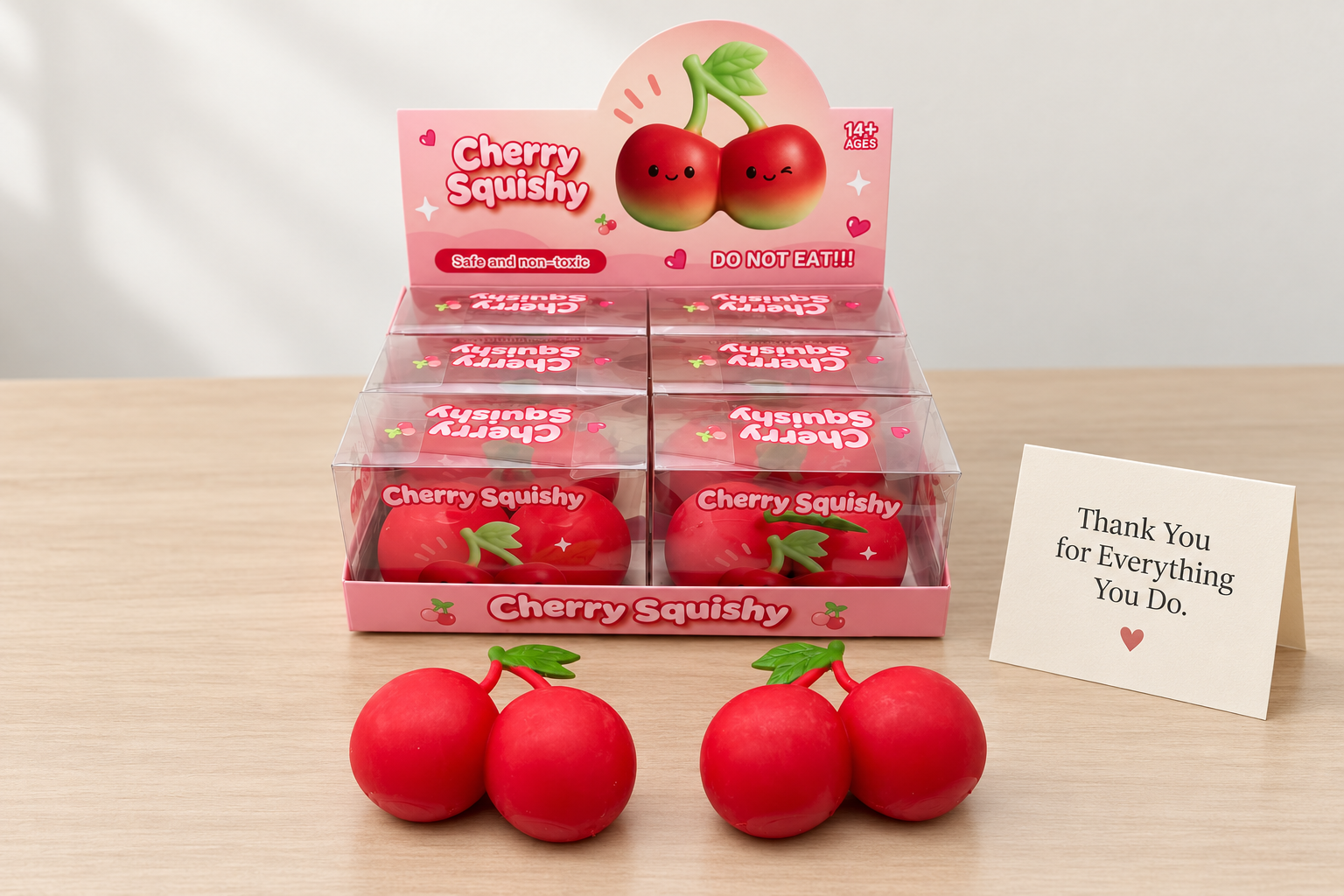
There are offices where a smiling dumpling will disappear onto someone’s desk and stay there for years. There are also offices where it will feel out of place before the box is open.
The decision is less about employee age than company culture. Designers, restaurant teams, game developers and customer service groups may be comfortable with a playful object. A formal professional-services office might prefer a clean shape in a restrained color. Employees who work on a production floor or rotate through shared stations may not have a desk at all.
One HR manager can like a product without it being right for 800 other people. Before approving employee appreciation giveaways, show the actual options to a few employees outside the buying group. Do not call them “stress-relief products” and ask whether that sounds appealing. Put three samples on a table and ask which one, if any, they would keep.
“No toy” is a useful answer. The company may be better served by food, time off, a handwritten note or something related to the work itself.
Keep the Logo in Its Place
The cloud sample exposed another issue. The company’s full logo was too wide for the print area. Reduced to fit, the smaller words underneath it were barely readable.
The first instinct was to make the cloud larger. That would have changed the product, packaging and freight. The easier answer was to use the recognizable portion of the mark on the toy and put the full logo on the card.
Internal gifts do not need to advertise the employer back to the employee. With employee appreciation giveaways, the packaging usually has more room for the message anyway. A paper sleeve, insert or small box can carry a project name, date and note from the manager without forcing several lines of print onto a curved surface.
This also makes version changes easier. The buyer in this project needed 420 English cards and 180 bilingual cards. The toy remained the same. Only the insert and carton counts changed.
That still required a packing instruction, not an informal email. The purchase order listed both card files, their quantities and the office receiving each version. Finished cartons were marked by destination. Otherwise, a small attempt at personalization could have turned into a sorting job after delivery.
Then the Remote List Appeared
The buyer originally described the order as three-office delivery. Later, HR produced a list of 74 home addresses.
That changed the job. The factory could pack each toy in its finished gift box, but it was not the right place to manage private employee data or mail individual parcels across the United States. The bulk order went to a domestic fulfillment provider instead.
Gift packaging and shipping packaging were priced separately. The small presentation box looked fine on a desk, but it needed an outer mailer to survive parcel delivery. Postage, address labels, returned packages and replacement units were added to the program budget.
Remote employees also needed the same timing as everyone else. Their parcels could not leave on the day office employees received their gifts. The fulfillment provider worked backward from the March handout date and mailed them earlier.
For employee appreciation giveaways, employees experience these logistics directly. When one group receives its gift two weeks late, the appreciation feels divided even if the product is identical.
Customization Can Quietly Split the Order
By the final review, marketing had proposed four cloud colors to match four departments. On paper, it looked like a 600-piece order. In production, it would have been four smaller color runs, plus two card versions and four delivery groups.
The buyer kept one color.
That decision left room in the budget for the bilingual insert and home delivery, both of which mattered more to the program. Employee appreciation giveaways do not become more personal simply because they have more SKUs.
A new mold or several custom colors may make sense when the company plans to reuse the design for onboarding, recruiting and future milestones. For a one-day program, an existing item with well-planned packaging is often the more sensible choice.
What the Supplier Needed to Know
The final inquiry was short, but it was no longer vague:
600 cloud-shaped desk toys in one existing color
One-color simplified logo on the product
420 English inserts and 180 bilingual inserts
Individual gift boxes suitable for placement inside parcel mailers
Three bulk delivery destinations
Required arrival date and ZIP code for each location
The supplier could quote that. More importantly, the buyer could see which parts of the program were product costs and which belonged to packing and fulfillment.
Companies that need guidance on the tax treatment of employee gifts should have payroll or a tax adviser review the actual program. Cash-equivalent benefits and low-value tangible items are not automatically handled the same way under IRS guidance.
Vilora Toys works with brands, promotional distributors and organizational buyers on custom squishy, sensory, fidget and novelty toy programs. When requesting employee appreciation giveaways, include the quantity, artwork, packaging plan, delivery destinations and the date employees should receive them—not simply the date of the company event.
Read More
Custom Stress Toys: Start With the Campaign, Not the Shape
Bulk Event Giveaway Toys: Start With the Date They Must Arrive