
A lightweight promotional ball compresses under your thumb. Beside it, a heavier character squishy changes shape as its filling moves. Both may be sold as stress toys, yet their construction tells two different manufacturing stories.
How are stress balls made? Some begin as a reactive mixture that expands into foam inside a mold. Others combine a separately formed flexible shell with an interior filling and a closure.
That distinction explains why similar-looking products can require different equipment, production steps, and design changes. The route described below is a general explanation; the exact process depends on the selected product.
Table of Contents
Foam Forms the Body Rather Than Filling It
For a molded polyurethane foam stress ball, the mold cavity defines the outside shape. The prepared polyurethane system is mixed and dispensed into the mold, where it reacts, expands, and develops a cellular structure.
After sufficient curing, the piece can be removed. Depending on the production method, finishing may include trimming excess material and adding surface decoration.
How are stress balls made without a separate filling operation? In this construction, the foam itself becomes the compressible body. Workers do not need to stuff a finished rubber ball with loose foam afterward.
Smooth-On’s flexible polyurethane foam range illustrates how foam formulations can differ in density, expansion, and compression behavior. These are examples of material properties, not recommended formulations for children’s toys.
The exterior may have a denser skin than the interior. That does not necessarily mean a separately manufactured shell surrounds a filling. Likewise, a smooth painted surface does not establish what lies underneath.
How are stress balls made in unusual shapes? The mold supplies the geometry, but the formed piece must still come out of it. Narrow projections, deep recesses, and undercuts can complicate removal. Those tooling considerations are covered separately in Vilora’s squishy toy mold development guide.
Color and decoration also depend on the process. Some surface work may happen in the mold; other details may be applied after demolding. There is no universal finishing sequence for every foam stress ball.
A Filled Product Requires a Shell, Contents, and Closure
A filled squishy takes a different route. Its flexible exterior contains another material, so forming the outside is only part of production.
How are stress balls made when they contain a distinct filling? A typical sequence is to form the exterior, introduce the specified contents, and close the opening. The actual forming and sealing methods must be confirmed for the SKU.
Thermoplastic elastomers can be injection molded by heating the material, introducing it into a mold, and cooling it into shape. Avient’s injection molding guide discusses factors such as wall thickness, gates, mold filling, and cooling.
That describes an available manufacturing process. It does not prove that a particular hollow toy uses injection molding, or that every filled squishy follows the same shell-forming method.
Vilora’s Panda Squishy Toy, for example, lists a TPR outer shell and clay filling. The listing identifies separate exterior and interior components; it does not document every production operation.
The shell provides flexibility and containment. The filling contributes weight, movement, and resistance. The closure completes the construction and must remain compatible with repeated compression.
How are stress balls made to feel heavier or firmer? For a filled product, the answer may involve the filling characteristics, fill quantity, shell properties, or their combination. Adding more filling is not automatically the right adjustment.
Follow What Changes Between the Two Routes
The difference becomes especially clear when a buyer requests a modification.
A firmer foam ball may require changes to the foam system or processing conditions. A firmer filled squishy may require a different balance between shell and contents. An identical outside shape does not make those changes equivalent.
Increasing size reaches further into production. It can affect tooling, material quantities, processing, and packaging. A larger version is not guaranteed to reproduce the original hand feel simply because its proportions match.
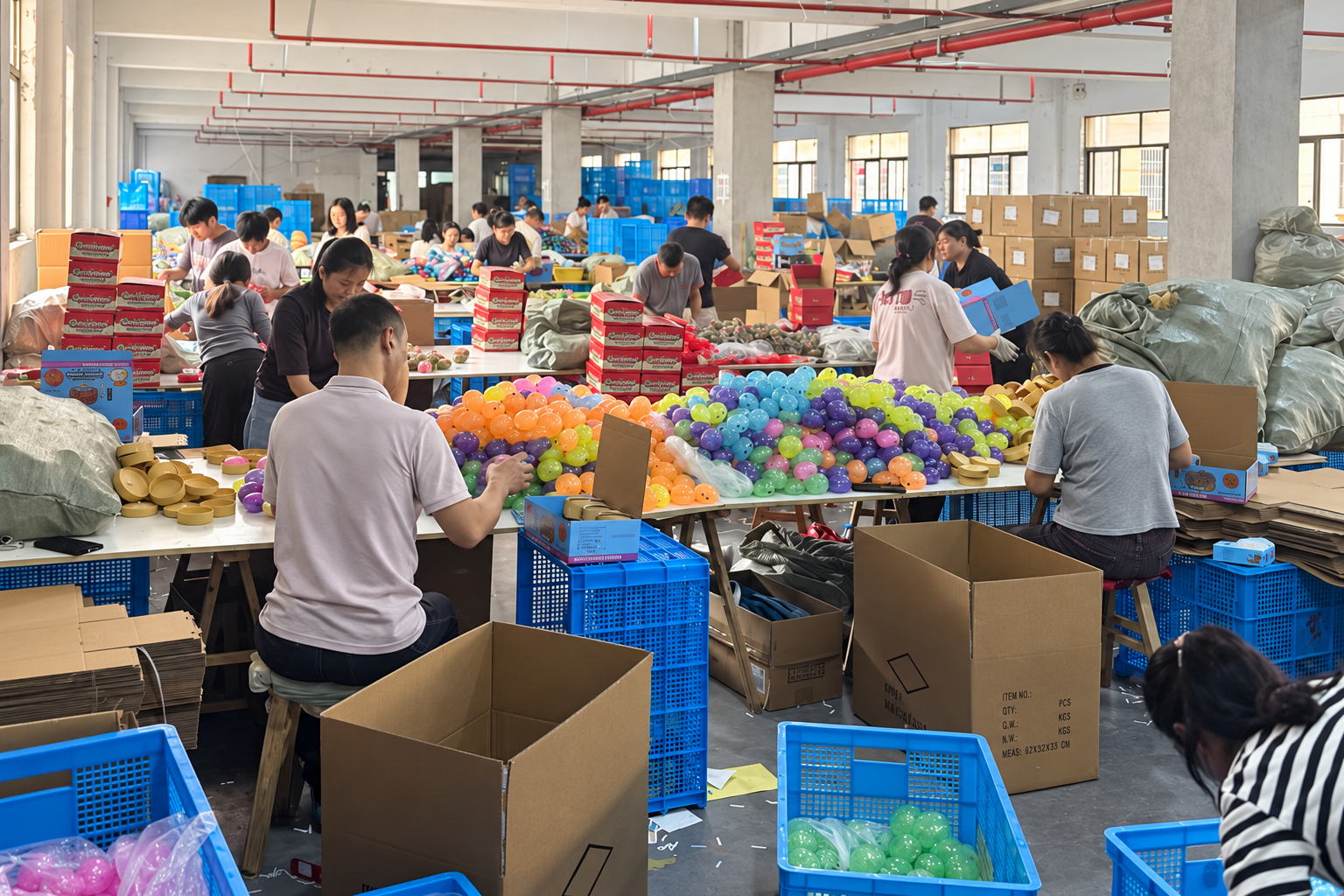
Decoration follows its own route, too. Changing a printed face may leave the body construction unchanged, provided the selected process works on that surface. Vilora’s stress ball printing methods guide explains that separate decision.
How are stress balls made? The most useful answer follows the physical product: either foam forms the compressible body, or a flexible exterior contains separately introduced material. Once that distinction is clear, the manufacturing steps—and the consequences of changing them—become much easier to understand.
Read More