
Learning how to use a fidget cube starts with one control at a time. Hold it loosely, try a button or moving part with your thumb, and turn the cube when you want a different action. There is no sequence to complete.
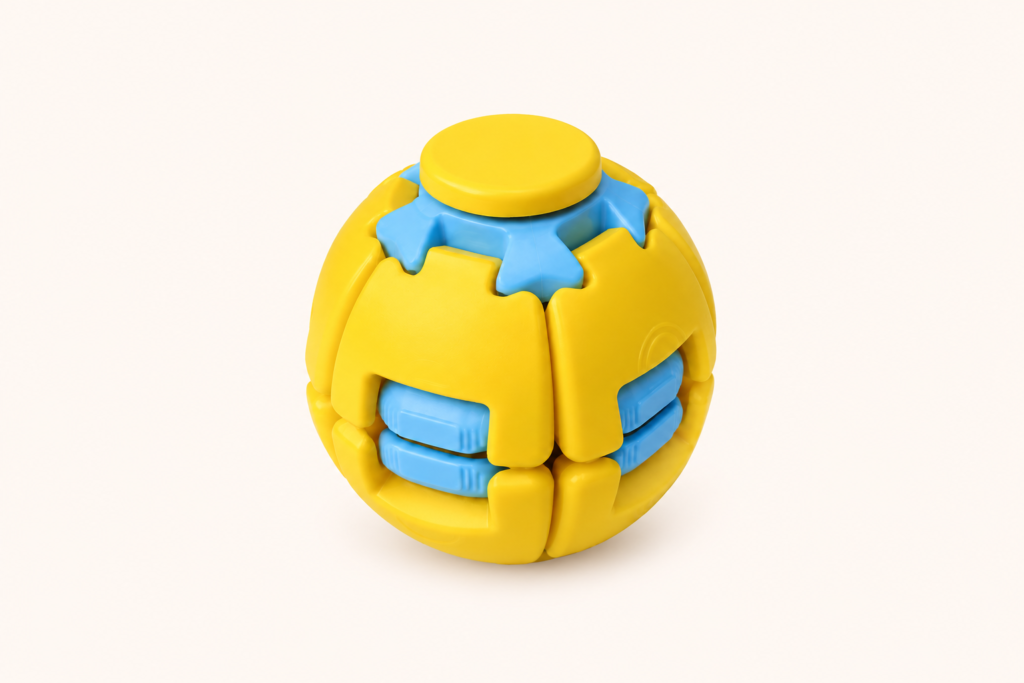
This guide covers mechanical cubes with controls on their faces. A soft squeeze cube compresses in your palm, while an infinity cube folds through connected sections. Check which type you have before following the instructions below.
Table of Contents
Identify the Controls on Your Cube
The original Fidget Cube by Antsy Labs names its six faces Click, Glide, Flip, Breathe, Roll and Spin. Other models may have different controls or arrange them differently.
When learning how to use a fidget cube, look at the actual mechanisms rather than relying on color or position. Find the buttons, joystick, rocker switch, recessed surface, rollers and dial. Consult the product instructions if yours has additional features.
Support the cube with your fingers and leave your thumb free to move. If reaching a control feels awkward, rotate the cube or try your other hand. You should not need a tight grip just to operate it.
How to Use a Fidget Cube: Try Each Side
Click: Press and Release
Press each button separately, then release it. The original model has three clicking buttons and two silenced buttons, so a quiet button is not necessarily broken. Check your own model before expecting the same arrangement.
Glide: Guide the Joystick
Move the joystick gently with your thumb. Begin with short movements. Only press it down or pull it upward if your model’s instructions specifically describe those features.
Flip: Rock the Switch
Move the rocker back and forth. On the original design, moving it gently or quickly changes its sound. Try both to hear the difference on your cube.
Breathe: Rub the Recess
Slide your thumb across the shallow hollow. The surface stays in place; it does not need to move inward or click.
Roll: Turn the Gears or Ball
Roll each exposed part separately. The original model’s ball also clicks when pressed, but that feature should not be assumed for every cube.
Spin: Rotate the Dial
Turn the circular dial with your thumb. Follow its normal range without forcing it. A slow turn is enough; you do not need to build up speed.
If you are showing someone how to use a fidget cube, demonstrate these actions separately. Let them try each one before moving on, rather than turning the cube rapidly through all six faces.
Find a Comfortable Grip and Repeatable Action
Once you know how to use a fidget cube, choose one control and repeat its movement a few times. Notice whether your thumb can find it again without looking down.
Adjust your grip if another finger accidentally presses a neighboring button. A control can feel different depending on how you hold the cube, so try a few positions before deciding whether that side suits your hand.
You do not have to use every side equally. Some people may prefer a short button press; others may enjoy rubbing the fixed surface. If you would rather squeeze or twist something, our guide to fidget toys for adults compares those alternatives.
For retail staff, a short “how to use a fidget cube” demonstration card can help explain an unfamiliar sample. List each control, its basic action, and any model-specific instructions. Place the card beside the matching item so shoppers can follow along while holding it.
For a branded project, our custom fidget toys guide covers broader customization decisions. Confirm the specific model, available decoration area and sample requirements with the supplier rather than assuming every face can carry a logo. A logo mockup should leave the controls easy to identify.
Check the Sound, Then Put It Away
Knowing how to use a fidget cube also means checking how it behaves in your intended setting. Try the control you expect to use, not just the quietest side, before taking it into a shared room.
A switch that sounds subtle at home may be noticeable beside someone reading or listening. Choose another action if necessary, and follow the rules of the classroom or workplace.
Watch what happens when you release each control, too. If a button stops springing back or a part starts sticking, check the maker’s guidance instead of pressing harder. Do not pry open the shell or add lubricant without product-specific instructions.
Follow the item’s age recommendation and care directions, including whether washing is permitted. When finished, release the control and set the cube aside; there is no puzzle state to restore.
The best way to learn how to use a fidget cube is to start gently and pay attention to your grip. Once the controls feel familiar, keep using the movement you enjoy rather than trying to use every feature at once.
Read More