
For toy suppliers, a first wholesale order is encouraging, but it is also easy to overread. A buyer may be testing a trend, filling a small gap in the assortment or simply trying something new. The more useful signal often comes later, when independent toy retailers decide whether to reorder and, just as importantly, what they choose to buy again.
That distinction matters in a market where smaller retailers can move quickly. Faire’s 2026 Independent Retail Report describes an independent wholesale model built around smaller, more frequent orders and shorter lead times rather than the long planning cycles common in big-box retail. That flexibility gives suppliers an opportunity to watch demand develop without waiting for a national rollout or immediately committing to a much larger production run.
For wholesalers and manufacturers, the second purchase can therefore carry more information than the first. It begins to show whether inventory actually moved, which variations earned another order and whether a product has enough staying power to influence the next production decision.
Table of Contents
The First Order Measures Interest; the Reorder Measures Movement
An opening order tells a supplier that a buyer sees potential. It does not necessarily show that the end customer agrees. Independent toy retailers may test a new product because the concept looks promising, the wholesale commitment is manageable or the item fits an emerging trend they want to explore.
The reorder starts to narrow that uncertainty. If a retailer comes back for the same product after a reasonable selling period, the supplier has evidence that the item did more than win over the buyer at a trade show or on a wholesale platform. It earned enough shelf movement to justify another allocation of inventory.
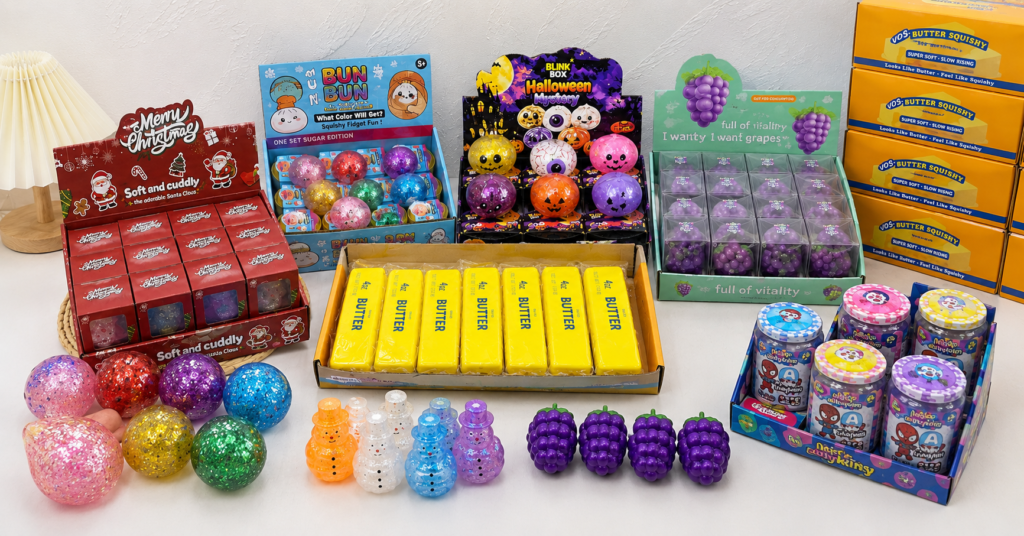
That distinction can be especially useful with tactile and collectible products, where small differences may influence repeat demand. A mixed case of fidget or squishy toys can sell through unevenly, with one color, shape or effect disappearing first. Our Fidget Trading analysis looks at why variation can create reasons for consumers to want another version; at wholesale level, the reorder can begin to show which of those variations are actually producing that behavior.
None of this means that a single reorder proves a national trend. One store may reflect a very specific local customer base, and a small replenishment order can have several explanations. The signal becomes much more useful when similar behavior starts appearing across multiple accounts.
What Reorder Patterns Can Reveal
The most useful reorder information is often more specific than the total number of units. A buyer who initially purchased a balanced mixed case may return asking for only two colors. Another may reorder the regular size but leave out the jumbo version, while a third may keep the product but ask whether a smaller display is available.
Those changes matter because they show where the original assortment was stronger or weaker than expected. For independent toy retailers, a second order does not always need to look like the first one. It can be an adjustment based on several weeks of actual customer response.
Timing adds another layer. A store that replenishes a product two weeks after delivery is sending a different signal from one that returns four months later. There is no universal reorder interval that works across every retailer, because traffic, location, seasonality and opening quantities vary, but comparing similar accounts can begin to reveal useful patterns.
Products that disappear from the second order deserve attention too. A viral item can generate strong opening interest without creating durable demand, while a quieter SKU may continue to sell and reorder after the initial excitement has passed. Looking at what buyers stop purchasing can be just as useful as looking at what they replenish.
Why Independent Toy Retailers Create Useful Early Signals
The economics of independent retail make this kind of observation particularly useful. Smaller opening commitments allow retailers to try a broader range without tying up the cash or shelf space required for a mass-retail launch. Suppliers, meanwhile, can see how products behave across different stores before making a much larger inventory decision.
Inside Out Toys described this flexibility clearly in a 2026 Toy World interview. The company built its independent-retail proposition around low minimum order quantities and no case-quantity requirements, allowing retailers to take a range of products and see what works for their customers rather than filling the stockroom with inventory they have not yet proven.
When independent toy retailers can test products with relatively low inventory risk, the opening order becomes easier to make. That makes the next order more interesting: the retailer has now had time to put the product on the shelf, hear customer questions and decide whether it deserves another allocation of cash and space.
This is also why suppliers should be careful about judging an account only by the size of its first PO. A modest opening order followed by steady replenishment may ultimately be more valuable than a much larger speculative order that never repeats. Over time, reorder quality can help reveal which products, accounts and assortment structures are worth building around.
Retail Channel Can Change the Reorder Pattern
The same SKU does not always behave the same way in every retail environment. A squishy sold as a sensory toy in a specialty store may perform differently when positioned as an impulse item near checkout or as a small gift in a lifestyle shop. Our Squishy Retail Channels analysis looks more closely at how packaging, display and purchase occasion can change where the same product makes sense.
For suppliers, that means reorder data should not be separated from channel context. If gift retailers repeatedly replenish individually packaged versions while toy stores favor mixed countertop displays, the conclusion is not necessarily that one package is better. Each format may be solving a different merchandising problem.
Independent toy retailers can be particularly useful for identifying those differences because their assortments are often curated around local customers rather than a standardized national plan. A retailer may move a product to another part of the store, change the mix after the first delivery or explain why one presentation is easier to sell than another.
That feedback helps distinguish a product problem from a presentation problem. If the core SKU sells well in one setting but struggles in another, developing another product may not be the first answer. A different package, assortment or retail placement may deserve testing before another mold is approved.
From Reorders to Smarter Production Decisions
Reorder information becomes most valuable when it changes a decision. If several buyers replenish the same colors first, the next production mix may need a different ratio. If one size repeatedly lags, the supplier can reduce it rather than carrying the original assortment forward unchanged, while repeated requests for a smaller display may justify a packaging adjustment before another SKU is added.
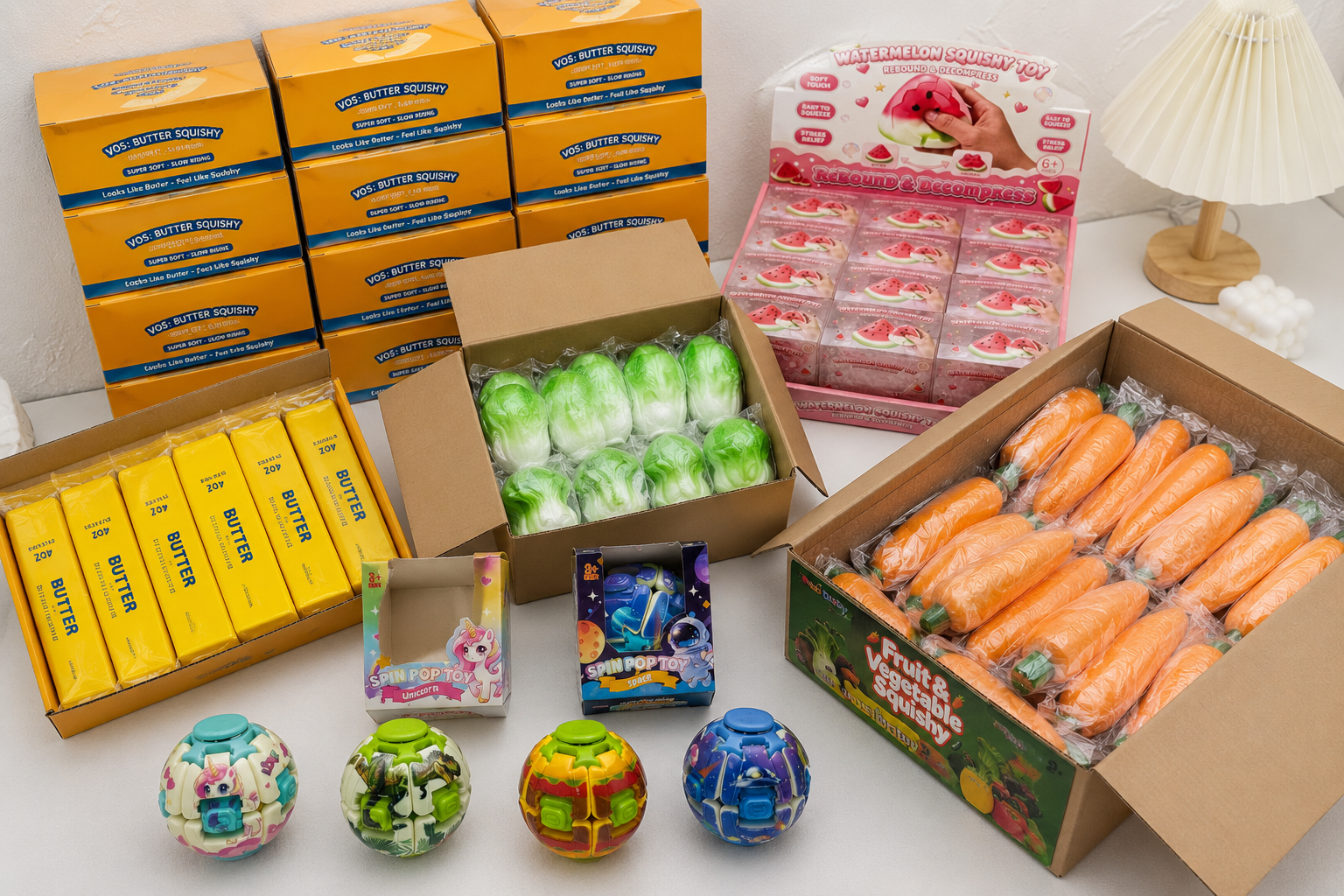
This is where wholesale feedback connects directly with sourcing and production planning. Our Toy Sourcing in 2026 guide looks at supplier capability, production consistency and sourcing flexibility; reorder behavior adds the market side of that equation. A factory may be capable of producing ten variations reliably, but retail evidence can help determine whether all ten deserve equal production volume.
For suppliers working with independent toy retailers, the goal is not to react to every individual request. It is to look for repeated signals across accounts: reorder timing, SKU mix, color preference, packaging changes, quantities and products that disappear from later orders. Once several of those signals begin pointing in the same direction, they can provide a stronger basis for the next production run.
That approach can also reduce trend risk. Instead of scaling simply because a product received attention online or generated a strong first wave of wholesale orders, suppliers can wait for evidence that retailers are coming back. The decision may take a little longer, but it is based on product movement rather than opening-order enthusiasm alone.
For independent toy retailers, a first PO starts the relationship; for suppliers, the more revealing information often arrives afterward. What sold first? What came back onto the next order? What disappeared? How quickly did the buyer return?
Across enough accounts, those answers can turn ordinary wholesale reorders into useful market evidence. And for a supplier deciding what to produce next, that evidence may ultimately be worth more than the size of the first order.
Read More: Buying Guide · OEM Guide