Private label fidget toys can look like a simple branding project: choose a product, add a logo, change the color, and approve the packaging. In practice, those requests do not all sit at the same level of manufacturing difficulty.
Changing a printed card may require no change to the toy itself. Matching a new product color affects production planning. Adding a molded logo can affect tooling. Changing the mechanism, dimensions, or internal construction can turn a private-label project into full OEM development.
The useful question is not simply, “Can this be customized?” It is how far the product needs to change to create a differentiated SKU without adding unnecessary tooling, minimums, testing, or lead time.
Table of Contents
Private Label Fidget Toys Usually Start With an Existing Product
The fastest route is usually an existing factory design whose basic construction is already established. The buyer keeps the shape and mechanism but changes selected brand-facing details.
This works especially well when the product itself already suits the intended channel. A retailer may not need a proprietary spinner, squeeze toy, sensory item, or desk fidget. It may need a recognizable color system, stronger packaging, and a presentation that does not look generic.
Private label fidget toys built on an existing platform can preserve the manufacturing setup while giving the buyer control over how the item appears in the assortment.
Once the request changes dimensions, moving parts, internal components, or the fundamental shape, however, the project is no longer just a branding exercise.
A Logo Has More Than One Place to Live
“Add our logo” sounds like one instruction, but there are several ways to do it.
A logo may be printed directly on the product, molded or embossed into a suitable surface, applied to a label, or carried entirely by the retail packaging. The right method depends on the material, surface geometry, available print area, and how the toy is handled.
For a small fidget, forcing a large logo onto the product can make the item look worse rather than more branded. Packaging can sometimes do more of the brand work while the toy remains visually clean.
Review logo placement on a physical sample. A flat artwork file cannot show whether fingers repeatedly rub across the print, whether a curved surface distorts the mark, or whether the logo disappears once the product is packed.
Color Customization Can Quietly Multiply the Order
Color often looks like one of the easiest changes. Commercially, it can still change the order structure.
If a buyer wants four custom colors instead of one, the important question is whether the factory treats the minimum as one total order or as a minimum per color. Production may require separate material preparation, color matching, setup, or batch control for each version.
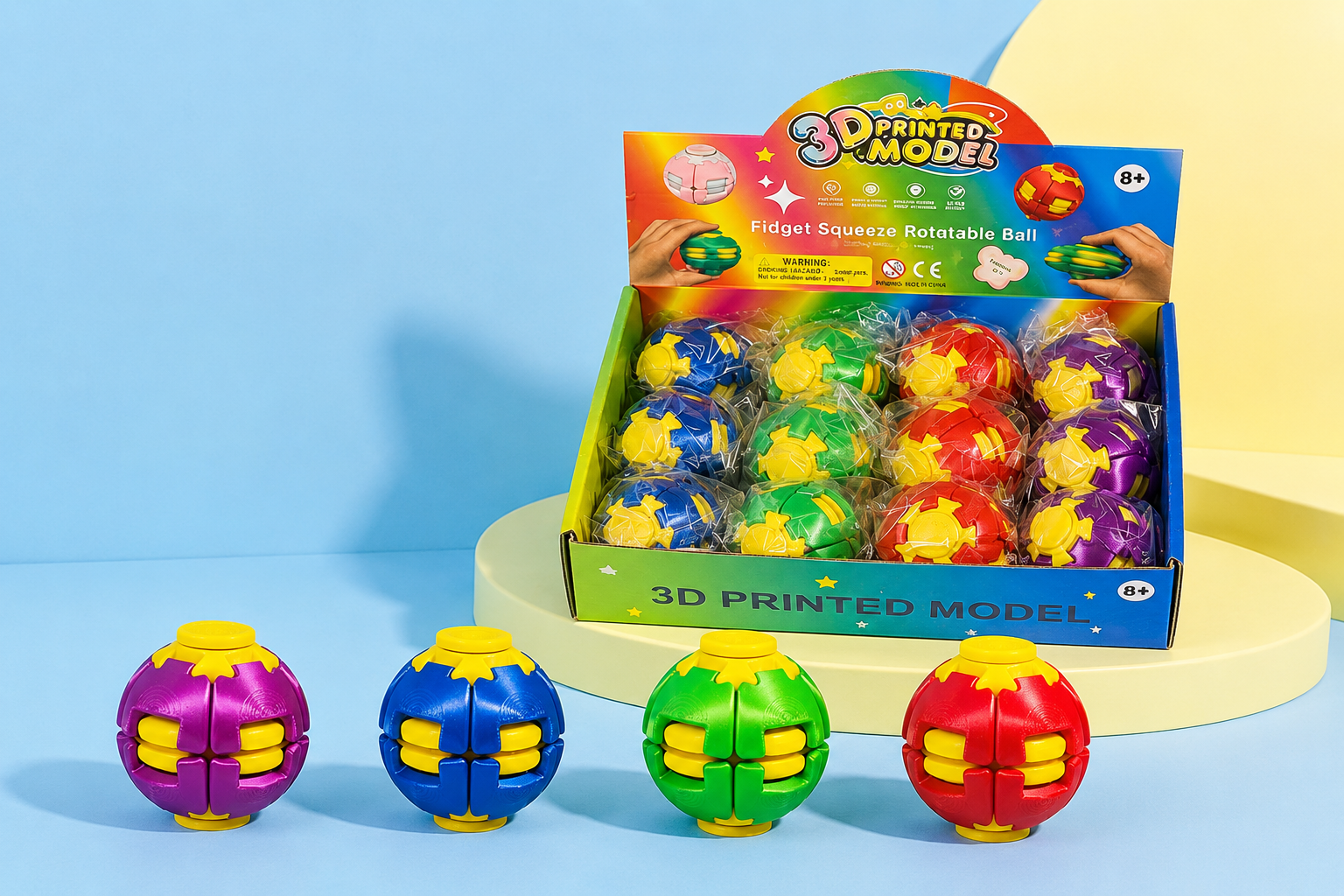
For private label fidget toys, the assortment decision should come before the color palette gets too ambitious.
A three-color launch with a deliberate ratio may be more practical than six colors split evenly just because six looked attractive in a presentation. Confirm quantity by color, not only the total quantity on the quotation.
Packaging Can Create More Brand Value Than Changing the Toy
For many existing fidget designs, packaging is where a private-label program becomes visibly proprietary.
A header card, color box, display box, insert, instruction card, or multipack can change how the same product is positioned. It also creates room for the product name, brand story, age grading, barcode, warnings, and channel-specific information without crowding the toy.
The package still has to follow the real product. A retail box must fit the actual item, and barcode space should be planned rather than squeezed into whatever area remains. Packaging artwork should be built on the approved structure and final dieline, not treated as a separate design exercise.
This is where private label fidget toys can gain shelf identity without immediately paying for a new product mold.
Assortment Is a Form of Customization Too
Customization is not limited to changing an individual unit.
A buyer may keep several standard products but specify the mix inside a display: more of the strongest color, fewer experimental designs, or a particular ratio of shapes. A retailer may also combine existing products into a branded set instead of developing each item from scratch.
The assortment itself can become specific to the buyer’s channel.
The factory needs the ratio clearly documented. “Mixed colors” is not the same instruction as 40% blue, 30% pink, 20% green, and 10% yellow. The more specific the mix becomes, the more important the packing specification and final carton check become.
Know When Private Label Has Turned Into OEM
There is a practical boundary between customizing an existing SKU and developing a new one.
A new silhouette, new mechanical interaction, altered internal structure, or product-specific molded feature may require new tooling and a new sample cycle. At that point, the project should no longer be compared with a simple logo-and-packaging order.
That change can affect compliance review too. In the U.S., children’s toys are subject to applicable CPSC requirements, and children’s products require tracking information on the product and packaging to the extent practicable. Requirements depend on the actual product, components, design, and intended age group—not simply on whether a similar factory SKU was tested before.
Private label fidget toys work best when the buyer decides which differences actually matter to the brand. If packaging, color, assortment, and a well-placed logo create enough distinction, keeping the established product construction may be the smarter commercial choice.
If the product needs to behave or look fundamentally different, treat it as OEM development from the beginning. For private label fidget toys, knowing where that boundary sits gives both sides a clearer view of tooling, samples, testing, MOQ, and timing.
Read More: Customization Guide · OEM Guide · Buying Guide