Seasonal toys have a deadline that evergreen products do not.
A Christmas squishy that reaches a warehouse in late December may be perfectly made and still be late. A Halloween item can face the same problem weeks earlier if shoppers have already started buying in September.
That makes seasonal toy buying less about choosing festive designs and more about managing time. Buyers need to know when the product should reach the shelf, how long it has to sell, and what happens to inventory when the occasion is over.
For seasonal toys, the calendar is part of the product decision.
Table of Contents
Start With the Shelf Date and Work Backward
The most useful date is not the factory ship date. It is the date the product needs to be available to the shopper.
That date may be earlier than buyers expect. The National Retail Federation reported that 49% of U.S. consumers planned to begin Halloween shopping in September or earlier in 2026.
Once the target shelf date is clear, buyers can work backward through warehouse receiving, freight, inspection, production, packaging and sample approval.
A stock product with existing packaging may move quickly. A custom seasonal shape, new display box and several sample rounds add time before production begins.
The question is not “Can the factory finish this before Christmas?” It is “Can the finished goods arrive early enough to capture the selling window?”
Seasonal Toys Have Different Levels of Calendar Risk
Not every holiday-themed product becomes obsolete at the same speed.
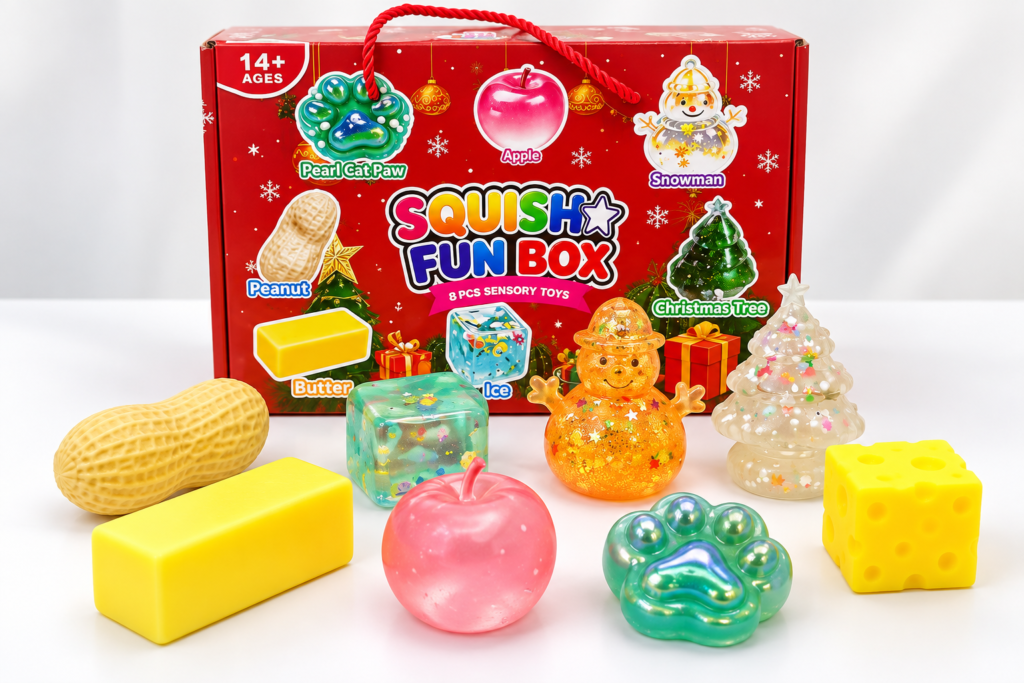
A Santa Claus squishy is strongly tied to Christmas. A red-and-green package printed with Christmas messaging makes the connection even stronger. After the holiday, both the product and package may be difficult to reposition.
A snowman is different. Depending on its colors and packaging, it may work as a Christmas item or remain relevant as a winter novelty. A gift-box shape can sometimes stretch further still.
That distinction matters before a purchase order is placed. The more specific the design is to one date or event, the less flexibility the buyer has if sales are slower than expected.
Seasonality can sit in the toy shape, colors, graphics, packaging or display—not just the SKU name.
Do Not Give Every Seasonal SKU the Same Buy Depth
Seasonal toys in one collection can carry very different levels of risk.
One design may already have sales history. Another may be a new character. A third may be a familiar evergreen shape placed in seasonal packaging.
Those products do not necessarily deserve the same inventory commitment.
A retailer can buy deeper into a proven item, use a moderate quantity for a seasonal variation, and keep an experimental design tighter until demand is clearer.
The Toy Association’s Holiday 2026 retail outlook specifically highlights consumer spending, value-seeking behavior, forecasts and assortment decisions as issues for toy companies heading into the season. The buying decision is also about where inventory risk belongs.
Leave Enough Time to Learn While the Season Is Still Open
Getting seasonal toys onto the shelf early has another advantage: buyers get a sales read while there is still time to act.
Imagine a Christmas display with a Santa, snowman and gift-box squishy. By the second or third week, the snowman may be moving twice as fast as the other designs.
That information matters only while there is time to replenish, shift inventory, adjust the display or promote the winner.
A product that arrives just before peak demand may technically be “on time,” but it leaves very little room for learning.
This is one reason lead time should be considered alongside reorder capability. For a short seasonal window, the last useful reorder date can matter almost as much as the first delivery date.
Packaging Can Shorten or Extend the Selling Window
Packaging can make an otherwise flexible toy much more seasonal.
Consider the same white snowman squishy in two packages. One box says “Merry Christmas” with trees, ornaments and December-specific artwork. The other uses a broader winter theme.
The toy has not changed, but the second version may have more merchandising options after December 25.
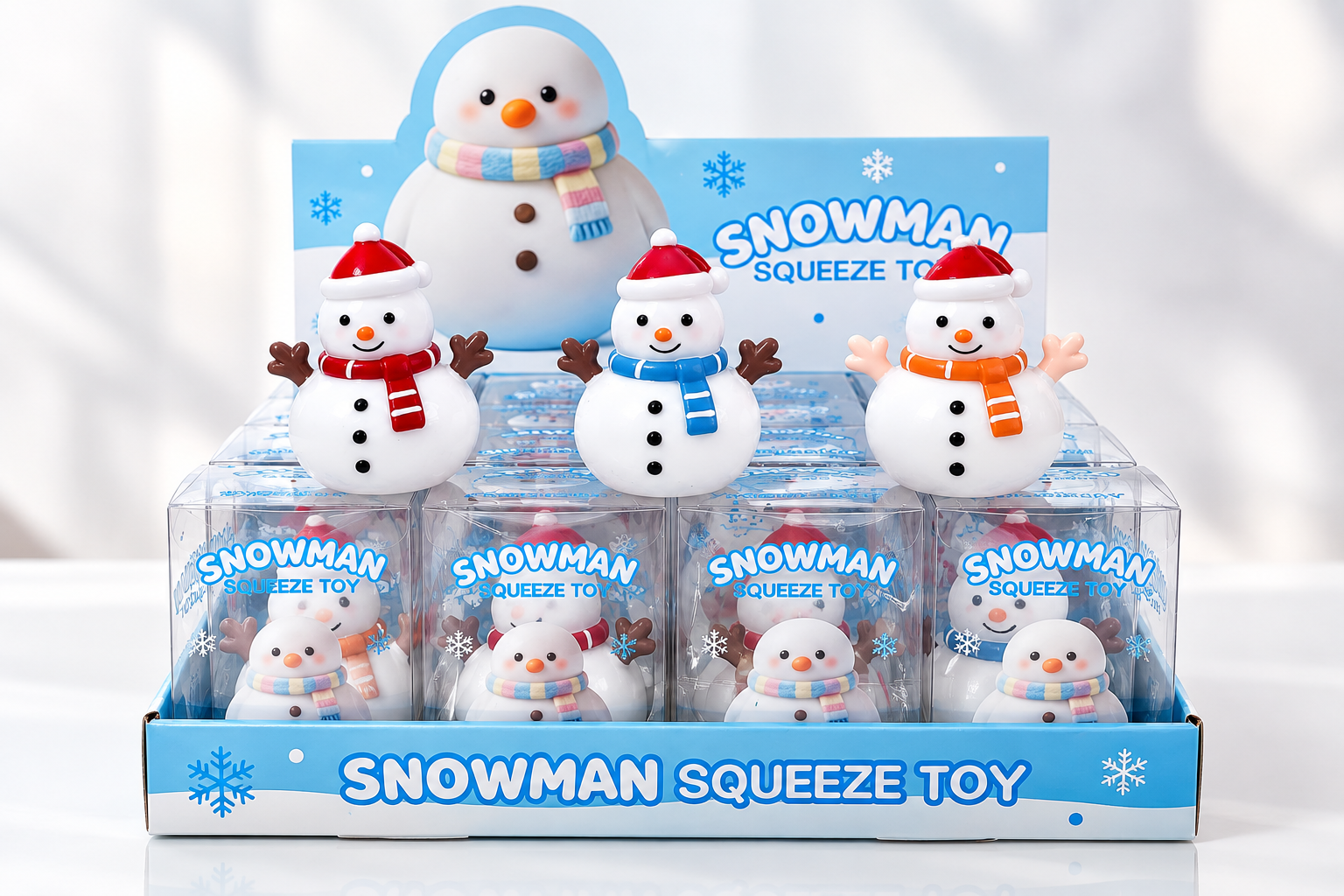
Strong holiday packaging can be exactly what a Christmas program needs. The point is to choose it deliberately.
For products expected to sell through quickly, highly specific packaging may be worth it. When demand is less predictable, a reusable package, removable seasonal sleeve, sticker or display header can sometimes preserve more flexibility.
Plan the Exit Before the Season Starts
Seasonal inventory becomes harder to manage once the peak has passed.
Mattel notes in its SEC filings that toy seasonality and production lead times create risks from both underproducing popular products and overproducing weaker ones. Retail buyers face the same tension on a smaller scale. SEC
Before seasonal toys arrive, buyers should know what they are willing to carry after the event.
Can the product stay on shelf as a winter item? Can remaining units move to another channel? Is there a planned markdown point? Would the packaging make the product awkward to sell after the holiday?
A SKU with almost no post-season use may justify a tighter initial quantity than one that can remain relevant for another month or move into an evergreen assortment.
A Seasonal Product Is Really a Calendar Commitment
A good seasonal toy program is not simply a collection of pumpkins in October or Santas in December.
It connects product specificity, packaging, inventory depth and lead time to one commercial window.
The strongest seasonal toys do not all need long selling seasons. Some are valuable precisely because they feel timely and specific. Buyers simply need to recognize that greater seasonal specificity usually leaves less room for delays and leftover inventory.
Before approving the assortment, put one date beside every SKU: the date it needs to be on the shelf.
Then ask a second question: if it does not sell through by the event, what can we still do with it?
Those two answers often reveal more about the risk of a seasonal program than the festive design itself.
Read More