
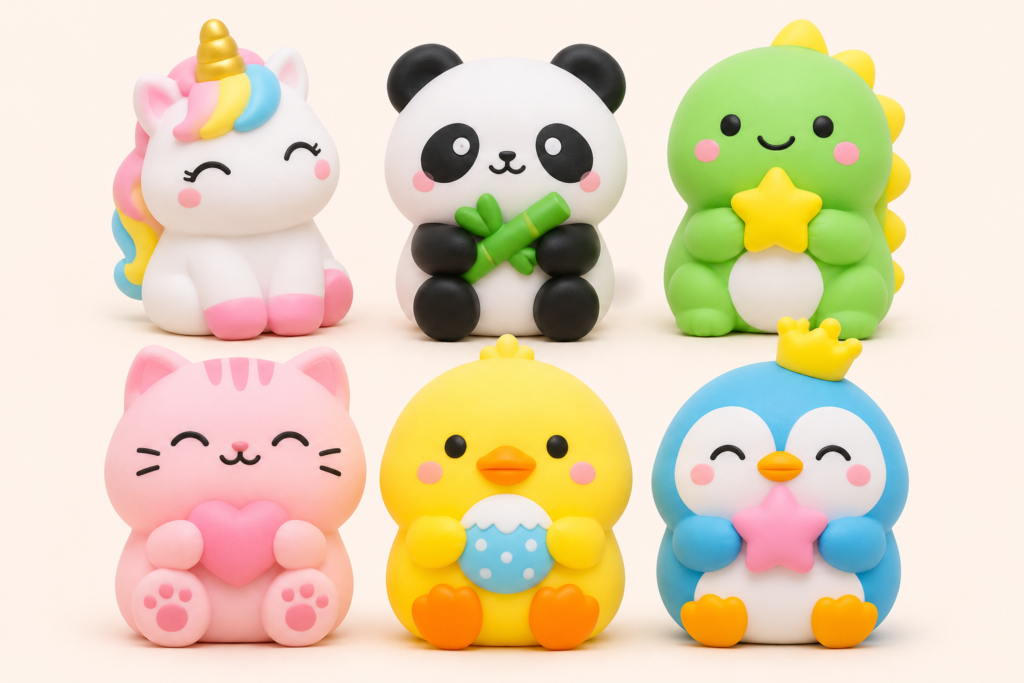
A private-label brand approves one character, then develops several more that no longer look like the same family. A squishy character style guide helps control that series-level problem. It records the shared visual rules that make different expressions and shapes belong together while leaving room for individual designs. This is a different document from a single-product sculpting brief: the buyer needs to explain what stays consistent across the collection before separate models move into development and approval.
Table of Contents
Give the squishy character style guide a series-level job
Identify the visual elements that connect the collection. They may include the treatment of eyes, the relationship between facial features, the general expression style or the way colors are used. Keep the guide specific enough to support decisions, without pretending that every character must have identical proportions. A useful rule explains what creates family resemblance and where the designer may vary the form to suit a different character.
Separate those rules from the specification for each finished SKU. A unicorn squishy reference can help identify a current product format, but it is not a ready-made proprietary character system for a new brand. The squishy character style guide should use artwork and references the buyer is authorized to provide. Do not borrow another collection’s recognizable character treatment and describe it as original simply because the product material or pose changes.
Before using a supplier’s existing platform, distinguish the underlying design, the brand’s supplied artwork and the proposed modifications. Record which uses have actually been agreed, including the intended market and any restriction on reuse. A style guide records visual decisions; it does not itself transfer copyright, reserve tooling or grant permission to copy another collection. Keep those permissions connected to the approved reference files rather than assuming they follow from a decoration quotation.
Keep rights and design references explicit
Record who supplied each drawing and what permissions support its proposed use. The US Copyright Office’s useful-articles guidance explains distinctions involving artistic expression and useful objects; it does not clear a particular character for manufacture. Ask the appropriate adviser about the actual artwork and intended markets. Keep reference images used for discussion separate from artwork approved for commercial production, so a mood board is not mistaken for a licensed design package.
USPTO’s design-patent guide also distinguishes ornamental appearance from the way an article works. That provides another reason to keep rights questions separate from visual consistency. A squishy character style guide does not establish ownership of every shape, expression or feature shown within it. Resolve the actual permission and clearance questions rather than treating the existence of a guide, drawing or purchased sample as sufficient authorization.
Review the family together before approving individuals
Place the proposed character views side by side and check the relationships the guide is meant to control. A single design can look attractive in isolation while drifting from the family when placed with the rest. Mark the specific inconsistency rather than requesting a vague change to make it more on-brand. If one model needs a production-driven adjustment, review whether the same rule needs clarification for the rest of the series.

Use the squishy character style guide to distinguish shared rules from model-specific decisions. Keep each SKU’s dimensions, construction and individual approval in its own record. The collectible-series discussion addresses why continuity matters commercially; this document should make continuity actionable for design review. The squishy product range can illustrate varied formats for discussion, without establishing a new collection’s design rights or promising that all concepts use the same production process.
Maintain the guide as the collection develops
Give the squishy character style guide a version reference and a clear owner. Record approved additions and exceptions so the next designer does not work from an outdated attachment. If a special edition uses a different expression or treatment, explain whether it changes the family rules or is a named exception. Keep old exploratory artwork identifiable rather than allowing unfinished concepts to circulate as approved production references.
When approaching Vilora with a character collection, provide the authorized squishy character style guide, individual concepts and the priorities that need feasibility review through the quote request page. Ask how proposed differences affect development rather than assuming one approved character resolves every later model. The useful outcome is a coherent set of design decisions that supports separate SKU approvals, with no invented license, exclusive right or manufacturing guarantee attached to the collection.
Read More