A toy assortment can look broad on a spreadsheet and still feel repetitive on the shelf.
Six squishies in six colors technically create six SKUs. But if they are the same size, price, squeeze action and visual effect, the shopper may experience them as one idea with color choices.
That is where toy assortment planning becomes more useful than simply adding products. The goal is not to reach a certain SKU count. It is to decide what each SKU contributes, then put more inventory behind the products that deserve it.
Table of Contents
Start With Product Roles, Not a SKU Target
There is no universal number of SKUs that makes a toy assortment complete. A specialty store, an online seller and a distributor supplying hundreds of doors will not build the same range.
A better starting point is to give each product a reason to be there.
One SKU might be the easy-to-understand core item that can carry volume. Another might have stronger visual impact. A lower-priced item can give shoppers an easier entry point. A larger toy may sit at the upper end of the range. A seasonal or unusual design can be treated as a test rather than bought at the same depth as a proven item.
This makes toy assortment planning less about filling slots and more about building a range in which products do different jobs.
Color Choice Is Not Always Assortment Breadth
Color matters in toys. It can make a display look fuller and give customers a favorite to choose.
But another color does not always add another reason to buy.
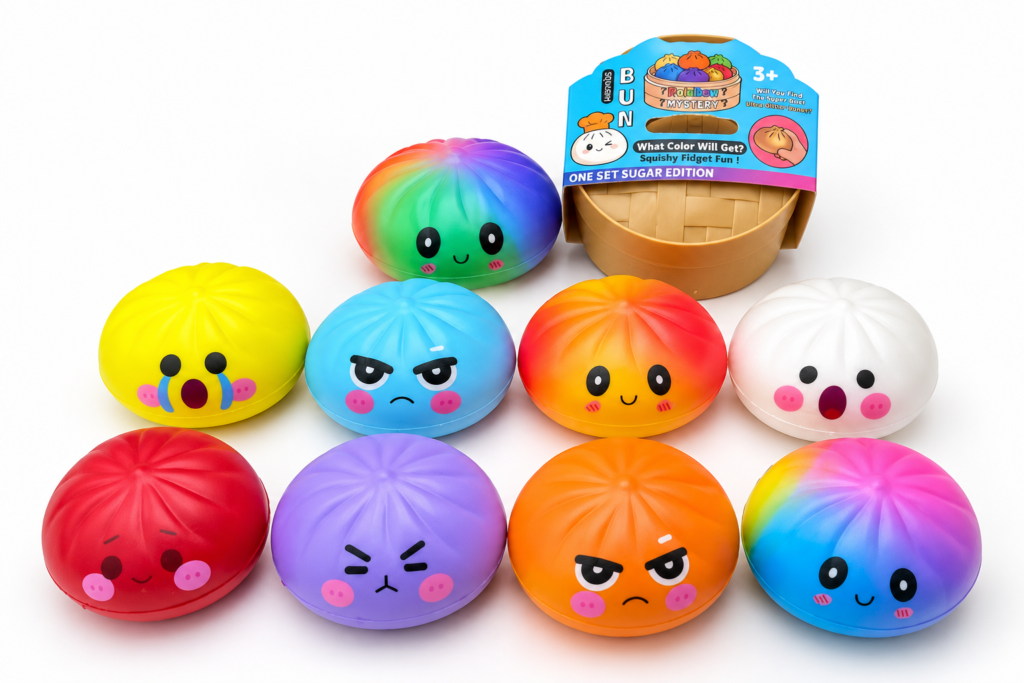
Imagine five dumpling squishies using the same mold, size, filling, package and retail price. The assortment has color variety, but limited product variety. Adding a jumbo version, a transparent bead-filled version or a different interaction can change the range more substantially than adding a sixth color.
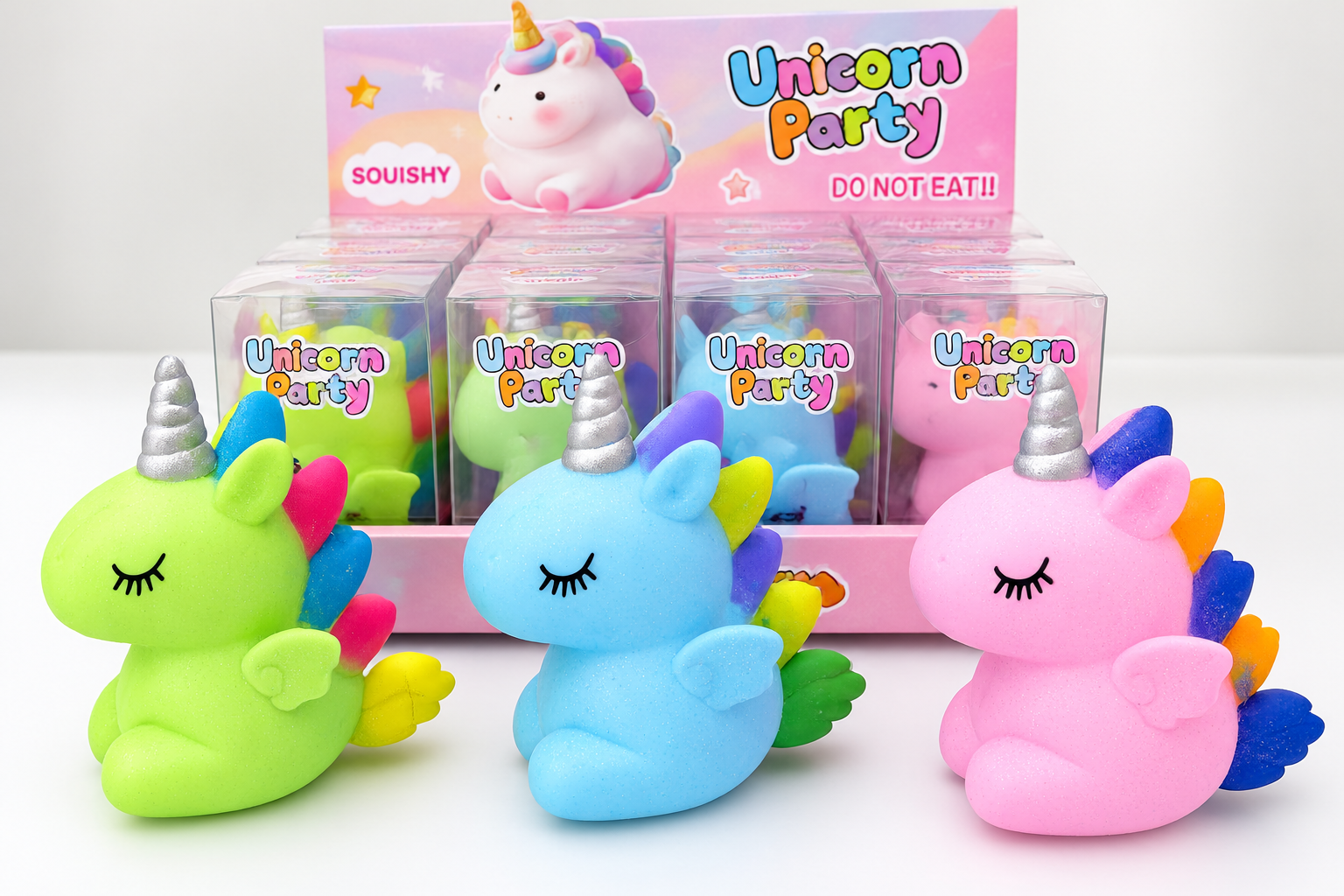
Ask: “How many meaningfully different choices does the customer see?”
That question helps keep minor variations from creating unnecessary inventory lines.
Watch for SKUs That Compete With Each Other
Two products can both be good and still be poor neighbors in the same assortment.
If they appeal to the same shopper, occupy the same price point and deliver almost the same play experience, one may simply divide sales that would otherwise go to the other.
This is easy to miss during sourcing because products are reviewed one at a time. On a quotation sheet, every item has its own photo and SKU number. In a store, several may read as substitutes.
Put the shortlist side by side before the purchase order is finalized. If two items are doing the same job, decide whether both need to launch together. Removing one can free budget for deeper inventory behind the stronger choice or for a product that adds something missing.
Toy Assortment Planning Means Balancing Breadth and Depth
Retail assortment planning commonly separates breadth—how much choice is offered—from depth—how much inventory sits behind those choices. With a fixed budget and limited space, the two compete for the same resources. This distinction is also used in retail assortment research, which considers merchandise variety, depth and inventory allocated to individual SKUs.
Suppose a first order is 2,400 units. Twelve SKUs bought evenly leave 200 units per SKU. Six SKUs allow an average of 400. Neither plan is automatically better.
The question is where uncertainty belongs. A new visual concept may deserve a smaller test. A familiar core item with stronger sales evidence may justify more units. An even split is simple, but simplicity is not evidence that every SKU deserves the same inventory.
This is where toy assortment planning should stop before it turns into bulk-order allocation. Once the range is chosen, carton quantities, case packs and reorder planning become the next decision.
Price Points Should Create Real Choices
A range can contain several different-looking toys and still be narrow if everything lands at roughly the same retail price.
A small impulse item can make sense near checkout or as an add-on. A standard item can carry the center of the assortment. A larger, giftable or more feature-driven product can give the buyer a higher price point without forcing the core SKU to do every job.
The gaps do not need to be perfectly even. What matters is whether the price ladder makes sense to the retailer and customer.
If two toys cost nearly the same, look similar and serve the same occasion, the second SKU needs another reason to stay.
Toy Assortment Planning Should Leave Room to Learn
A first assortment is a hypothesis.
Sales can show which colors move, which product gets reordered, which price point is easiest to sell and which SKU looked stronger in the sample room than at retail. Retail assortment planning is generally treated as an ongoing inventory decision rather than a one-time exercise, particularly as demand, seasons and product performance change. Shopify
That information should change the next buy. A weak SKU does not have to remain because it was part of the original assortment. A strong SKU may deserve more depth. A test item that performs well can become core.
This is one reason a first order should not use every available variation simply because the factory can make it. Good toy assortment planning leaves room to expand deliberately instead of starting with maximum complexity.
A Good Assortment Is Easy to Explain
Before approving the range, try describing the job of every SKU in one short line: core volume item, lower-price impulse option, visual feature, larger giftable version, new concept being tested, seasonal addition.
If several products get exactly the same description, look at them again.
Good toy assortment planning does not require every SKU to be dramatically different. It does require the range to make commercial sense as a whole. The strongest assortment is not necessarily the one with the most products. It is the one where the buyer knows why each product is there and what should change when real sales data comes back.
Read More