A buyer can save twenty appealing product photos and still have trouble deciding which samples to request. The pictures show different characters and colors, but rarely show the products at the same scale or from the same angle.
Comparing stress ball shapes becomes easier when each candidate has a specific job. One might suit a compact geometric assortment. Another could anchor a food-themed display. Start there, then check whether the actual dimensions and presentation support the choice.
Table of Contents
Compare Stress Ball Shapes at Their Actual Size
Put the measurements beside the pictures before judging the grip. A cube photographed alone can look larger than a long butter-shaped toy, even when the opposite is true. Images with different cropping make that comparison harder.
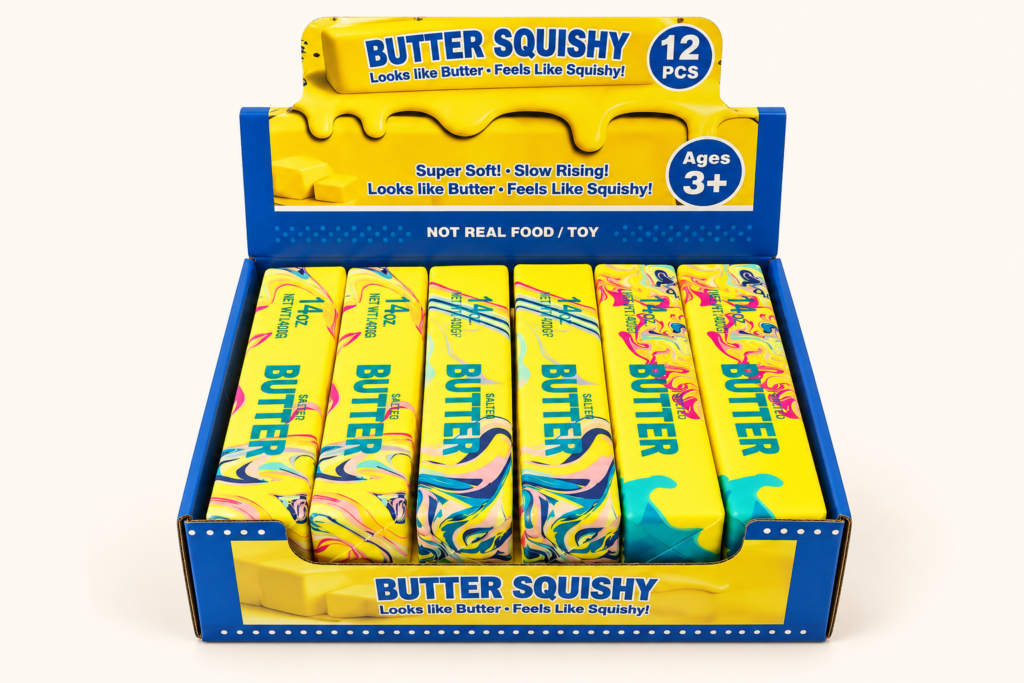
Our Stretchy Squishy Cube is listed at 5 × 5 cm. The Realistic Butter Stick Squishy measures 11 × 3.5 × 3.5 cm. The butter design is longer, but narrower across the body. Neither measurement alone tells you which someone will prefer holding.
For a round reference, Quality Logo Products lists its Round Stress Reliever by diameter. That illustrates a useful distinction when comparing stress ball shapes: a sphere needs a diameter, while an elongated or irregular design needs enough measurements to explain its proportions. That supplier’s specifications apply to its own item.
A paper outline drawn to scale can help narrow the list before samples arrive. It shows approximate length and width, although it cannot reproduce the thickness, weight, or squeeze. Use it to rule out obvious size mismatches, then handle the remaining candidates.
Give Each Candidate a Different Reason to Stay
A shortlist does not need one of every shape. It needs enough contrast to answer the buying question. If you are deciding between a compact block and a longer food-inspired design, requesting five nearly identical cubes will not resolve that choice.
Use this table to compare stress ball shapes before requesting samples:
| Shape | What to compare in the sample | What to clarify for the order |
|---|---|---|
| Round | Diameter and how fully the fingers wrap around it | Exact size and surface style |
| Cube | Width across the faces and feel around the corners | Dimensions and decorative version |
| Long butter-style block | Grip across the narrow side and overall length | Product orientation and retail pack |
| Animal or other character | Width around the main body and position of raised details | Exact character, size, and included packaging |
These are comparison points, not promises about comfort or performance. Two similarly shaped products may have different constructions. Keep your preferred outline separate from your preferred squeeze response until you have reviewed both.
Vilora’s panda, for example, has a rounded character body with ears and a distinct front. A cube has several broad faces. Either may suit a novelty assortment, but they give buyers different things to evaluate. Choose the examples that help settle a real decision.
Check the Shape From the Shopper’s View
Catalog photography usually gives a product its best angle. Your display may not. A toy placed below eye level, behind a window, or beside taller products can look quite different from its isolated photograph.
Set the sample in the proposed selling position. For stress ball shapes with a recognizable front, check whether the face remains visible when the product settles. For a long design, see whether it needs to lie sideways to show its full outline.
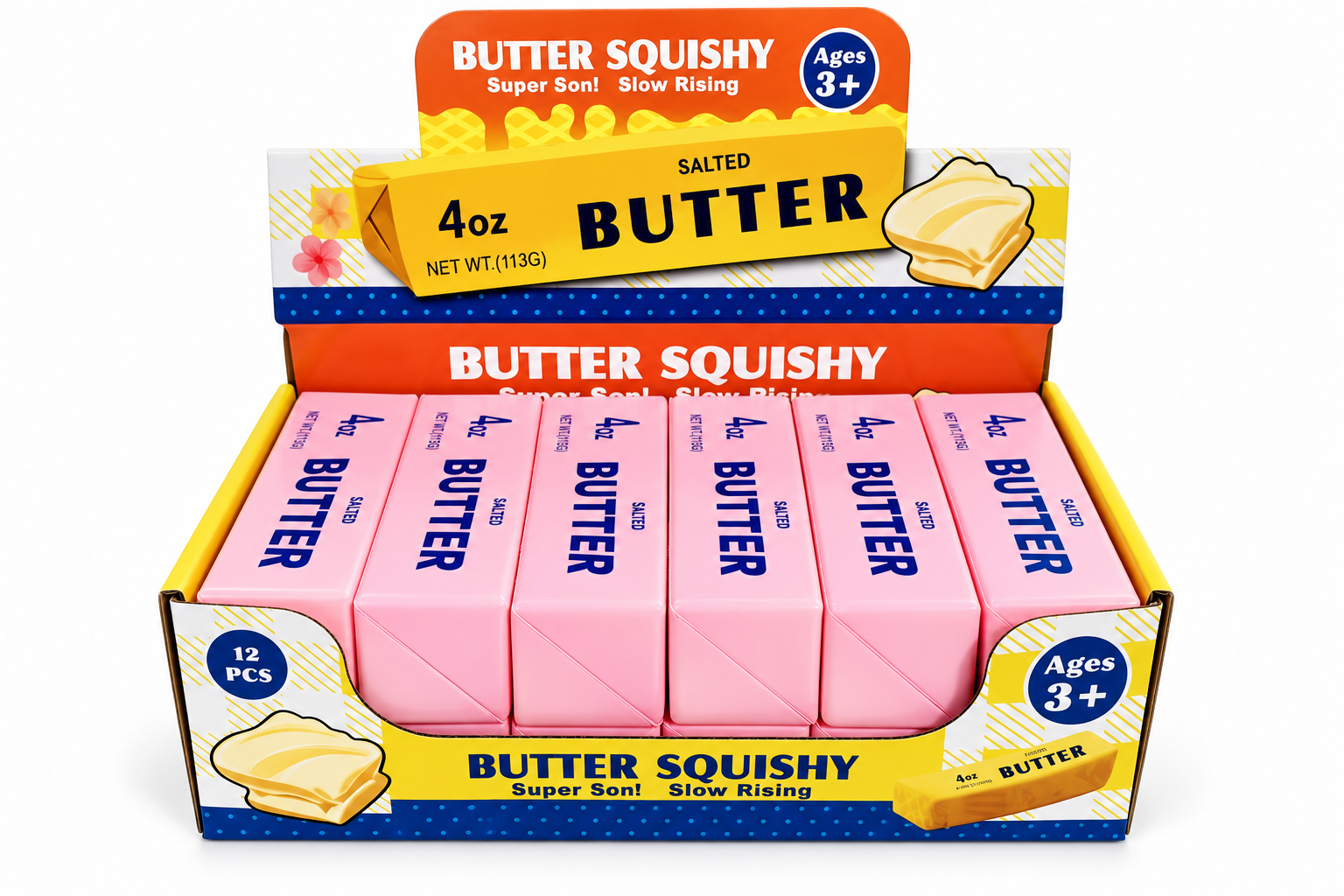
Take one photograph of the whole arrangement rather than another close-up of each item. Can shoppers distinguish the products without picking up every package? Does one piece hide another? You may find that changing the arrangement solves the problem without changing the toy.
When narrowing stress ball shapes, keep the sample that works in the presentation you can actually use. An attractive design that needs constant repositioning deserves another look before it becomes the centerpiece of an open display.
Request Samples Around the Decision You Need to Make
A useful inquiry explains what you are comparing. “Please send your best sellers” leaves the selection largely to the supplier. “We are comparing a compact cube with a longer food-shaped squishy for a countertop range” gives the discussion a direction.
For stress ball shapes on your shortlist, identify the reference image, approximate size, and preferred packaging format. Include the quantity, destination market, intended audience, and required arrival date. Ask which versions are currently available to sample and which would require development.
If dimensions or packaging options differ, ask for those differences alongside the sample proposal. That makes it easier to compare the complete versions rather than approving one toy and later discovering it was quoted with another presentation.
To discuss stress ball shapes with Vilora Toys, send us your shortlisted references and explain the choice you are trying to make. We can review suitable options and the next sampling step around your product range.
Read More