

A squishy dumpling can look harmless on a store shelf. It has a smiling face, a soft outer skin, and packaging that makes it easy to display alongside other novelty toys. What shoppers cannot see is the material inside.
For importers and distributors, that hidden filling has become an important purchasing question. In 2026, water bead squishy toy safety moved into sharper focus as new federal requirements took effect and several filled squishy products were recalled in the United States.
The issue is not whether every filled toy should be avoided. It is whether buyers know exactly what they are purchasing and can obtain reliable evidence that the product meets the requirements of its intended market.
Table of Contents
Water Bead Squishy Toy Safety: Why the Filling Matters
Water beads are made from absorbent polymers that expand when exposed to liquid. Some squeeze toys contain these beads inside a flexible TPR shell, sometimes mixed with glitter or decorative particles.

If the shell breaks, the beads may become accessible. Swallowed beads can expand inside the digestive system and cause intestinal obstruction. Inhalation or insertion into the nose or ear can also create serious hazards.
A sealed appearance does not eliminate these concerns. A product may survive normal squeezing but still be damaged through biting, pulling, repeated use, or other foreseeable handling.
There is another complication for buyers: factory descriptions are not always precise. Terms such as jelly filling, soft gel, maltose, or bead-filled may describe a product’s feel rather than identify its actual composition.
That is why water bead squishy toy safety begins with a material specification, not a product photograph. Ask whether the filling contains expandable polymer beads, what substances are used, and whether the supplied documentation covers the complete toy.
What the 2026 CPSC Standard Actually Requires
On March 12, 2026, the U.S. Consumer Product Safety Commission’s mandatory water bead toy standard, 16 CFR § 1250.4, took effect.
The standard addresses three areas: expansion size, extractable acrylamide content, and warning labels. Its requirements also address water beads contained inside toys, not merely loose beads sold separately.
For qualifying beads, the expansion test uses a 5 mm gauge. The standard also establishes a limit of 325 micrograms of extractable acrylamide from the specified quantity of beads.
Importantly, this is not a blanket ban on every water bead toy. Compliance depends on the actual product, its materials, and the applicable regulatory requirements.
For children’s products covered by the standard, the Children’s Product Certificate must identify 16 CFR § 1250.4. Buyers should also consider other applicable toy requirements, including relevant ASTM F963 provisions.
A supplier presenting only a test report for the outer TPR skin has not necessarily demonstrated compliance for the internal filling.
For water bead squishy toy safety, the critical question is whether the laboratory evidence covers the finished SKU and all applicable requirements, rather than a vaguely similar product.
What Recent Squishy Toy Recalls Tell Wholesale Buyers
The recalls announced in September and October 2026 show why this distinction matters.
On September 3, approximately 8,000 GIHNJSI Squeezy Dumplings were recalled. The products contained water beads and were sold in packaging resembling a bamboo steamer.
That same day, approximately 7,200 Rainbow Mystery Squishy Bun Toys were also recalled over water bead ingestion hazards.
On October 1, ABC Trading recalled about 37,000 squishy dumpling and ball toys because the water beads inside expanded beyond the permitted size.
These recalls concern specific products. They do not establish that every dumpling squishy, translucent squeeze ball, or gel-filled toy contains noncompliant water beads.
However, they illustrate a practical weakness in purchasing decisions. A buyer may carefully compare unit prices, display boxes, and shipping terms while accepting an incomplete description of the filling.
Water bead squishy toy safety therefore needs to be part of supplier evaluation before a purchase order is confirmed, not an issue discovered after the shipment reaches the United States.
Five Essential Checks Before Placing a Wholesale Order
1. Identify the filling precisely. Request the actual material composition, including whether expandable water beads are present. Do not treat broad commercial descriptions as technical specifications.
2. Verify the exact test coverage. Ask for reports identifying the tested product, model, materials, applicable standards, and laboratory. The report should correspond to the product you intend to import. During squishy toy sample approval, document any differences between the tested sample and the production version.
3. Review construction and durability. Examine the outer shell, seams, closure points, and possible access to the filling. Physical inspection is useful, but it does not replace required laboratory testing. A pre-shipment inspection should also confirm that production matches the approved specifications.
4. Check certificates and warnings. Review the applicable Children’s Product Certificate, test evidence, age grading, tracking information, and required labels. For covered water bead toys, confirm that the new federal standard has been addressed.
5. Control production changes. Require supplier approval before changing the filling, shell material, dimensions, or construction. A different filling may change both the squeeze experience and the applicable testing requirements.
These checks matter especially when buying ready-made products from multiple factories. Similar-looking toys may use entirely different internal materials.
Choosing a Safer Sourcing Approach Without Losing Product Appeal
Water bead squishy toy safety does not have to mean abandoning the squishy category. It means choosing a construction that fits the product concept and can be supported by appropriate compliance evidence.
Depending on the desired texture, manufacturers may offer slow-rising PU foam, clay-filled designs, or other non-water-bead constructions. Each has its own characteristics and testing considerations. None should be assumed safe or compliant solely because it does not contain water beads.
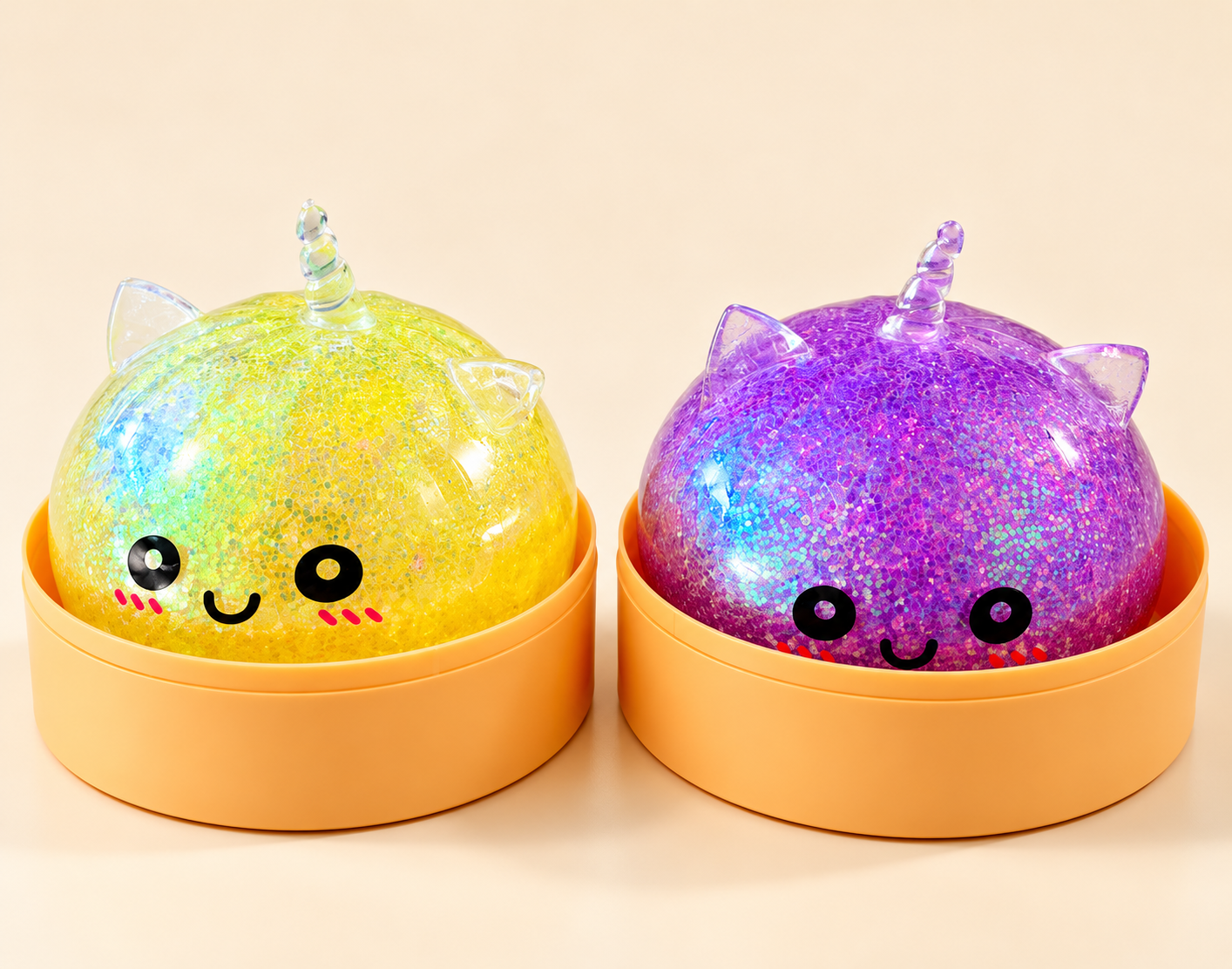
Buyers can compare different designs in Vilora Toys’ Squishy Toys wholesale collection and discuss alternative materials through its OEM and ODM development process.
For a private-label program, the more useful starting point is the desired squeeze feel, target age group, retail market, and packaging format. Material selection should follow those requirements rather than simply copying the filling of a trending product.
Before confirming an order, buyers can request a quotation with their intended market, quantity, and material requirements so that product specifications and testing needs can be reviewed together.
Buyer’s Note: A good sample and an attractive wholesale price are not enough. For water bead squishy toy safety, identify the filling, verify SKU-specific documentation, and confirm that the approved production version matches the evidence before committing to a bulk order.
Read More