
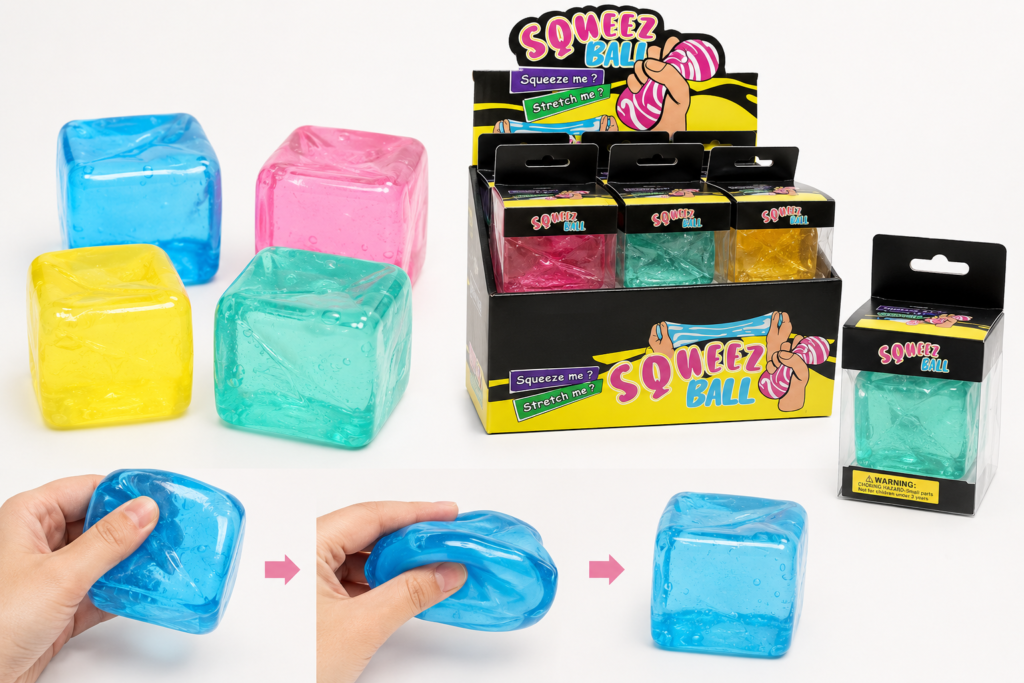
Slow-rise squishies are not difficult products to understand, but they are surprisingly easy to compare badly.
A buyer can place two samples side by side, squeeze both once and decide that they feel “about the same.” A week later, after more handling, the differences are much easier to notice. One recovers smoothly every time. Another comes back quickly at first but starts to feel firmer after repeated compression. A third may recover slowly but never quite return to its original shape.
That is why slow-rise squishy wholesale sourcing should begin with the behavior of the product, not just its design. Recovery speed, softness, shape retention and consistency from piece to piece are more useful buying criteria than a supplier simply describing a toy as “slow rising.”
Table of Contents
“Slow Rise” Needs a More Specific Definition
There is no single recovery time that automatically makes a squishy good.
Some products begin expanding almost immediately but take several seconds to return completely. Others stay compressed briefly before they start recovering. Both may be marketed as slow-rise, yet they create a noticeably different experience in the hand.
When comparing slow-rise squishy wholesale samples, it helps to use the same basic test each time. Compress the product in roughly the same way, release it and watch how it recovers. Then repeat the test several times rather than judging it from one squeeze.
A supplier does not necessarily need to promise an exact recovery time down to the second. For most commercial programs, a practical approved range and a physical reference sample are more useful. What matters is that the production batch behaves reasonably close to the version the buyer approved.
Softness and Recovery Speed Are Not the Same Thing
A very soft squishy is not automatically a slow-rise squishy.
This distinction matters because buyers sometimes describe the product they want with only one word: “soft.” A sample can feel extremely soft under pressure and still return to shape quickly. Another can feel slightly firmer but recover much more slowly.
For slow-rise squishy wholesale, I would compare these as two separate characteristics. First, how much resistance do you feel while squeezing? Second, what happens after you let go?
That simple separation makes supplier conversations clearer. Instead of asking for something “softer,” a buyer can explain that the approved sample has the right softness but needs a slower recovery—or the opposite.
The same idea applies when buyers choose the right squishy toys for a larger assortment. Tactile performance is easier to manage when the desired effect is described specifically rather than with general terms such as soft, stretchy or satisfying.
Repeated Compression Reveals More Than the First Squeeze
A sample can feel excellent for the first few seconds and still have problems that only appear after repeated use.
Take the same squishy and compress it ten or fifteen times. Look for changes in recovery speed, surface texture and shape. If one side begins recovering differently from the other, or the toy starts staying slightly flattened, that is useful information before a larger order is placed.
This is one of the most important checks in slow-rise squishy wholesale sourcing because the product is designed to be handled repeatedly. The first squeeze matters, but the tenth one tells you more about how the toy may behave on a retail shelf or after a customer starts using it.
If several samples are available, test more than one. A single good sample proves very little about production consistency.
For custom projects, the approved sample should stay with the order as a reference. A written note such as “slow rise” is too vague on its own.
Slow-Rise Squishy Wholesale Samples Should Be Compared Under Similar Conditions
Temperature and storage can affect the way soft materials feel.
A sample that has just arrived from a hot delivery truck may not behave exactly like one that has been sitting in an air-conditioned office all day. The same applies to a product that has remained compressed inside tight packaging for an extended period.
That does not mean buyers need a laboratory setup for every sample review. It simply means comparisons are more useful when the products have been sitting under similar conditions.
If three supplier samples arrive on different days, allow them to rest before making a final judgment. Then test them together.
This is especially helpful for slow-rise squishy wholesale programs where the recovery effect is one of the main reasons the product is being purchased. Small differences that might not matter on an ordinary novelty toy can become part of the product experience here.
Packaging Can Affect What the Buyer Sees After Delivery
Packaging deserves attention for a different reason with slow-rise products.
A package that presses continuously against a soft toy can leave it compressed during storage and transportation. In many cases the product will recover after unpacking, but the buyer should know how long that takes and whether the original shape returns completely.
This is where novelty toy packaging becomes relevant without needing to redesign the entire product. The important question is whether the package fits closely enough to protect the toy without putting unnecessary pressure on it.
For a retail box or display program, test the finished package with the actual product inside. Leave the sample packed for a realistic period, remove it and check the recovery again.
That small test is more informative than approving packaging artwork and product samples separately.
Consistency Matters More Than an Extreme Slow-Rise Effect
It can be tempting to choose whichever sample takes the longest to recover.
That is not always the best commercial decision.
A dramatic slow-rise effect may look impressive in a video, but retailers also need a product that behaves consistently from unit to unit. If one toy takes six seconds to recover and another from the same batch takes twenty, the issue is no longer about personal preference. It is a consistency problem.
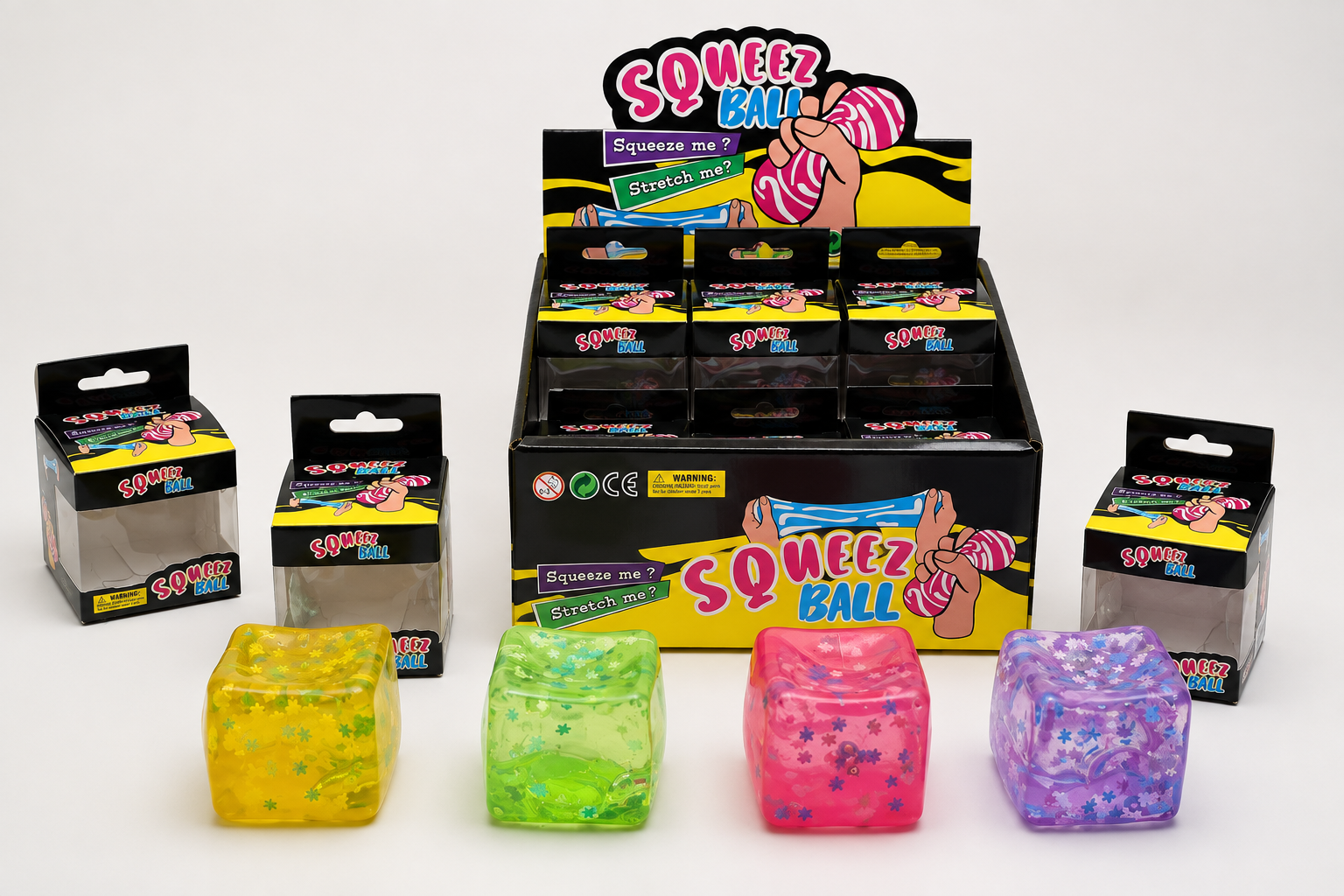
For slow-rise squishy wholesale, a slightly less dramatic effect that stays predictable across production may be more useful than an unusually slow sample that cannot be reproduced reliably.
This is also where a novelty toy supplier should be able to explain how the approved sample will be referenced during production and what level of variation is realistic.
Before finalizing the order, compare enough samples to understand the product range rather than choosing from a single “best” piece.
Approve the Feel Before You Approve the Quantity
Slow-rise squishies are tactile products first.
Color, shape and packaging can be reviewed in photos, but the recovery behavior cannot. A buyer who approves a large slow-rise squishy wholesale order from images alone is leaving one of the product’s most important characteristics undefined.
The practical sequence is straightforward: test the feel, compare recovery, repeat the compression test, check the product after storage or packaging, then approve the version that should be used as the production reference.
Once that reference is clear, the rest of the order becomes much easier to discuss.
Read More: Buying Guide · Customization Guide · OEM Guide