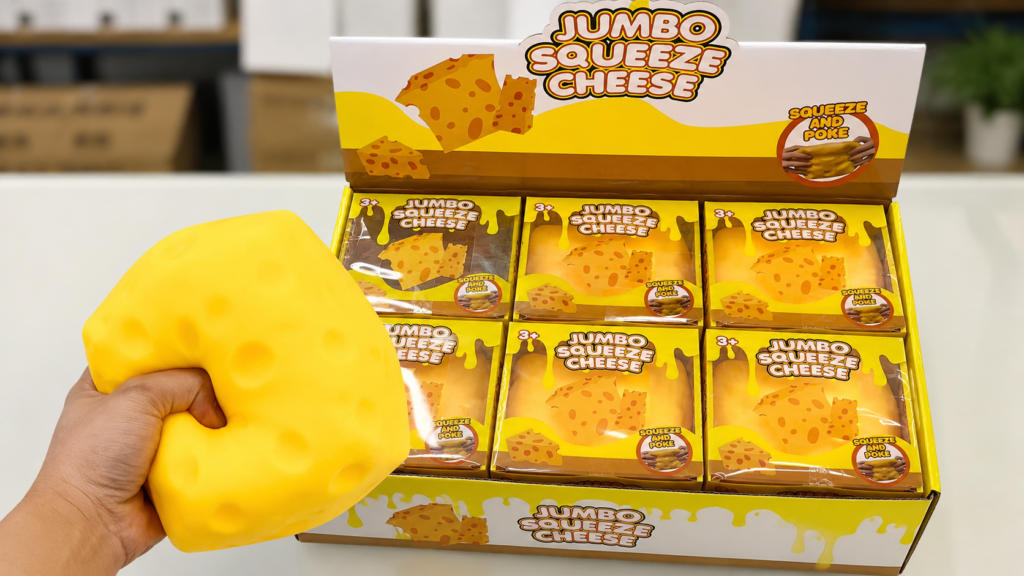
A finished production run can look reassuring in photos. Cartons are stacked, packaging is complete, and the order appears ready to leave the factory.
That is also the point when buyers need more than a few warehouse pictures.
A squishy toy inspection before shipment checks whether the finished production lot still matches what was approved before production. It is different from laboratory safety testing. The focus is the actual order: appearance, feel, workmanship, packaging, quantities, assortment and consistency.
For squishy products, that distinction matters. Two pieces can look nearly identical in a photograph while feeling noticeably different when squeezed.
Table of Contents
Start With the Approved Sample, Not a Generic Checklist
An inspection is only useful when the inspector has a clear reference.
For a squishy order, that reference should normally include the approved sample, confirmed dimensions, colors, printing or decoration, packaging specifications and any product characteristics agreed before production.
“Check quality” is not a useful instruction.
A buyer may care about softness, recovery speed, surface finish or the position of a printed face. Those details need to be communicated before inspection rather than judged after the report arrives.
This is why sample approval and final inspection belong to the same quality-control process. The approved sample establishes the target; the inspection checks whether bulk production stayed close to it.
Random Sampling Shows What the Batch Really Looks Like
The factory should not simply choose its best-looking pieces for review.
Professional pre-shipment inspections normally use randomly selected units from the production lot. ISO 2859-1:2026 provides AQL-indexed sampling schemes for lot-by-lot inspection and is designed to evaluate a lot through sample-based inspection rather than examining every individual unit. The current third edition was published in January 2026.
This does not mean an AQL inspection proves that every unit is perfect.
Its value is that buyers get a more representative view of production quality than they would from a few hand-picked samples.
QIMA describes pre-shipment inspection as typically taking place once at least 80% of an order is complete, with samples selected from the production lot and checked against buyer-defined specifications.
For a squishy toy inspection, the objective is therefore not to find three perfect toys. It is to understand how consistently the production batch matches the approved product.
What a Squishy Toy Inspection Should Actually Check
Squishies need a more product-specific review than many hard plastic toys.
Appearance comes first. Shape, color, printed features, decorative details and surface condition can all be compared with the approved version. Minor cosmetic variation may be normal, but repeated staining, deformation, damaged surfaces or badly positioned decoration can indicate a broader production problem.
Then comes handling.
Selected units should be squeezed and allowed to recover. The inspector is not performing a laboratory material analysis. The purpose is to identify obvious differences in softness, resistance or recovery between units and against the approved reference.
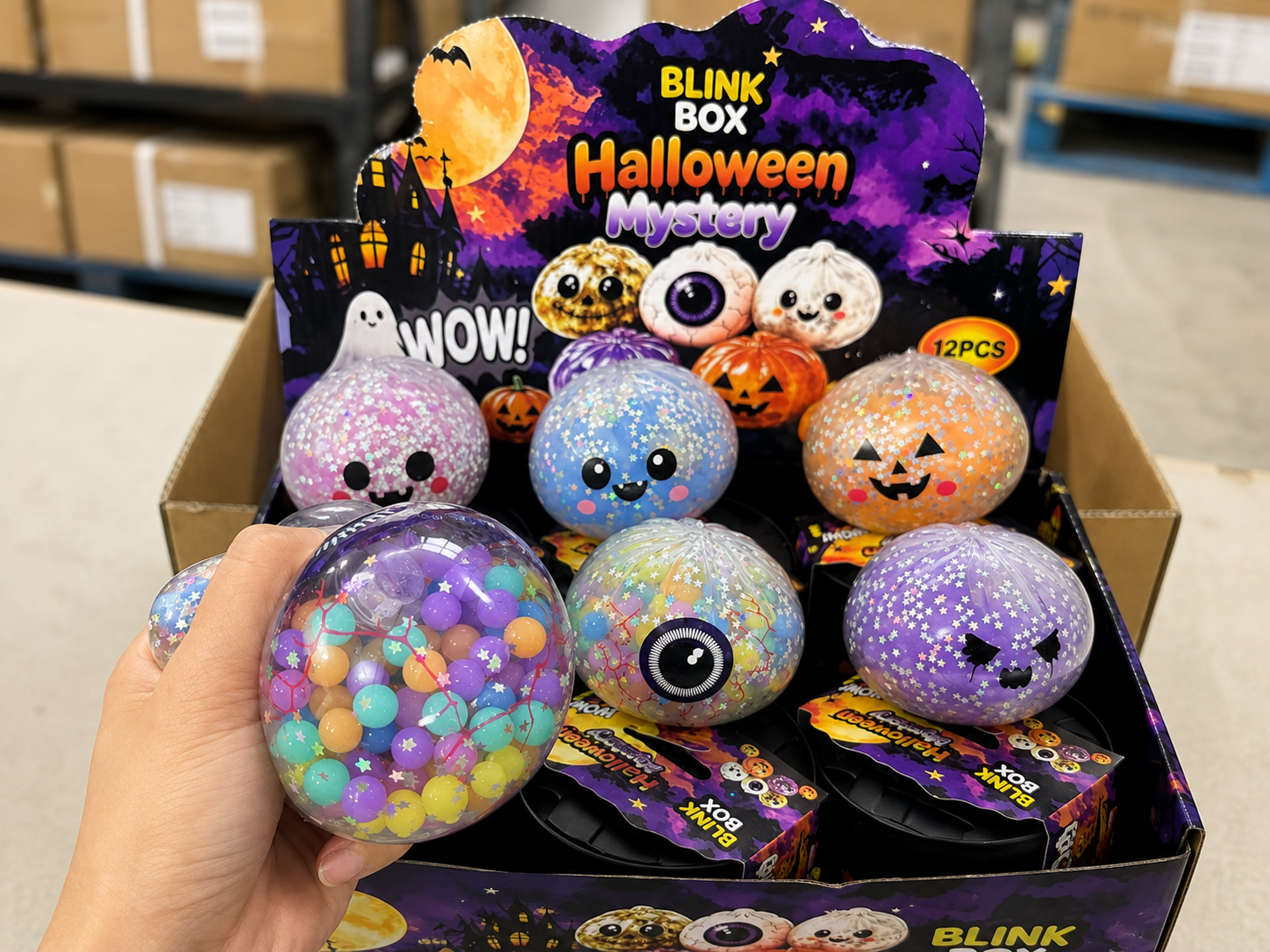
If several pieces feel noticeably firmer than the approved sample, or recovery varies substantially across the inspected units, that deserves attention.
Dimensions and unit weight can also be checked where those specifications were agreed in advance. Standard pre-shipment inspections commonly include dimensions, weight, workmanship, colors, construction and consistency checks.
For a buyer placing a bulk order, consistency across the batch often matters more than finding one visually perfect piece.
Packaging and Cartons Are Part of the Inspection
The product itself is only part of the finished order.
Soft squishies can be compressed or distorted when packaging is too tight. A box that looked fine during artwork approval may behave differently once the actual product sits inside it for days.
That is why squishy toy inspection should include packaged units, not only loose samples.
Inspectors can verify whether the correct product is inside the correct packaging, whether colors or styles follow the agreed assortment, and whether retail packaging, labels and carton markings match the purchase order.
Export cartons matter too.
QIMA’s inspection procedures include checks of inner and outer packaging, export carton dimensions and weights, shipping marks, quantities and assortment.
This is particularly important for mixed-color orders. Every individual toy can be acceptable while the shipment is still commercially wrong because the assortment ratio or carton quantity does not match what the buyer ordered.
Decide Which Defects Actually Matter
Not every small variation should stop a shipment.
Soft products naturally require judgment. A slight difference in surface texture is not the same as torn material. A small print shift on one unit is different from the same printing problem appearing repeatedly across the batch.
Before inspection, buyers should define what they consider critical, major and minor issues.
The terminology may sound technical, but the commercial question is straightforward:
Would this problem make the product unsafe, materially different from what was ordered, difficult to sell, or merely cosmetically imperfect?
That decision should be made before the inspector arrives.
Otherwise, a squishy toy inspection can produce a long defect list without helping the buyer decide whether the order should actually ship.
Use the Inspection Report Before Releasing the Shipment
An inspection report is a decision tool, not just paperwork.
A useful report should show what was inspected, what defects were found, photographs of those defects, quantities checked and whether the shipment met the agreed criteria. QIMA’s pre-shipment reports, for example, include inspection findings, photographs and an overall pass/fail result.
One isolated cosmetic issue may require no action. A repeated defect across randomly selected pieces may justify sorting, rework or another inspection.
The timing is important because problems are easier to correct while the goods are still at the factory.
Cartons can be reopened. Incorrect assortments can be corrected. Damaged packaging can be replaced. Repeated workmanship problems can be separated or reworked before international freight begins.
Inspection should also remain separate from regulatory testing. A factory or third-party inspection can review workmanship, specifications, packaging and on-site performance, but it does not replace laboratory testing required for applicable toy safety standards. QIMA likewise treats toy inspection and laboratory testing as separate quality-assurance activities.
For buyers working with squishy toy suppliers, both processes matter for different reasons.
A final squishy toy inspection is therefore not about proving every piece is mathematically identical. It is about confirming that the production lot is consistent with the approved product and commercially ready to ship while there is still time to fix meaningful problems.
Read More: Buying Guide · Customization Guide · OEM Guide