

A panda squishy can look wider in one supplier photo than another without either sample being the wrong size. A hand pressing its side, a tilted ruler or a recently squeezed body can change the apparent measurement. For a U.S. buyer approving a retail box or display, squishy toy measurements need a repeatable starting position. Otherwise, the dimension on the purchase specification may describe the photograph rather than the product that must fit the package.
Table of Contents
Squishy toy measurements start with a defined resting shape
For repeatable squishy toy measurements, place the finished toy on a level surface in its intended resting orientation. Identify the front, base and highest point with an annotated sample photograph. Decide whether an ear, hanging loop or other projection belongs inside the stated overall dimension. For an irregular character, a single unexplained diameter is rarely enough to describe the clearance needed around the body.
Vilora’s boxed panda squishy illustrates why the distinction matters. The current product description lists an approximately 6.5 cm toy and a separate clear unit box measuring 6.5 × 6.5 × 8.5 cm. Those figures serve different purposes. They are not instructions to squeeze the animal until it matches the box width, nor a tolerance agreement for a particular order.
Sample preparation also belongs in squishy toy measurements. Record whether the piece was just unpacked, squeezed or allowed to rest under agreed conditions. There is no universal waiting period suitable for every foam, elastomer and filled construction. The supplier should identify the proposed preparation, and the buyer should approve it before comparing results from different locations.
Use contact that does not become a squeeze test
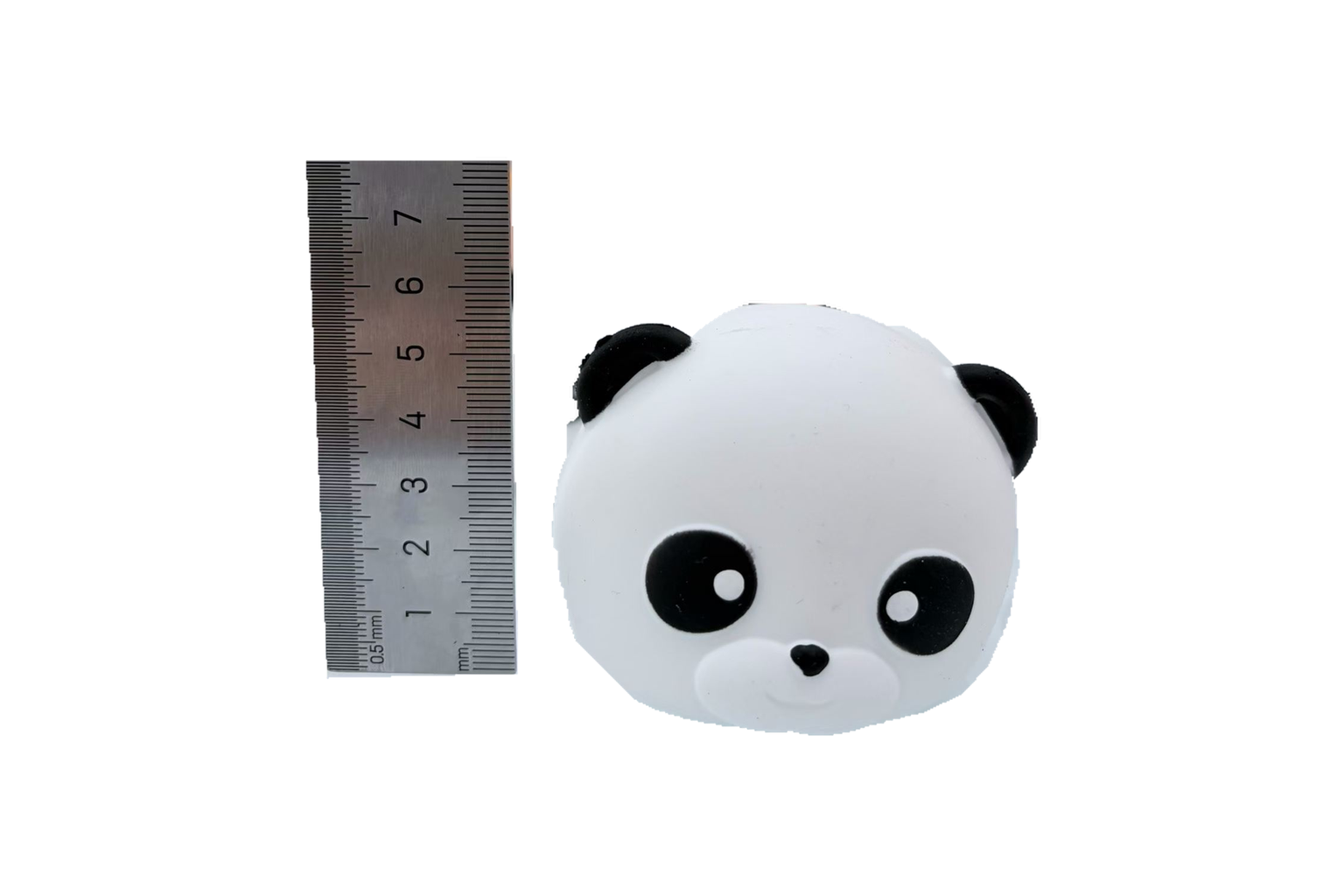
A ruler beside the product gives context for squishy toy measurements, but perspective can make a photograph misleading. A close measurement may need an agreed fixture or gauge. For a deformable body, discuss how much contact is permitted and where it occurs. Closing calipers until a soft surface visibly dents measures a compressed condition rather than an undisturbed width.
Keep a reference image showing the instrument, sample orientation and contact points. If a supplier reports a different number, first compare the setups instead of immediately changing the drawing. A complete specification sheet should identify the measurement basis alongside the nominal size and the agreed acceptance limits. The instrument and method need enough resolution for those limits to be meaningful.
An inspection specialist’s squishy toy quality-control overview includes dimensions among product checks. That does not establish a mandatory method or a universal tolerance. Use such guidance to identify what needs controlling, then document the actual procedure for the selected SKU. A photograph alone cannot demonstrate measurement accuracy.
Separate product variation from package fit
Evaluate the retail pack with the same approved reference pieces used for squishy toy measurements. Check whether the lid closes without sustained pressure on a character’s ears or face and whether the toy can be removed as intended. Record the internal usable space, not just the supplier’s external box dimensions. Inserts, seams and folded edges can reduce that space.
For a new sample round, request individual squishy toy measurements from the agreed sample selection rather than only an average. An average can conceal pieces that crowd the package. Label the samples so a measurement, photograph and fit observation refer to the same piece. If the product changes construction or tooling, review whether the established datum and method still make sense.
The approval record should leave the next person able to repeat the check: which finished variant, which resting position, which contact method and which package revision. When those details are settled, a dimensional disagreement becomes a specific question about a sample or setup. It no longer depends on whose photograph makes the panda look larger.
Read More